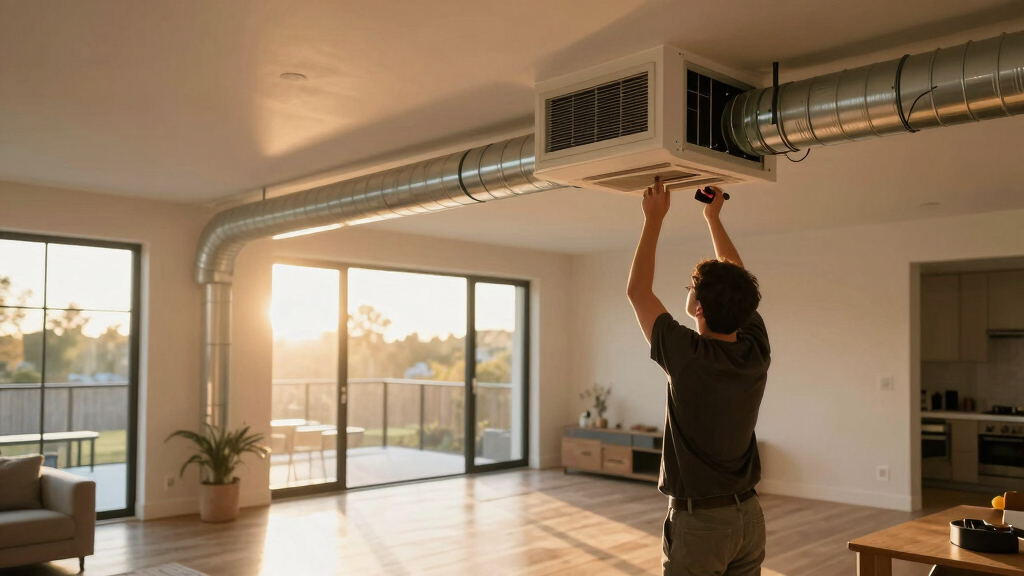
Finding the best whole house ventilation system involves balancing performance, energy efficiency, and ease of installation. The Quietcool QC ES-7000 RF stands out for its combination of high airflow and low energy use, making it a top overall pick. For those prioritizing quiet operation, the Through Wall HEPA Ventilation Fan offers ultra-quiet performance with smart controls. Meanwhile, the AC Infinity CLOUDWAY T10 is ideal for tech-savvy homeowners who want app control and smart features. Most options require tradeoffs between airflow capacity, noise levels, and installation complexity. Keep reading for a detailed breakdown to find the best fit for your home and needs.
Key Takeaways
- High airflow capacity models like the Quietcool QC ES-7000 excel in large homes but may come with higher energy consumption.
- Energy recovery ventilators (ERVs) like Aprilaire V22BEC provide balanced ventilation and humidity control, suited for climate-sensitive areas.
- Smart controls and WiFi app integration are increasingly common, offering convenience but potentially increasing initial costs.
- Quiet operation is a key factor; models with noise-reducing features tend to have slightly lower airflow but are better for bedrooms or offices.
- Installation complexity varies; wall-mounted fans tend to be easier to retrofit, while ceiling or attic-mounted systems often require professional setup.



More Details on Our Top Picks
Through Wall HEPA Ventilation Fan with WiFi & Remote Control, Ultra Quiet EC Motor Wall Vent, Fresh Air Intake & Air Exchange System for Bedroom, Home Office, Attic
This wall-mounted fan combines a sophisticated 3-stage filtration system with continuous fresh air exchange, making it stand out for those seeking quality indoor air. Compared with the Quietcool models, this unit offers integrated HEPA and activated carbon filters, ensuring dust, pollen, and odors are effectively reduced. Its true air exchange capability means it actively replaces stale indoor air with cleaner outdoor air, unlike simple exhaust fans. The smart WiFi control enhances convenience, allowing remote adjustments, which is a big plus over more basic models. The ultra-quiet EC motor ensures operation without disturbance, ideal for bedrooms or offices. A tradeoff is that installation might be more complex for some, and regular filter maintenance is required for optimal performance. Overall, this makes the most sense for homeowners prioritizing air quality and smart home integration, especially in enclosed or allergy-sensitive environments.
Pros:- Effective 3-stage filtration reduces dust, pollen, and odors
- Active air exchange improves indoor air quality continuously
- Smart WiFi control for remote operation and mode switching
- Ultra quiet operation with advanced EC motor
Cons:- Installation may be complex for DIYers, requiring wall access and proper sealing
- Regular filter replacement adds ongoing maintenance costs
- Higher initial cost compared to basic exhaust fans
Best for: Homeowners needing a quiet, filtered, and app-controlled ventilation solution for bedrooms, offices, or allergy-prone spaces
Not ideal for: Homes with limited wall space or those seeking simple exhaust solutions without filtration or smart features
- Filtration System:Pre-filter, HEPA filter, activated carbon
- Operation Mode:Fresh air intake, exhaust, circulation
- Control:WiFi via Tuya Smart App
- Noise Level:Ultra quiet, specific decibel not provided
- Motor Type:EC (Electronically Commutated) motor
- Installation:Through-wall, adjustable duct
- Maintenance:Detachable magnetic front panel
- Power:Not specified
Bottom line: This system is ideal for those seeking a smart, filtered, and quiet ventilation upgrade for their home.
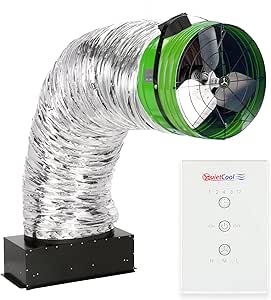
Quietcool QC ES-7000 RF Energy Saver Advanced Whole House Fan with Wireless Control – Up to 6878 CFM – As low as 164 watts – Two Speed – Covers up to 3,439 SQFT – 10 Year Warranty
The QuietCool QC ES-7000 is designed for larger homes, delivering impressive airflow of up to 6878 CFM with energy efficiency in mind, drawing as little as 164 watts. Compared to the smaller QC ES-4700, it covers more square footage, making it suitable for bigger residences. Its dual-speed operation offers flexibility, while the wireless control via RF remote adds convenience for everyday use. Despite its high airflow, the fan operates quietly, which is a benefit over older, louder models. However, the heavy housing can be challenging for one person to install, and the RF control interface feels somewhat clunky, especially for those used to smartphone apps. It’s perfect for homeowners who prioritize high airflow and energy savings with a straightforward, durable design, but less so for those seeking smart home integration or easy DIY installation.
Pros:- Massive airflow capacity suitable for large homes
- Low energy consumption with as little as 164 watts
- Two-speed operation for flexible airflow control
- Durable, 10-year warranty and quiet operation
Cons:- Heavy housing may complicate installation for some
- RF remote control interface can be less intuitive than app-based controls
- No integrated smart home connectivity
Best for: Homeowners with larger homes needing high airflow and energy-efficient operation, comfortable with RF controls
Not ideal for: Small residences or users preferring smart app controls over RF remote, or those uncomfortable with heavier units
- CFM:Up to 6878
- Power Consumption:As low as 164 watts
- Coverage Area:Up to 3,439 sq ft
- Control Method:Wireless RF remote
- Number of Speeds:Two
- Warranty:10 years
- Installation:Ceiling mount, heavy housing
- Noise Level:Not specified but quiet
Bottom line: This model is best for large households needing powerful, energy-efficient ventilation with remote control convenience.
Quietcool QC ES-4700 RF Energy Saver Advanced Whole House Fan with Wireless Control – Up to 4195 CFM – As low as 75 watts – Two Speed – Covers up to 2,098 SQFT – 10 Year Warranty – Removable Grille
The QuietCool QC ES-4700 offers a compelling balance of airflow, energy efficiency, and ease of installation for homes up to approximately 2,100 sq ft. Its 4195 CFM on high and 2304 CFM on low make it suitable for moderate-sized residences, outperforming smaller fans like the QC CL-6000 in airflow capacity. The unit consumes as little as 75 watts, making it a cost-effective choice for energy-conscious homeowners. Its removable grille simplifies cleaning and maintenance, and the RF wireless control provides convenience, although it might lack the sophistication of smart app controls. Some users might find the installation process straightforward but note that the control interface could be more intuitive. This pick is ideal for those wanting reliable airflow, energy savings, and simple operation without the complexity of smart home integration.
Pros:- Efficient operation with as low as 75 watts power draw
- Good airflow for homes up to 2,100 sq ft
- Removable grille simplifies cleaning
- 10-year warranty and quiet operation
Cons:- Limited coverage for larger homes
- RF control less feature-rich than app-based systems
- No smart home compatibility
Best for: Homeowners with mid-sized homes seeking energy-efficient ventilation with remote control and easy maintenance
Not ideal for: Larger homes requiring higher airflow or users seeking full smart home integration
- CFM:Up to 4195
- Power Consumption:As low as 75 watts
- Coverage Area:Up to 2,098 sq ft
- Control Method:Wireless RF remote
- Number of Speeds:Two
- Warranty:10 years
- Installation:Ceiling mount with removable grille
- Noise Level:Not specified but quiet
Bottom line: This model fits well for mid-sized homes prioritizing energy efficiency and straightforward remote operation.
VENTS-US Frigate ERV 80 R – Whole House Energy Recovery Ventilation System, Up to 100 CFM – Continuous Supply of Fresh Air While Exhausting Equal Amounts of Stale Air
The VENTS-US Frigate ERV 80 R provides a balanced approach, continuously supplying fresh air while exhausting stale air at a modest rate of up to 100 CFM. Compared to high-capacity fans like the QuietCool models, this unit excels in energy recovery, making it suitable for homes where balanced ventilation and energy conservation are priorities. Its small size and corrosion-resistant steel casing facilitate installation in tight spaces, and the built-in controls support manual and automatic modes. The energy recovery core helps maintain indoor humidity and heat levels, reducing energy costs. A downside is its relatively low airflow, making it less suitable for larger residences or homes with high ventilation needs. This makes it ideal for smaller homes or apartments looking for steady, energy-efficient ventilation with minimal noise.
Pros:- Energy recovery core improves energy efficiency
- Continuous balanced ventilation maintains indoor air quality
- Compact, corrosion-resistant steel casing
- Supports manual and automatic operation modes
Cons:- Limited airflow rate of 100 CFM may be insufficient for large homes
- Low maximum capacity compared to high-volume fans
- More suitable for steady, balanced ventilation rather than rapid air exchange
Best for: Small homes or apartments needing continuous, balanced ventilation with energy recovery features
Not ideal for: Larger homes or spaces requiring high-volume airflow or rapid air exchange
- CFM:Up to 100
- Operation Mode:Continuous supply and exhaust
- Energy Recovery:Yes
- Noise Level:1.4 sones
- Housing Material:Steel
- Control:Manual and automatic modes
Bottom line: This system is best suited for smaller spaces prioritizing energy-efficient, continuous ventilation over high airflow.
VENTS-US Frigate ERV 150 Ventilation System – 180 CFM Whole House Fresh Air Intake and Humidity Exhaust for Balanced Indoor Comfort, Includes Washable Filters and Anti-Freeze Protection
The VENTS-US Frigate ERV 150 offers robust balanced ventilation at 180 CFM, with features like washable filters and anti-freeze protection, making it suitable for moderate climates and comfort-focused homes. Compared with the ERV 80 R, this unit provides higher airflow for larger spaces while maintaining energy efficiency through heat and humidity recovery. Its washable filters simplify maintenance, and the anti-freeze feature ensures reliable operation in cold conditions. However, its larger size and higher power draw mean it may be less suited for very small or tightly confined spaces. This ERV is a solid choice for homeowners seeking continuous, balanced ventilation that also optimizes energy and humidity control, especially in moderate climates or energy-conscious households.
Pros:- High-efficiency energy and humidity recovery
- Includes washable filters for easy maintenance
- Anti-freeze protection for reliable cold-weather operation
- Balanced airflow suitable for moderate-sized homes
Cons:- Higher power consumption compared to smaller units
- Size may be less suitable for very tight spaces
- Lower airflow rate than high-capacity fans
Best for: Moderate-sized homes in variable climates needing balanced ventilation with humidity and heat recovery
Not ideal for: Small apartments or homes in extremely cold or hot climates where high capacity or quick air exchange is needed
- CFM:Up to 180
- Features:Washable filters, anti-freeze protection
- Operation:Continuous supply/exhaust
- Noise Level:Not specified
- Housing Material:Steel with multilayer coating
- Energy Recovery:Yes
Bottom line: This ERV is ideal for households seeking balanced, energy-efficient ventilation with humidity control in moderate climates.
VENTS-US Frigate ERV 150 EC Ventilation System – 186 CFM Whole House Fresh Air Intake and Humidity Exhaust with EC Motors for Balanced Indoor Comfort
The VENTS-US Frigate ERV 150 EC stands out for its ability to supply fresh air while simultaneously exhausting stale air, making it ideal for maintaining balanced indoor conditions. Compared to the AC Infinity CLOUDWAY T10, which primarily targets attic spaces, this ERV offers a more comprehensive whole-house solution with heat and humidity recovery via its enthalpy core, reducing energy costs. Its durable steel casing and anti-corrosion coating ensure long-term performance, but the system’s 186 CFM airflow may be insufficient for larger homes or spaces requiring higher ventilation rates. Installation can be more complex due to its size, and its noise level, though low, might still be noticeable in very quiet environments. Overall, it makes the most sense for homeowners seeking a reliable, balanced ventilation system that recovers both heat and moisture, especially in moderate-sized homes.
Pros:- Balances supply and exhaust airflow for consistent indoor air quality
- Includes heat & humidity recovery to lower energy bills
- Steel construction with anti-corrosion coating for durability
Cons:- Limited airflow capacity at 186 CFM for larger residences
- Installation may be complex in tight spaces or retrofit scenarios
Best for: Homeowners looking for balanced ventilation that improves indoor air quality and reduces energy costs in homes up to 1,500 sq. ft.
Not ideal for: Large multi-story homes or spaces requiring more than 200 CFM, where higher airflow is necessary.
- Air Flow Capacity:186 CFM
- Voltage:120 Volts
- Power Consumption:186 Watts
- Noise Level:1.9 Sones
- Housing Material:Steel with anti-corrosion coating
- Humidity Recovery:Yes
Bottom line: This ERV best suits those wanting a reliable, energy-efficient system for moderate-sized homes focused on balanced ventilation and humidity control.
AC Infinity CLOUDWAY Whole House EC Fan T10, 1200 CFM with Temperature Humidity Controller, WiFi Integrated App Control – Ceiling Mount House Attic Vent Fan, Exhaust Home Ventilation System
The AC Infinity CLOUDWAY T10 offers substantial airflow at 1200 CFM, making it an excellent choice for ventilating larger spaces or entire homes with attic exhaust strategies. Unlike the VENTS-US ERV 150, which emphasizes balanced air exchange and humidity recovery, this fan focuses on rapidly removing hot air from attics, providing quick cooling and improved comfort. Its WiFi-enabled app allows advanced scheduling, automation, and climate monitoring, adding convenience. The 48 dBA noise level is relatively quiet for such high airflow, but some users might find it audible in very quiet rooms. Its 250W power draw is higher than smaller fans, which could impact energy costs over time. Overall, this pick is ideal for homeowners who want a powerful, remotely controllable ventilation system to manage attic heat and improve overall cooling efficiency.
Pros:- High airflow capacity suitable for large homes and attic ventilation
- WiFi app control for scheduling and automation
- Quiet operation relative to airflow at 48 dBA
Cons:- Higher power consumption at 250W
- Installation requires ceiling mounting and ducting
Best for: Homeowners with large attics or wanting whole-house cooling through attic ventilation and smart control features.
Not ideal for: Small or heavily insulated homes where high airflow may be unnecessary or create excess noise.
- Air Flow Capacity:1200 CFM
- Wattage:250 Watts
- Noise Level:48 dBA
- Control:WiFi App
- Mounting Type:Ceiling
- Duct Size:10 inches
Bottom line: This fan is best for those needing high-capacity attic exhaust with smart, remote control in larger or multi-zone homes.
Aprilaire V22BEC Energy Recovery Ventilator (ERV), 120 CFM Air Exchanger for Homes up to 6,000 Sq. Ft. – Whole-House Fresh Air Ventilation System
The Aprilaire V22BEC ERV brings a balanced approach to ventilation, exchanging 120 CFM of air to help maintain indoor air quality without significant temperature fluctuations. It is particularly well-suited for larger homes up to 6,000 sq. ft., providing a simple and effective way to add fresh air and control humidity. Compared to the VENTS-US ERV 150, which offers higher capacity at 180 CFM, the Aprilaire model is more compact and easier to install, with straightforward push-button controls for operation. However, its airflow rate might be inadequate for very large or highly ventilated spaces, and some users may find the 120 CFM insufficient during peak occupancy. It excels in environments where a quiet, maintenance-friendly system is desired to improve indoor air quality across a large residence.
Pros:- Provides balanced fresh air intake and exhaust
- Effective humidity and odor control
- Simple push-button operation
Cons:- Relatively low airflow at 120 CFM for some large or busy homes
- Limited capacity compared to higher-flow systems like the VENTS-US ERV 150
Best for: Owners of large homes seeking a quiet, easy-to-use ventilation system to improve air quality and control humidity.
Not ideal for: Homes requiring high airflow or rapid air exchange, especially in humid or extremely cold climates where higher capacity is needed.
- Air Flow Capacity:120 CFM
- Coverage Area:Up to 6,000 sq. ft.
- Control Type:Push-button
- Housing Material:Plastic
- Power Consumption:Not specified
- Mounting:Wall, ceiling, or floor
Bottom line: This ERV is ideal for large homes prioritizing quiet, straightforward, and balanced ventilation with moderate airflow needs.
VENTS-US Frigate HRV 120s Heat Recovery Ventilator – Whole House Ventilation Fan with Up to 118 CFM and Freeze Protection
This model stands out for its high heat recovery efficiency, capturing up to 73% of outgoing heat to reduce utility bills, especially in colder regions. Compared with the Quietcool QC ES-4700 RF that offers higher airflow, the Frigate HRV 120s prioritizes energy savings and cold weather durability. Its electronic antifreeze protection and corrosion-resistant steel casing make it highly reliable in harsh climates, but this focus on cold protection results in a lower airflow capacity of 118 CFM, which may be insufficient for larger homes needing more ventilation. The three-speed control provides flexibility for continuous operation without excessive energy use, consuming only 19 Watts on low. Its dual washable filters help maintain indoor air quality, making it suitable for allergy sufferers. However, its slightly lower airflow makes it less ideal for very large or highly ventilated spaces, and installation complexity could be a hurdle for DIY homeowners. This pick is best suited for homes in cold climates prioritizing heat recovery and energy efficiency over maximum airflow.
Pros:- High heat recovery efficiency of up to 73%
- Reliable antifreeze protection for cold climates
- Corrosion-resistant steel casing ensures durability
- Low power consumption at 19 Watts on low speed
Cons:- Limited airflow capacity of 118 CFM may be insufficient for larger spaces
- Installation can be complex without professional help
- Less suitable for homes needing rapid air exchanges
Best for: Homeowners in cold regions seeking efficient heat recovery and reliable cold-weather operation
Not ideal for: Large homes that require high airflow or homes in warm climates where heat recovery is less critical
- Air Flow Capacity:118 CFM
- Power Consumption:19 Watts on LOW
- Material:Corrosion-resistant steel casing
- Special Features:Anti-frost protection, dual washable filters, three-speed control
- Certification:HVI Certified
- Mounting Type:Ceiling mount
Bottom line: This system makes the most sense for cold climate homes that want to reduce heating costs through heat recovery and long-term durability.
How We Picked
The products in this roundup were evaluated based on their airflow capacity, energy efficiency, noise levels, ease of installation, and smart features. We prioritized systems that offer reliable performance across different home sizes and climates, as well as those with durable build quality and user-friendly controls. Our ranking balances value for money with premium features, ensuring options suitable for various budgets and technical comfort levels. We also considered long-term maintenance and the availability of replacement parts to recommend systems that provide consistent, hassle-free operation.Factors to Consider When Choosing Best Whole House Ventilation System
Choosing the best whole house ventilation system requires understanding several key factors that influence performance, comfort, and cost. Beyond just airflow capacity, you should consider energy efficiency, control options, and how the system integrates with your home’s layout. Proper sizing is vital—oversized units waste energy, while undersized ones fail to ventilate effectively. Installation complexity varies, so assess whether you need a DIY-friendly model or professional installation. Lastly, think about climate considerations like humidity and temperature, which can influence whether an ERV or HRV is a better choice.Airflow Capacity and Home Size
Matching a system’s airflow capacity with your home’s size is essential for effective ventilation. Larger homes require higher CFM (cubic feet per minute) ratings to ensure proper air exchange, but oversizing can lead to unnecessary energy use. Conversely, a system that’s too small will struggle to maintain fresh indoor air, especially in homes with multiple rooms or open floor plans. Carefully measure your space and consult manufacturer guidelines to select a unit that provides adequate airflow without excess energy consumption.
Energy Efficiency and Operating Costs
Energy-efficient models, especially those with EC motors or heat recovery features, can significantly reduce ongoing costs. These systems use less electricity while delivering the same or better ventilation performance. However, they often come at a higher upfront price. Consider your long-term budget and climate conditions; in humid or cold climates, an ERV might save more energy over time by balancing humidity and temperature, offsetting initial investment costs.
Control Options and Smart Features
Many modern systems include WiFi connectivity, remote control, or app integration, making operation more convenient. These features appeal to tech-savvy homeowners seeking automation and real-time monitoring. However, they can add to the purchase price and may require ongoing updates or troubleshooting. Think about how much control and automation you desire and whether these features justify the additional expense for your household.
Installation and Maintenance
Installation complexity varies widely; wall-mounted units are often easier and less invasive, while ceiling or attic systems might need professional help. Proper installation ensures optimal performance and energy efficiency. Maintenance requirements, such as filter replacement or cleaning, should also be factored in. Choose a system with accessible filters and clear maintenance instructions to avoid costly service calls and keep your system running smoothly.
Climate and Environmental Considerations
Your local climate influences which system works best. In humid areas, an ERV can help control indoor moisture levels, preventing mold and discomfort. Cold climates benefit from heat recovery features that conserve energy while maintaining indoor comfort. Conversely, in dry or temperate regions, a simple ventilator might suffice. Understanding your climate helps you select a system that maintains indoor air quality without imposing unnecessary operational costs or discomfort.
Frequently Asked Questions
How do I determine the right airflow capacity for my home?
To find the appropriate airflow capacity, measure your home’s total square footage and consider the number of bedrooms and occupants. A general rule is about 0.35 CFM per square foot for standard homes, but larger or more airtight buildings may need higher ratings. Consulting a professional or the manufacturer’s sizing charts can help ensure you choose a system that provides adequate ventilation without wasting energy or creating noise issues.
Are energy recovery ventilators worth the extra cost?
Energy recovery ventilators (ERVs) can be a valuable investment, especially in climates with extreme temperatures or high humidity. They help conserve energy by pre-treating incoming air, reducing heating and cooling costs. While their upfront price is higher, the long-term savings in energy bills and improved indoor comfort often justify the expense, making them a smart choice for energy-conscious homeowners.
Can I install a whole house ventilation system myself?
Some smaller or wall-mounted units are designed for DIY installation, but most whole house systems—especially those integrating into existing ductwork or attic spaces—are better handled by professionals. Proper installation affects performance, energy efficiency, and safety. Attempting a DIY install without proper knowledge can lead to leaks, inadequate ventilation, or electrical issues, so evaluating your skill level and the system’s complexity is crucial.
What maintenance is required to keep these systems running efficiently?
Regular maintenance typically involves cleaning or replacing filters, inspecting for blockages, and checking electrical connections. Many systems include washable filters, which can reduce ongoing costs. Neglecting maintenance can lead to reduced airflow, higher energy use, or system failure. Establish a routine schedule based on manufacturer recommendations to sustain peak performance and prolong the lifespan of your ventilation system.
How important are smart features and app controls?
Smart controls and app integration add convenience, allowing you to monitor and adjust ventilation remotely. They are especially useful if you want to automate operation based on indoor air quality sensors or schedules. However, they can increase initial costs and sometimes require ongoing software updates. If you prefer simple, manual operation, a basic model without smart features might be more cost-effective and easier to operate.
Conclusion
For those seeking an all-around performer, the Quietcool QC ES-7000 RF offers high airflow with low energy use, making it ideal for larger homes. Budget-conscious buyers will find excellent value in models like the QuietCool QC CL-6000 RF, combining strong performance with affordability. Homeowners in colder or more humid climates should consider systems with heat or energy recovery, such as the Aprilaire V22BEC, for added efficiency. Beginners or DIY enthusiasts will appreciate simpler wall-mounted units, while tech-savvy users benefit from smart controls in models like the AC Infinity CLOUDWAY T10. Ultimately, your choice depends on your home size, climate, and desired features, but this guide aims to point you toward the best fit for your specific needs.