When power outages strike, having a reliable inverter generator can be the difference between comfort and chaos. The best models combine quiet operation, fuel efficiency, and sufficient wattage to run essential home appliances. The Oxseryn 4400-Watts Inverter Generator stands out as the overall best choice for its balanced performance and portability. The Champion 11,000-Watt Wireless Remote Start Generator offers impressive power and convenience, making it ideal for larger needs. However, buyers face tradeoffs between price, noise levels, fuel type, and ease of use. Continue reading for a detailed breakdown of each option and what suits your emergency power needs best.
Complete the kit


Key Takeaways
- The top picks balance power output with portability, ensuring reliable emergency use without sacrificing ease of transport.
- Quiet operation is a key feature for home use, especially if the generator will run during nighttime outages or near living spaces.
- Dual fuel options add versatility, allowing users to choose between gasoline and propane for extended runtime.
- Remote start and smart features provide added convenience, particularly for less physically accessible setups.
- Price varies widely, with premium models offering more features but not always necessary for basic emergency needs.


| inverter generators for emergency home power | Runtime | Noise Level |
|---|---|---|
| Oxseryn 4400-Watts Inverter Ge | 14 hours | — |
| Champion 11,000-Watt Wireless | — | 64 dBA |
| WEN 6800-Watt Dual Fuel RV-Rea | — | 64 decibels |
| Westinghouse 12000 Peak Watt D | Up to 19 hours | 64 dBA |
| Westinghouse 5000 Peak Watt Su | — | 52 dBA |
| ERAYAK 4500W Portable Inverter | 16 hours at rated load | — |
| Oxseryn Power Equipment 4400 W | 14 hours | — |
More Details on Our Top Picks
Oxseryn 4400-Watts Inverter Generator, Gas Powered, Open Frame, RV Ready, EPA Compliant
This inverter generator leads in versatility, offering a robust 4400 peak watts and 3400 running watts, making it capable of handling essential appliances during a power outage. It compares favorably to larger, noisier options by remaining lightweight at 56 lbs, yet it trades some runtime for portability with only 14 hours at 25% load. Its inverter technology and eco mode boost fuel efficiency, while the RV-ready 30A outlet adds convenience for outdoor use. Unlike the Westinghouse models, it’s less powerful for whole-home backup but excels in portability and ease of use for smaller emergencies. The limited runtime and potential gas smell upon arrival are tradeoffs to consider.
Pros:- Powerful 4400 peak watts suitable for multiple devices
- Lightweight and portable at 56 lbs
- Features inverter technology and eco mode for efficiency
- RV ready with a 30A outlet
Cons:- Limited runtime of 14 hours at 25% load
- Possible gas smell upon receipt due to factory testing
- No noise level specified, which could be a concern
Best for: Small to medium households needing reliable, portable backup with easy setup.
Not ideal for: Users seeking long-term power solutions or running high-wattage appliances continuously.
- Wattage:4400 watts
- Fuel Type:Gasoline
- Power Source:Fuel Powered
- Recommended Uses:Camping, Commercial, Residential
- Voltage:120 volts
- Tank Volume:2 gallons
- Runtime:14 hours
- Engine Type:4 Stroke
- Engine Power:Maximum 4.4 KW
Our verdict“This generator is a versatile choice for those who prioritize portability and moderate power during outages.”
Champion 11,000-Watt Wireless Remote Start Portable Inverter Generator
Compared with smaller generators like the Oxseryn, the Champion 11,000-watt model offers a significant power boost, making it ideal for running whole-home circuits or large appliances during outages. Its remote start feature adds unmatched convenience, especially when managing multiple devices or avoiding startup strain. The longer run time of up to 15 hours and multiple outlets, including GFCI-protected ones, position it as a more comprehensive backup. However, it is heavier and bulkier, which reduces portability, and its noise level of 64 dBA might be noticeable for quiet outdoor environments. The higher price reflects its advanced features and larger capacity, making it less suitable for users with limited space or budget.
Pros:- Remote start with wireless key fob for added convenience
- Long runtime of up to 15 hours on a full tank
- Multiple outlets including GFCI protected and high-capacity options
- Built-in safety features like CO Shield auto shutoff
Cons:- Relatively heavy and bulky for portability
- Noise level of 64 dBA may be disruptive
- Higher cost compared to smaller models
Best for: Homeowners seeking a high-capacity, user-friendly generator with remote operation.
Not ideal for: Individuals needing a lightweight, budget-friendly emergency backup solution.
- Starting Watts:11,000
- Running Watts:9,000
- Engine:459cc Champion single-cylinder OHV
- Tank Capacity:6.1 gallons
- Run Time:up to 15 hours
- Noise Level:64 dBA
- Outlets:Two 120V 20A GFCI duplex, 120/240V 30A, 37.5A, 12V
- Warranty:3-year limited
Our verdict“This generator is best suited for those who prioritize power and convenience over portability and cost.”
WEN 6800-Watt Dual Fuel RV-Ready Electric Start Portable Inverter Generator with CO Watchdog
The WEN 6800-watt inverter offers a practical balance between power and portability, especially with its dual-fuel capability that allows switching between gasoline and propane. Its clean power output ensures sensitive electronics remain safe, a feature that sets it apart from larger, noisier generators like the Westinghouse 12000. While its run time of about 6-9 hours is shorter than larger models, its portability and safety features—such as CO shutdown—make it suitable for camping and backup use. However, the limited run time and the need to purchase a parallel kit separately might be drawbacks for those seeking continuous power or a plug-and-play setup.
Pros:- Dual-fuel capability with gasoline and propane
- Provides clean, stable power for sensitive electronics
- Includes safety features like CO shutdown and overload protection
- Portable with wheels and telescoping handle
Cons:- Limited run time of around 6-9 hours depending on load
- Relatively heavy and sizable for frequent transport
- Requires separate purchase for parallel connection kit
Best for: Campers and small households that want flexible power sources with safety features.
Not ideal for: Users needing extended runtime or to power large appliances continuously.
- Engine Displacement:224cc
- Surge Power (Gasoline):6800 watts
- Rated Power (Gasoline):5100 watts
- Fuel Tank Capacity:2.9 gallons
- Run Time:Up to 6.1 hours
- Noise Level:64 decibels
- Receptacles:L14-30R 120V/240V, three 120V, 12V DC, USB
- Warranty:3 years
Our verdict“This generator fits well for users needing versatile fuel options and portability for moderate emergency needs.”
Westinghouse 12000 Peak Watt Dual Fuel Portable Inverter Generator with Remote Electric Start
The Westinghouse iGen12000DFc provides impressive peak power at 12,000 watts, making it a strong choice for whole-house backup needs. Its remote start feature and long runtime of up to 19 hours on a full tank make it convenient for extended outages. Quiet operation at 64 dBA and dual fuel capability add to its appeal, especially compared to smaller units like the Oxseryn or WEN. However, its size and weight limit portability, and the complex setup could be daunting for less experienced users. The higher cost reflects its capacity and features, positioning it as a premium emergency power solution.
Pros:- High peak wattage suitable for whole-home backup
- Quiet operation at 64 dBA
- Remote start with included battery
- Long runtime of up to 19 hours on a full tank
Cons:- Heavy and large, less portable
- Higher price point
- Complex setup for beginners
Best for: Homeowners with large electrical loads who want reliable remote operation and long runtime.
Not ideal for: Individuals with limited space or those who need a lightweight, portable generator for quick setups.
- Peak Wattage:12,000W
- Running Wattage:9,000W
- Fuel Type:Gasoline, Propane
- Engine:457cc 4-Stroke OHV
- Runtime:Up to 19 hours
- Fuel Tank Capacity:7.9 gallons
- Noise Level:64 dBA
- Outlets:120/240V 14–50R 50A, 120V/240V L14-30R 30A
Our verdict“This generator is best suited for those needing high power and remote operation for large or whole-house backup scenarios.”
Westinghouse 5000 Peak Watt Super Quiet Portable Inverter Generator with Remote Start
Compared to the larger Westinghouse 12000, the 5000-watt model offers a quieter operation at just 52 dBA, making it more suitable for noise-sensitive environments while still providing enough power for essential appliances. Its remote start feature adds convenience, and with up to 18 hours of runtime, it offers extended backup capability. The lightweight design enhances portability for camping or small-scale emergencies, but the limited wattage means it won’t handle heavy loads or entire home circuits. The absence of detailed size and weight specifications might concern those with strict space constraints. Overall, it strikes a balance between power, quiet operation, and portability, but at a higher cost than smaller, less feature-rich models.
Pros:- Quiet operation at 52 dBA
- Remote electric start for convenience
- Extended runtime of up to 18 hours
- Lightweight and portable design
Cons:- Limited to 5000 peak watts, not suitable for large loads
- Weight and size details not specified, potential portability concerns
- Price may be high relative to basic models
Best for: Campers, RV users, or small households needing quiet, portable backup power.
Not ideal for: Users requiring high wattage for large appliances or whole-home backup.
- Peak Watts:5000
- Rated Watts:3900
- Fuel Tank Capacity:3.4 gallons
- Run Time:up to 18 hours
- Noise Level:52 dBA
- Outlets:120V Duplex, RV-Ready TT-30R, USB
Our verdict“This generator is perfect for those prioritizing quiet operation and portability for essential, small-scale power needs.”
ERAYAK 4500W Portable Inverter Generator for Home Use, Super Quiet Small Generator for Camping Outdoor Emergency Power Backup, Gas Powered Engine, ECO Mode, EPA Compliant
The ERAYAK 4500W stands out for its impressive balance of power, portability, and quiet operation, making it an excellent choice for emergency home power. Compared to the Oxseryn 4400W, it offers slightly higher peak wattage and longer runtime, which can be critical during extended outages. Its low noise level of 60.5 dB makes it suitable for sensitive environments like neighborhoods or camping sites. The multiple outlets, including USB and RV connections, enhance its versatility, while its lightweight design at just over 55 pounds improves portability. However, the need to purchase a parallel kit separately can be a drawback for those wanting immediate dual-unit setup, and the initial oil addition could be inconvenient for some users. Overall, this generator makes sense for homeowners who want reliable, quiet power with the flexibility to connect multiple devices or expand capacity.
Pros:- Quiet operation at just 60.5 dB, suitable for noise-sensitive environments
- Multiple outlets including USB, RV, and standard AC for versatile use
- Long runtime of up to 16 hours at rated load, ideal for extended outages
- Lightweight design with portability accessories for easy handling
Cons:- Parallel kit sold separately, adding extra cost for dual-unit configurations
- Requires engine oil addition before first use, which may inconvenience some users
Best for: Families seeking a quiet, portable backup that can power essential appliances during outages without noise disturbances
Not ideal for: Homeowners who need a built-in, dual-unit setup right out of the box or prefer no additional accessories for expansion
- Wattage:3500 watts (running), 4500 watts (peak)
- Fuel Type:Gasoline
- Runtime:16 hours at rated load
- Weight:55.12 lbs
- Dimensions:20″ L x 12.2″ W x 19.3″ H
- Additional Features:Fuel Efficient, Low Oil Shutdown, Portable, Super Quiet
Our verdict“This generator is ideal for homeowners who prioritize quiet, reliable power with flexible outlet options and portability.”
Oxseryn Power Equipment 4400 Watts Inverter Generator Gas Powered, Portable Open Frame Generator, Low Noise with ECO Mode, RV Ready, Emergency Home Backup
The Oxseryn 4400W generator offers robust power output and portability, making it well-suited for those needing dependable emergency home backup or RV power. It competes directly with the ERAYAK 4500W but delivers a slightly lower peak wattage, which may limit some heavy appliance loads. Its low noise level of under 72 dBA is notable, though slightly louder than the ERAYAK, making it still acceptable for residential use. The ECO mode enhances fuel efficiency, extending runtime on its 2-gallon tank to approximately 14 hours. It is lightweight at 56 pounds, with a durable metal frame that simplifies transport. A minor issue is a slight gas smell upon arrival, which could concern sensitive users. This model makes the most sense for users who want a compact, powerful generator with fuel efficiency and are comfortable with a slightly louder operation than the quietest options.
Pros:- Powerful output suitable for multiple appliances or RV use
- Low noise operation under 72 dBA, acceptable for residential settings
- Fuel-efficient ECO mode extends runtime to about 14 hours
- Lightweight at 56 lbs with a durable metal frame for easy transport
Cons:- Slight gas smell upon delivery, which may require airing or additional handling
- Limited to gasoline fuel, reducing fuel flexibility compared to dual-fuel options
Best for: Homeowners or RV travelers needing portable, reliable power with good runtime and low noise for emergency or outdoor use
Not ideal for: Those requiring a generator with a built-in dual-unit capability or expecting absolute silence during operation
- Wattage:3400 watts
- Peak Wattage:4400 watts
- Runtime:14 hours
- Weight:56 lbs
- Tank Volume:2 gallons
- Additional Features:Cold Start Technology, Fuel Gauge, Overload Protection
Our verdict“This generator is best for users who want a portable, fuel-efficient option with solid power output for emergency and outdoor needs.”
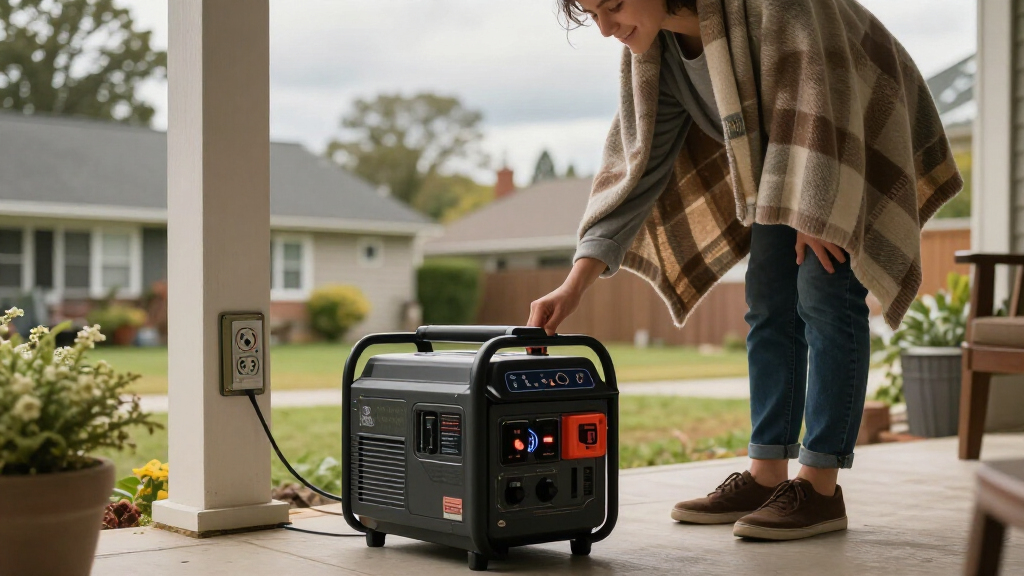
How We Picked
The products were selected based on a combination of performance, reliability, noise levels, fuel efficiency, and user convenience. We prioritized models with sufficient wattage to power essential home devices during outages, ensuring they meet EPA standards for safety and emissions. Ease of use, durability, and price were also key factors, helping to identify options that suit different budgets and experience levels. The ranking reflects a balanced view of value, features, and practicality for emergency home power scenarios.Factors to Consider When Choosing Best Inverter Generators For Emergency Home Power
Choosing the right inverter generator for emergency home power involves considering several important factors beyond just wattage. The right model should fit your home’s power needs while being easy to operate and maintain. Understanding these broader considerations can help prevent common pitfalls, such as overestimating your needs or selecting a generator that’s too noisy or inefficient for your environment.Power Capacity and Wattage
Start by assessing your essential power needs. Most homes require around 2,000 to 4,000 watts to run critical appliances like refrigerators, lights, and communication devices. Larger models can handle more devices simultaneously but come with increased size and cost. Overestimating wattage can lead to unnecessary expense and bulk, while underestimating risks leaving you unable to power essential items during an outage.
Noise Levels
Quiet operation is especially important if the generator will run overnight or near living spaces. Inverter generators are generally quieter than traditional models, but noise still varies. Look for decibel ratings and user reviews indicating noise levels, aiming for models below 60 dB for a more comfortable experience. Excessive noise can cause disturbance and may even violate local noise ordinances.
Fuel Type and Efficiency
Many inverter generators run on gasoline, but dual-fuel options that accept propane can offer longer runtime and easier storage. Fuel efficiency impacts how often you need to refuel during extended outages, so consider models with ECO modes or advanced engine management. Keep in mind that some fuels may be more readily available in your area or easier to store safely.
Ease of Use and Features
Features like remote start, digital displays, and automatic shutoff improve convenience and safety. For emergency use, a user-friendly interface reduces setup time and errors. Portability features such as wheels and handles can make a significant difference if you need to move the generator around or store it during non-emergent times.
Price and Value
While premium models offer extra features like higher wattage, quieter operation, and longer runtimes, they also come with higher costs. For most emergency scenarios, balancing cost against necessary features is key. Consider your typical usage patterns and pick a model that offers the best combination of performance and affordability without overspending on unnecessary extras.
Frequently Asked Questions
How much wattage do I need for basic home emergency power?
Most homes can operate essential appliances like refrigerators, lights, and communication devices with around 2,000 to 4,000 watts. It’s wise to list your critical devices and add their wattage requirements to determine the minimum power your generator should provide. Overestimating slightly can help ensure you have enough capacity for unexpected additional loads, but avoid excessive oversizing that leads to unnecessary expense and bulk.
Is it better to choose a dual-fuel inverter generator?
Dual-fuel models offer significant advantages, especially during extended outages. Propane can be stored longer and is often cleaner burning, while gasoline provides quick access to fuel. Having both options enhances flexibility and runtime. However, dual-fuel units tend to be more complex and slightly more expensive, so consider whether the added versatility aligns with your typical emergency scenarios.
How important is noise level for an emergency home generator?
Noise level is a key consideration if the generator will run overnight or near bedrooms and living spaces. Quieter models, generally below 60 dB, reduce disturbance and make prolonged use more tolerable. If noise isn’t a primary concern—say, if the generator will be used outdoors far from living areas—you might prioritize power or fuel efficiency over noise suppression.
Should I prioritize portability or larger size for my generator?
This depends on your storage space and intended use. Portable models with wheels are easier to move around, which is helpful if you need to position the generator for optimal ventilation or store it when not in use. Larger, stationary units might offer higher wattage and longer runtimes but require a dedicated space and are less convenient to relocate. Balance your space constraints with your emergency preparedness plans.
What maintenance is required to keep my inverter generator ready?
Regular maintenance includes changing the oil, inspecting and replacing air filters, and running the generator periodically to ensure it remains functional. Fuel stabilizers can extend the usability of stored fuel, and keeping the unit clean and dry prolongs its lifespan. Proper storage in a sheltered location also protects against weather damage, ensuring your generator is ready when needed.
Conclusion
For those seeking a reliable all-around performer, the Oxseryn 4400-Watts Inverter Generator offers a balanced mix of power, portability, and affordability, making it the best overall choice. If maximizing power and convenience is your priority, the Champion 11,000-Watt Wireless Remote Start Generator stands out, especially for larger homes or more demanding loads. Budget-conscious buyers can consider the ERAYAK 4500W Portable Inverter Generator for good value without sacrificing essential features. Beginners or those with minimal power needs may favor models like the Westinghouse 5000 Peak Watt Super Quiet Generator for its simplicity and quiet operation. Ultimately, your choice should reflect your specific emergency preparedness requirements and how you plan to use the generator during outages.