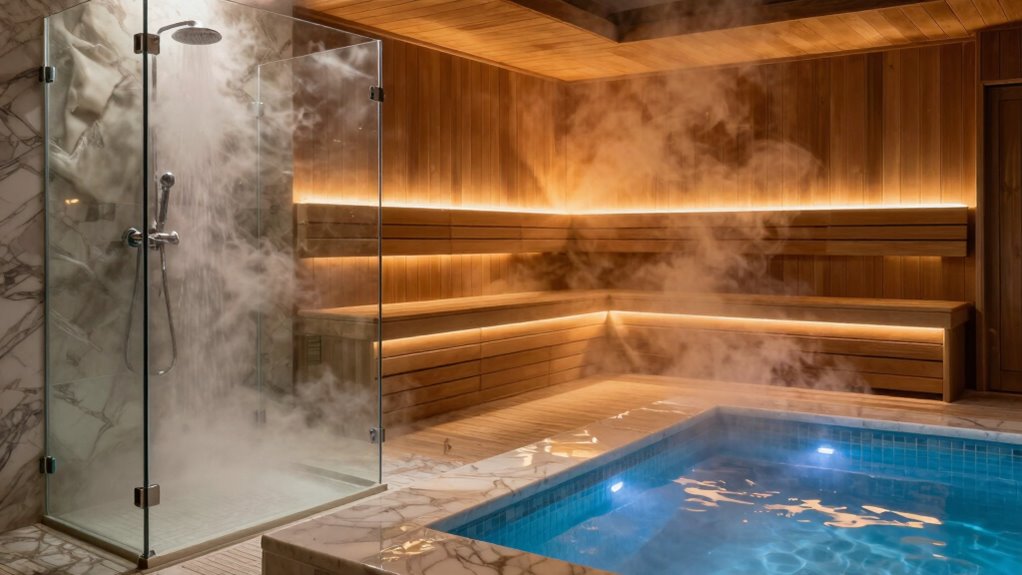

Steam showers, saunas, and cold plunges each target different wellness goals. Steam showers and saunas promote sweating, helping with detoxification and improving circulation. Cold plunges invigorate your nervous system, reduce inflammation, and boost recovery. Warm therapies focus on relaxation and mental renewal, while cold dips balance your body and enhance healing. Understanding these differences helps you choose the best method for your needs. Keep exploring to discover how combining these practices can maximize your wellness routine.

Get decor and gifts delivered free — and shop member deals
- Fast, free delivery on millions of items
- Access to Prime Big Deal Days deals on October 6–7
- Prime Video, Amazon Music and more included
Key Takeaways
- Saunas and steam showers primarily promote sweating for detoxification and improved circulation.
- Cold plunges help reduce inflammation and invigorate the nervous system through cold exposure.
- Saunas and steam rooms focus on warmth to facilitate relaxation and mental clarity.
- Cold plunges balance body temperature and accelerate recovery after heat therapy.
- Each method has distinct cultural origins and wellness benefits, serving different health and relaxation goals.

In recent years, steam showers, saunas, and cold plunges have gained popularity as accessible ways to boost overall wellness. But understanding their differences starts with exploring their historical origins and cultural traditions. Saunas, for example, have roots in ancient Finland, where they’ve been a vital part of daily life for thousands of years. Finnish culture views the sauna as more than just a way to relax; it’s a place for social connection and spiritual cleansing. Similarly, traditional Russian banyas share similarities with Finnish saunas but incorporate steam and rituals that have been passed down through generations. These practices emphasize cleansing, community, and ritual, making them deeply embedded in cultural identities. Meanwhile, steam showers, although more modern in design, draw inspiration from these age-old traditions of heat therapy. They mimic steam rooms used in ancient Roman baths and Turkish hammams, which served as social and cleansing spaces. These ancient practices highlight the long-standing belief that heat facilitates physical and mental renewal. Additionally, the cultural significance of these traditions underscores their enduring role in promoting holistic wellness. Furthermore, heat therapy traditions demonstrate the universal human pursuit of healing through natural elements. Cold plunges, on the other hand, have their origins in Nordic and Japanese traditions. The Nordic practice of plunging into icy waters after a sauna session is believed to invigorate the body and sharpen the mind. Similarly, Japanese onsen bathing combines hot spring soaking with cold water dips to promote circulation and relaxation. These traditions emphasize balance—alternating between hot and cold to stimulate the body’s natural healing mechanisms. Understanding the cultural diversity behind these practices can deepen your appreciation for their significance and help you select the most suitable method for your wellness routine. Additionally, modern innovations have integrated technology into these age-old customs, making them more accessible and customizable for individual preferences. While the cultural traditions behind saunas and cold plunges are centuries old, modern wellness trends have adapted these practices for contemporary use. Today, you can find high-tech steam showers and cold plunge pools in gyms and spas worldwide, but their core principles remain rooted in these ancient customs. Recognizing the significance of natural elements in these practices highlights their enduring connection to the environment and holistic health. Despite their shared focus on health, each method offers distinct benefits. Saunas and steam showers promote sweating, helping to detoxify the body and improve circulation. Cold plunges, however, are primarily used to reduce inflammation, invigorate the nervous system, and boost recovery. Recognizing their origins and traditions helps you appreciate how these practices are more than just wellness fads—they’re part of a rich history of human pursuit for health and vitality. By understanding their cultural significance, you can better tailor your experience to suit your wellness goals, whether that’s relaxation, recovery, or mental clarity. Ultimately, each method has its unique role, and knowing their roots allows you to make informed choices about incorporating them into your routines.
As an affiliate, we earn on qualifying purchases.
Frequently Asked Questions
How Long Should I Spend in Each Wellness Treatment?
You should spend about 15-20 minutes in a sauna or steam shower, honoring their historical origins and cultural significance in promoting relaxation. Cold plunges are best for 1-5 minutes to stimulate circulation and invigorate the body. Listening to your body is key. Historically, these practices have been part of many cultures’ wellness rituals, so adapt your time based on comfort and personal tolerance, ensuring safety and maximum benefit.
Can These Therapies Be Combined Safely?
You can combine these therapies safely if you pay attention to therapy compatibility and safety considerations. For example, alternate hot and cold treatments to boost circulation, but avoid overdoing it—limit your sessions and listen to your body’s signals. Stay hydrated and consult with a healthcare provider if you have underlying health conditions. By respecting these guidelines, you can enjoy the benefits of each treatment without risking your health.
Are There Any Health Conditions That Contraindicate Use?
You should avoid using steam showers, saunas, or cold plunges if you have certain medical restrictions, like cardiovascular issues or respiratory conditions, as these therapies can strain your heart or lungs. Allergy concerns are also important—if you’re allergic to certain materials or scents used, you might experience adverse reactions. Always consult your healthcare provider before trying these therapies, especially if you have health conditions or allergies, to guarantee safe use.
What Are the Costs Associated With Installing These Features?
You’ll find installation costs vary depending on the feature and your home setup, typically ranging from $2,000 to $10,000. Maintenance expenses also differ: steam showers need regular sealing, saunas require cleaning, and cold plunges might need filtration system upkeep. Budget accordingly for both initial installation and ongoing maintenance to guarantee these wellness features operate efficiently and last longer, enhancing your health routine without unexpected expenses.
How Often Should I Use Each for Optimal Benefits?
Think of your wellness routine as a symphony—each element plays a essential part. Use steam showers 3-4 times a week to enhance relaxation techniques and improve skin benefits by opening pores. Saunas are best 2-3 times weekly to boost circulation and relax muscles. Cold plunges, done 1-2 times a week, invigorate your system and reduce inflammation. Balance these practices for peak health and a harmonious mind-body connection.
Conclusion
Remember, each wellness tool offers unique benefits: steam showers relax muscles, saunas promote circulation, and cold plunges boost recovery. Did you know that cold water immersion can reduce inflammation by up to 20%? By understanding these differences, you can tailor your routine to meet your specific health goals. Incorporate the right mix for your body, and you’ll experience peak wellness—whether that’s relaxation, recovery, or resilience.
Halloween Picks
halloween
As an affiliate, we earn on qualifying purchases.