

To optimize your bedroom temperature for restful sleep, aim for a cozy 60-67°F (15-19°C), which helps your body relax and fall asleep faster. Keep air circulating with fans or open windows, and maintain humidity levels between 40-60% to prevent discomfort. Proper ventilation and air quality also make a difference. If you want to learn how to create the perfect sleep environment, keep exploring these tips for better rest and health.
Key Takeaways
- Maintain bedroom temperature between 60°F and 67°F (15.5°C to 19.5°C) for optimal sleep comfort.
- Use fans or ventilation to promote air circulation and prevent stuffiness during sleep.
- Keep humidity levels between 40% and 60% to avoid dryness or excess dampness that disrupts sleep.
- Regularly monitor air quality and adjust humidifiers or dehumidifiers to maintain a healthy environment.
- Ensure vents are unobstructed and incorporate temperature control devices like heat pumps for consistent comfort.
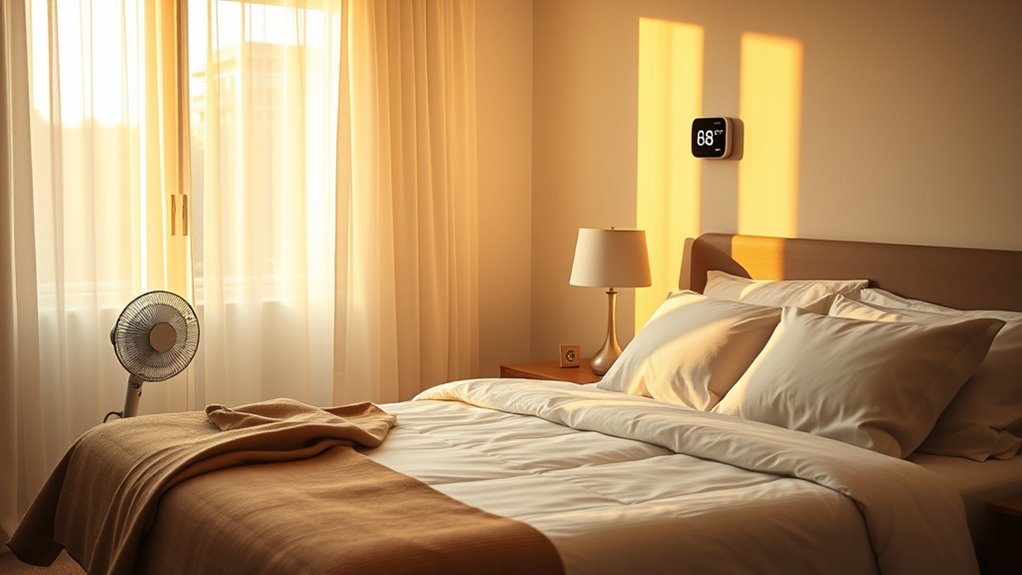
Getting your bedroom temperature just right is essential for a good night’s sleep. When the room feels comfortable, your body can relax more easily, helping you fall asleep faster and stay asleep longer. One of the key factors in creating this ideal environment is ensuring proper air circulation. Good air circulation prevents the room from becoming stuffy or stagnant, which can disrupt your sleep and lead to discomfort. By allowing fresh air to flow through your space, you help regulate temperature naturally and avoid hot spots or cold drafts that can wake you up during the night. Using a fan or opening a window during the day can promote better airflow, especially if you keep your bedroom door open or invest in a ventilation system.
Proper air circulation helps regulate bedroom temperature and promotes restful sleep.
Along with air circulation, humidity control plays a crucial role in optimizing your sleeping environment. Too much humidity can make the air feel heavy and damp, leading to a sticky sensation that interferes with your rest. Excess moisture can also encourage mold growth and dust mites, which are common allergens. Conversely, very low humidity can cause dry skin, irritated sinuses, and discomfort that keeps you tossing and turning. You should aim to keep humidity levels between 40% and 60%. Using a humidifier or dehumidifier can help you reach this balance, depending on your climate and the season. For example, during winter months, adding moisture to the air can prevent dryness, while in humid summers, reducing excess moisture can keep the room comfortable.
Maintaining proper air circulation and humidity control isn’t complicated, but it requires some attention. Keep vents clear of obstructions and consider installing an air purifier if your room tends to accumulate dust or allergens. Regularly monitoring humidity levels with a hygrometer can help you adjust your humidifier or dehumidifier accordingly. Additionally, placing a fan in a strategic spot can help distribute air evenly, preventing hot or cold zones. If you notice condensation or mold, take steps to improve airflow and reduce excess moisture. These measures not only contribute to a more comfortable sleep environment but also promote better overall health and well-being.
Incorporating good air circulation and humidity control into your bedroom setup can make a noticeable difference. When your space feels fresh, balanced, and well-ventilated, you’ll find it easier to unwind and enjoy restful sleep. Small adjustments, like opening a window or using a portable fan, can have a big impact on your sleep quality, helping you wake up feeling more refreshed and energized. Additionally, considering heat pump systems with humidity control features can further enhance your bedroom environment by maintaining consistent and comfortable conditions throughout the night.
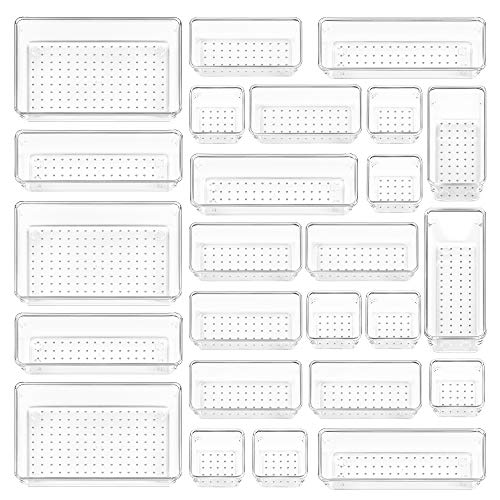
Vtopmart 25 PCS Clear Plastic Drawer Organizers Set, 4-Size Versatile Bathroom and Vanity Drawer Organizer Trays, Storage Bins for Makeup, Bedroom, Kitchen Gadgets Utensils and Office
- Versatile Drawer Organizer: Suitable for bathroom, kitchen, office, and more
- Includes 25 Storage Bins: Four sizes for customized organization
- Multiple Sizes Included: 9x6x2, 9x3x2, 6x3x2, 3x3x2 inches
As an affiliate, we earn on qualifying purchases.
Frequently Asked Questions
Can Ambient Humidity Affect Sleep Quality at Optimal Temperatures?
Yes, ambient humidity can affect your sleep quality even at ideal temperatures. If humidity levels are too high, moisture control becomes difficult, leading to a damp, uncomfortable environment that can cause restless sleep. Conversely, low humidity can dry out your skin and throat, disrupting rest. Maintaining balanced humidity levels helps create a cozy, comfortable space, ensuring moisture stays in check and you sleep soundly through the night.
How Does Room Temperature Impact Different Age Groups’ Sleep?
As you age, room temperature influences your sleep cycle and circadian rhythm differently. Younger individuals often sleep better in cooler environments, while older adults might prefer slightly warmer settings. Imagine a gentle night breeze versus a cozy blanket—each impacts rest uniquely. You can optimize your sleep by adjusting the temperature to match your age group, helping your body maintain its natural rhythm and enjoy more restorative sleep every night.
Are There Specific Bedding Materials That Work Better at Certain Temperatures?
You should choose bedding textures and fabric breathability based on your room temperature. For warmer nights, opt for lightweight, breathable fabrics like cotton or linen to stay cool. If it’s cooler, thicker materials like flannel or fleece provide extra warmth. Breathable fabrics help regulate your body temperature, ensuring you stay comfortable throughout the night. Selecting the right bedding materials enhances sleep quality by maintaining a consistent, comfortable temperature.
What Is the Best Way to Measure and Monitor Bedroom Temperature Accurately?
You can guarantee accurate temperature measurement by using a reliable thermometer, preferably a digital one known for high accuracy. Smart temperature sensors are a great upgrade, offering real-time monitoring and alerts. Don’t rely solely on your thermostat, as it might not reflect the actual bedroom conditions. Place sensors away from windows or drafts, and regularly calibrate your devices for the most precise readings, helping you create the perfect sleep environment.
How Quickly Should I Adjust Room Temperature for Better Sleep?
You should adjust your room temperature gradually to prevent sudden climate control changes that cause uncomfortable temperature fluctuations. Aim to modify the thermostat by about 1-2 degrees Fahrenheit every 30 minutes until you reach the ideal sleep temperature. This steady adjustment helps your body adapt comfortably, ensuring ideal sleep conditions without shocking your system with abrupt shifts in temperature. Consistent, gentle climate control promotes better rest and minimizes sleep disruptions.
Conclusion
By setting your bedroom temperature just right, you create a sleep sanctuary that feels as peaceful as a serene oasis. When you keep your room around 60-67°F, you’ll drift into restful sleep faster than you can imagine—like sinking into a cloud of pure comfort. Don’t let an uncomfortable temperature turn your nights into battles; instead, embrace the perfect climate and wake up feeling refreshed and ready to conquer the day. Your best sleep awaits!