TL;DR

Get decor and gifts delivered free with Prime
- Fast, free delivery on millions of items
- Prime Video, Amazon Music and more included
- Member-only deals all year
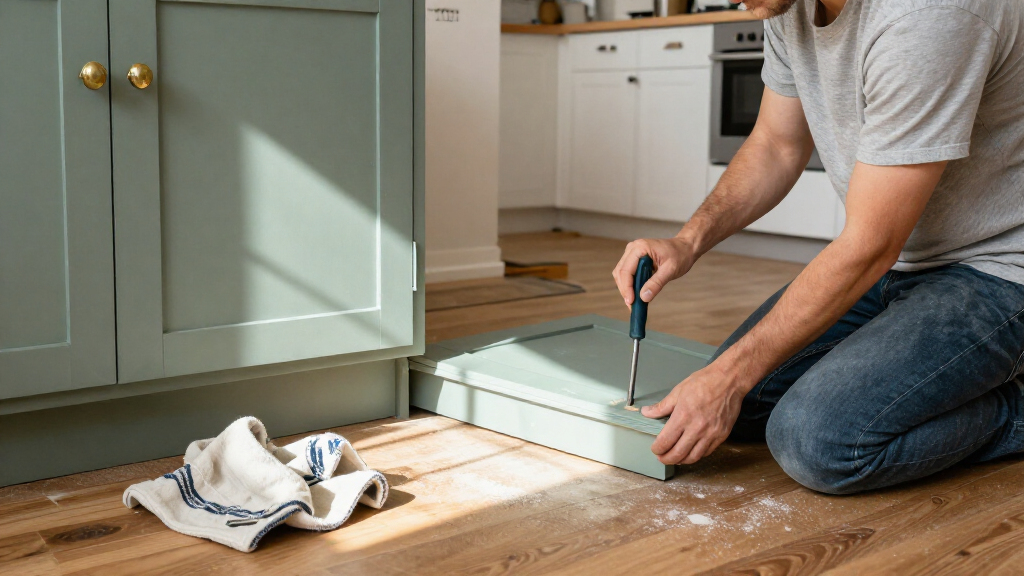
An Ideal Home contributor says she and her partner have been renovating their 1700s house gradually since moving in during February 2023. She credits the slower approach with helping them understand how they use the home, manage stress and avoid some rushed purchases; these are personal observations, not measured results or general guarantees.
The contributor describes slow renovating as a move away from quick makeovers and deadline-driven work, in favour of more considered decisions and less overconsumption. She and her partner spent about nine months living in the house before making major changes. During that time, they observed their everyday routes, where they spent evenings and how light changed across the rooms and seasons.
The work has proceeded in stages. The couple moved in in February 2023; they carried out rewiring, replumbing and floor-plan changes from December 2023 into January 2024, and completed a bathroom during that period. Later work included flooring, a roof, windows, a wildlife pond, a kitchen and a bedroom conversion. The report says they had started replastering upstairs by September 2026, with two bedrooms, the staircase, a living room and an en suite still to complete.
The writer gives examples of costly errors during an earlier rush to coordinate trades and order materials: she bought more socket and switch faceplates than needed, then lost them, and ordered the wrong bathroom tile. She says taking more time has made it easier to think through purchases. The report also describes using a freestanding dresser and table to test kitchen circulation before settling on an island size. It does not provide a total renovation budget or quantify savings.
How a Longer Schedule Shapes Decisions
The account highlights a practical trade-off for homeowners: a prolonged renovation can leave rooms unfinished for years, but it can also give residents time to learn what works before committing to permanent layouts and purchases. In this couple’s case, observing daily routines informed design decisions, while staging the kitchen helped them test circulation before fixing the island dimensions.
The writer also says removing a fixed completion deadline has helped the couple protect their well-being and relationships, by allowing them to postpone jobs when needed. That is her experience, rather than evidence that slow renovation is less stressful or cheaper for every household. Delaying work may not suit homes with urgent repairs, safety problems or constraints imposed by contractors, budgets or living arrangements.
Products Worth Considering

Philips Hue Festavia 130-Foot Indoor/Outdoor Smart String Lights, 500 LEDs

Philips Hue Smart LED Candle Light Bulb (B39, E12) – 2 Pack

eufy Security Video Doorbell E340 Kit with Chime, 2K Resolution and 8GB Local Storage
As an affiliate, we earn on qualifying purchases.
From a 2023 Move to Staged Work
The contributor contrasts this project with an earlier renovation that took about two years before a job relocation prompted a move. For the current project, she says she wanted to preserve the older property’s character while making it fit the couple’s needs. The report describes a phased timeline, with substantial gaps between some projects rather than a single continuous build.
Her account also responds to a familiar pressure in home-improvement media: highly compressed makeovers that can make a renovation appear quick and straightforward. The writer says family and friends have asked when the work will finish and whether the couple will move before enjoying the completed home. Those reactions are reported as part of the household’s experience; the source does not establish how common slow renovating is among homeowners.
““I wanted to take my time and really learn to live in the process of it all.””
— Amy Reeves, writing for Ideal Home
Costs and Completion Date Remain Unreported
The source offers one household’s account and does not establish whether the approach reduced the project’s overall cost, prevented more mistakes than it caused, or lowered material waste. The supplied report discusses waste-conscious renovation but ends before giving details that would support a specific outcome or measurement. It also does not give a final budget, total project cost or completion date.
The renovation was still underway in September 2026, according to the report, with several spaces left to complete. It is unclear how long those projects will take, whether the household’s plans or priorities will change, and what constraints may affect the schedule.
Remaining Rooms Set the Next Phase
The couple’s next work, as described in the report, includes finishing two bedrooms, the staircase, a living room and an en suite. The source says upstairs replastering had begun in September 2026, but does not identify a deadline for finishing the remaining rooms or detail which job will follow.
For now, the reported approach is to continue at a pace the couple considers manageable, making design and purchasing decisions as they gain experience living in the house. Any later account of the project would be needed to confirm its final timeline, costs and completed scope.
Key Questions
What does slow renovating mean in this report?
The writer uses slow renovating to describe making home improvements gradually, with time to consider design choices instead of rushing toward a quick makeover or fixed completion deadline.
When did the couple begin renovating their house?
They moved into the 1700s house in February 2023. The report lists major work beginning later that year and continuing through September 2026.
What benefits does the writer report?
She says living in the home before making major changes helped them adapt designs to their routines and changing light, while a slower pace gave them more time to make decisions and reduce pressure. These are personal observations, not independently measured results.
Has slow renovating been shown to save the couple money?
The report does not provide a total budget or quantified savings. The writer describes avoiding or regretting some rushed purchases, but the source does not establish the project’s overall financial outcome.
Is the renovation finished?
No. The report says that, as of September 2026, the couple still had two bedrooms, a staircase, a living room and an en suite to complete. It gives no final completion date.
Source: idealhome.co.uk