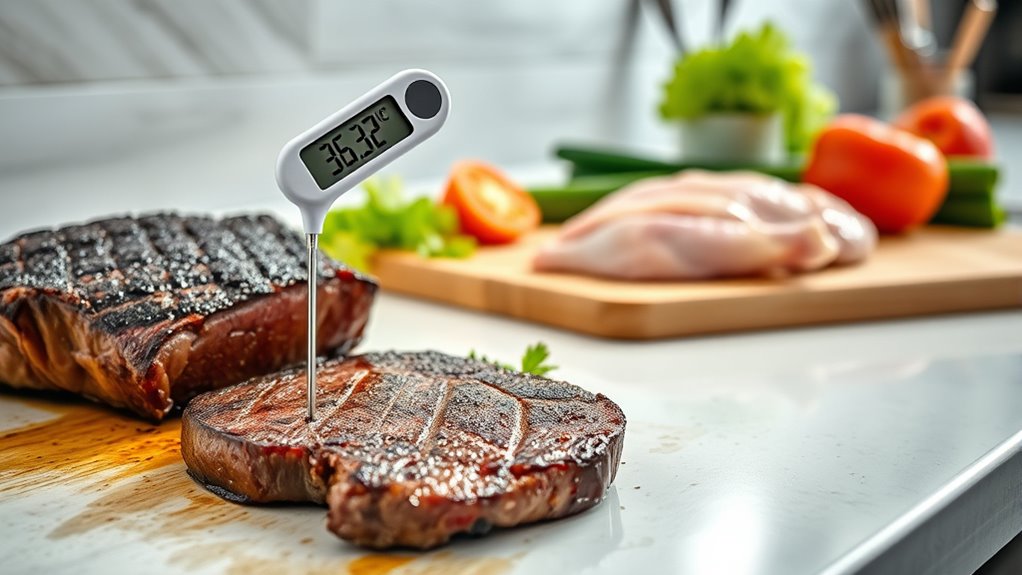

Understanding food safety science helps you prevent foodborne illnesses caused by bacteria like Salmonella and Campylobacter. Bacteria grow quickly in warm, moist, and nutrient-rich environments, so proper cooking is essential. Using a food thermometer ensures your food reaches the right temperature to kill harmful bacteria. Good hygiene and correct storage keep bacteria at bay. Keep learning about how scientific research sets safe cooking temps and safeguard your health every time you prepare food.
Key Takeaways
- Proper cooking to specific temperatures kills harmful bacteria like Salmonella and Campylobacter.
- Using a food thermometer ensures foods reach safe internal temperatures.
- Bacteria need moisture, warmth, and time to multiply; controlling these factors prevents growth.
- Cross contamination transfers bacteria from raw to cooked foods via surfaces, utensils, or hands.
- Prompt refrigeration of leftovers slows bacterial growth and maintains food safety.
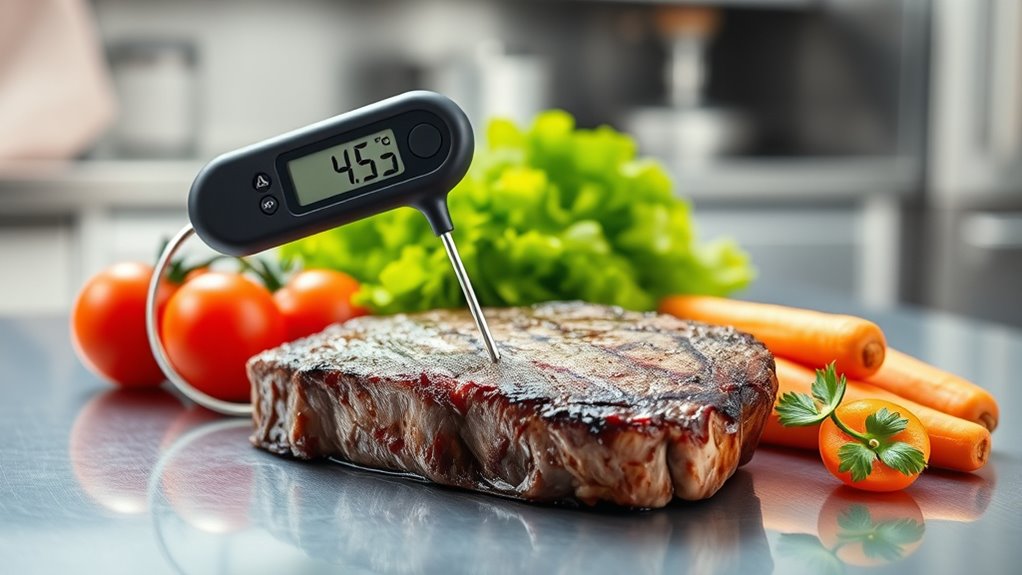
Have you ever wondered how scientists guarantee the food we eat is safe? It all comes down to understanding the science of food safety, especially how bacteria can contaminate our meals and cause illness. One critical aspect is recognizing cross contamination risks, which happen when harmful bacteria transfer from raw foods to cooked or ready-to-eat items. For example, using the same cutting board for raw chicken and vegetables without proper cleaning can transfer bacteria like Salmonella or Campylobacter. These bacteria thrive when given the right conditions, so controlling cross contamination is essential to prevent outbreaks. It’s not just about avoiding direct contact; bacteria can spread through utensils, hands, and surfaces, making vigilant hygiene practices essential.
Understanding bacterial growth factors helps you see why certain foods become risky if mishandled. Bacteria need specific conditions to multiply—mainly moisture, warmth, food particles, and time. If you leave cooked food out at room temperature for too long, bacteria can rapidly multiply, increasing the risk of foodborne illnesses. Recognizing these growth factors helps you manage food properly. For instance, chilling leftovers promptly slows bacterial growth, and cooking foods to the right temperature kills most bacteria present. Additionally, using specialized equipment like food thermometers ensures accurate temperature measurement, which is crucial for safety. Proper cooking temperatures are a scientific standard, based on extensive research, that helps you confidently prevent foodborne illnesses. Not only do they kill bacteria, but they also reduce the risk of cross contamination by ensuring that bacteria present in raw ingredients are eliminated during cooking.
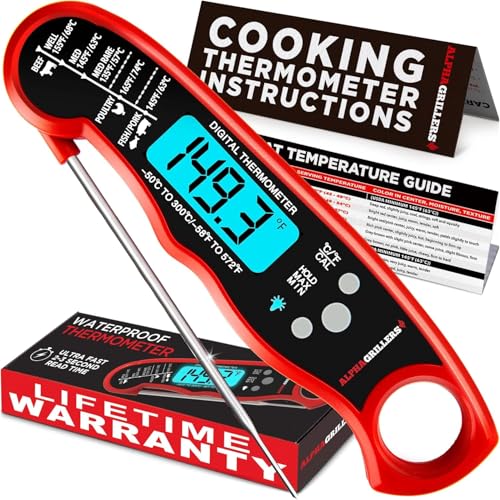
Alpha Grillers Meat Thermometer Digital – Instant Read Food Thermometer for Cooking & Grilling – Professional Kitchen Birthday Gifts for Men, Him, Dad, Husband, Boyfriend
Instant Read Food Thermometer | Our instant read thermometer features a temperature probe and advanced, highly accurate technology…
As an affiliate, we earn on qualifying purchases.
As an affiliate, we earn on qualifying purchases.
Frequently Asked Questions
How Does Bacteria Survive High Cooking Temperatures?
You might wonder how bacteria survive high cooking temperatures. Some bacteria have heat resistance, allowing them to withstand thermal sterilization methods. They protect themselves with tough cell walls or form spores that can endure extreme heat. When you cook food, guarantee it reaches the recommended internal temperature to break down these defenses. Proper cooking destroys most bacteria, but understanding heat resistance helps you prevent survival through inadequate heating.
Are There Bacteria Resistant to Standard Food Safety Measures?
Imagine eating undercooked chicken and still getting sick—that’s bacteria resisting standard safety measures. Some bacteria develop antibiotic resistance and form biofilms, making them tougher to eliminate. For example, Salmonella can survive despite proper cooking if it’s part of a biofilm or resistant strain. These adaptations help bacteria survive high temperatures and cleaning, emphasizing the need for rigorous hygiene and cooking protocols to guarantee food safety and prevent outbreaks.
How Can Cross-Contamination Be Prevented During Cooking?
To prevent cross-contamination during cooking, you should practice proper utensil handling and maintain good kitchen hygiene practices. Always use separate cutting boards and utensils for raw meat and vegetables, and wash your hands thoroughly before and after handling different foods. Clean countertops and utensils frequently, and store raw meat separately from cooked or ready-to-eat items. These steps help stop bacteria from spreading and keep your food safe.
What Are the Signs of Bacterial Contamination in Food?
You can spot bacterial contamination in food through visual cues like discoloration, sliminess, or mold growth. Additionally, trust your sense of smell—if the food has a sour, rotten, or off odor, it’s likely contaminated. Always discard food with unusual appearance or smells, as these signs indicate bacterial growth. Remember, bacteria can’t always be seen or smelled, so proper cooking and storage are key to safety.
Do Different Cooking Methods Affect Bacteria Differently?
Different cooking techniques impact bacteria differently by applying heat in various ways. For example, grilling or roasting usually heats food evenly, effectively killing bacteria, while frying or sautéing might create hot spots where bacteria survive if not cooked thoroughly. Bacterial resistance varies, so choosing proper techniques like boiling, steaming, or baking guarantees you reach safe temperatures throughout the food, reducing the risk of contamination and ensuring safety.
Alpha Grillers Meat Thermometer Digital – Instant Read Food Thermometer for Cooking & Grilling – Professional Kitchen Birthday Gifts for Men, Him, Dad, Husband, Boyfriend
Instant Read Food Thermometer | Our instant read thermometer features a temperature probe and advanced, highly accurate technology…
As an affiliate, we earn on qualifying purchases.
As an affiliate, we earn on qualifying purchases.
Conclusion
Now that you understand how bacteria hide in your food and the importance of reaching the right temperatures, you hold the power to protect yourself. Picture steaming dishes, perfectly cooked and safe, with juices running clear and aromas inviting. By knowing these science-backed guidelines, you become a shield against foodborne illness, creating meals that are not only delicious but also safe for everyone at your table. Your kitchen is your fortress—keep it safe, keep it healthy.

Food Safety Temperatures Poster Unframed; Scales Temperatures Wall Poster, Kitchen, Restaurant, Cafeteria (11×14", Paper Poster)
Food safety temperatures wall art is ideal for your kitchen, restaurant, cafeteria, classroom, or any food prep zone…
As an affiliate, we earn on qualifying purchases.
As an affiliate, we earn on qualifying purchases.
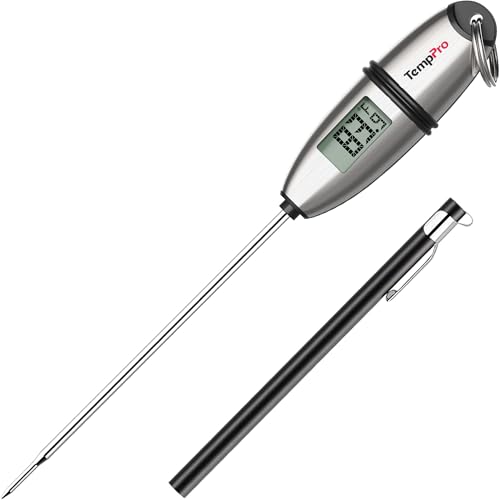
TempPro TP02S Digital Food Thermometer for Cooking Bread Baking Sourdough Liquids, Meat Thermometer Digital with Super Long Probe for Kitchen Candy Making Gift for Dad Husband (Previously ThermoPro)
Fast and Accurate Reading: Kitchen thermometer for cooking features a 1 second readout speed and high accuracy of…
As an affiliate, we earn on qualifying purchases.
As an affiliate, we earn on qualifying purchases.