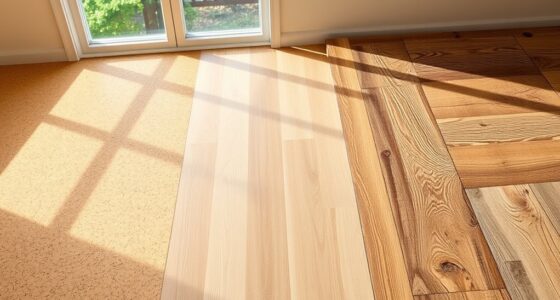
Sustainable furniture materials like bamboo, recycled plastics, and reclaimed wood help you make eco-friendly choices that reduce environmental harm. Bamboo grows quickly and doesn’t contribute to deforestation, while recycled plastics cut waste and lower resource use. Using responsibly sourced or renewable materials supports healthier ecosystems and promotes responsible consumption. By choosing these options, you’re encouraging industries to adopt greener practices. Keep exploring to discover more options that make your furniture choices even more sustainable.
Key Takeaways
- Bamboo is a fast-growing, renewable resource that reduces deforestation and provides durable, eco-friendly furniture options.
- Recycled plastics help decrease landfill waste and reduce the demand for virgin raw materials in furniture manufacturing.
- Other sustainable materials include reclaimed wood, metal, glass, and natural fibers, supporting responsible sourcing and conservation.
- Eco-friendly manufacturing processes prioritize waste reduction, energy efficiency, and non-toxic finishes to minimize environmental impact.
- Choosing sustainable furniture promotes healthier environments and supports brands committed to ethical, environmentally conscious practices.
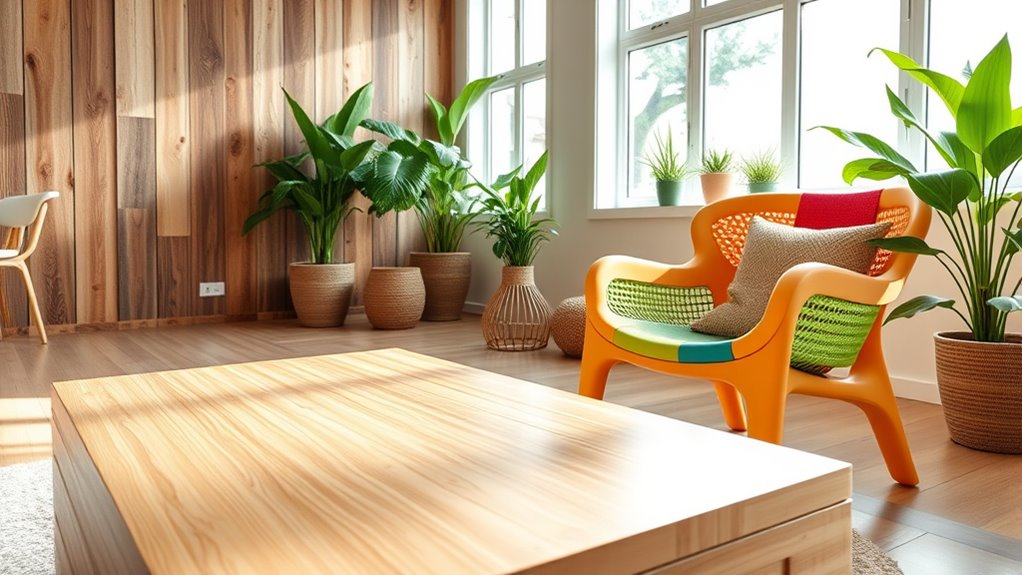
Have you ever wondered how choosing sustainable furniture materials can make a difference for the planet? When you opt for eco-friendly manufacturing practices, you’re actively reducing your carbon footprint and supporting companies committed to environmental stewardship. One of the key aspects of sustainable furniture is renewable resource sourcing, which ensures that the raw materials used are replenished quickly and responsibly, preventing deforestation and habitat destruction. By selecting furniture made from renewable resources like bamboo or reclaimed wood, you’re contributing to a cycle that keeps forests healthy and ecosystems intact.
Eco-friendly manufacturing processes prioritize reducing waste, minimizing energy consumption, and avoiding harmful chemicals. These methods often involve innovative techniques that lower emissions and use less water, making furniture production cleaner and more sustainable. For example, many manufacturers now use non-toxic finishes and adhesives that are better for both the environment and your health. When you choose furniture made through eco-friendly manufacturing, you’re supporting industries that value transparency and sustainability, encouraging others to follow suit.
Eco-friendly manufacturing reduces waste, saves energy, and uses non-toxic finishes for healthier, more sustainable furniture options.
Renewable resource sourcing plays a crucial role in this effort. Bamboo, for instance, is a fast-growing grass that can be harvested in just a few years, unlike traditional hardwoods that take decades to mature. This rapid growth makes bamboo an excellent renewable resource, ensuring that your furniture doesn’t contribute to deforestation. Similarly, reclaimed or recycled materials—like metal, glass, and plastics—are repurposed to create stylish, durable pieces without the need for new raw materials. This approach not only conserves natural resources but also reduces waste in landfills.
When you prioritize sustainable furniture, you’re making conscious choices that support ethical supply chains. Many companies now source their materials responsibly, ensuring fair labor practices and environmentally friendly harvesting methods. This commitment to ethical sourcing means that your furniture isn’t just good for the planet but also supports communities and workers around the world.
In essence, choosing furniture made from eco-friendly manufacturing techniques and renewable resources is an impactful way to make your home more sustainable. It’s about making smarter, more responsible choices that align with your values and protect the environment for future generations. From the way the materials are sourced to how they’re processed and finished, every step can contribute to a healthier planet. By supporting brands that emphasize renewable resource sourcing and eco-friendly manufacturing, you’re helping to drive positive change and encouraging a shift toward a more sustainable and responsible furniture industry.

VASMIA Luggage Rack,Bamboo Suitcase Stand with Storage Shelf,Folding Luggage Stand for Guest Room,Hotel,Bedroom,Heavy-Duty, Holds up to 131 lb, White
【Easy Packing, Happy Trip】 This luggage rack keeps your luggage off the floor, making it easy for you…
As an affiliate, we earn on qualifying purchases.
As an affiliate, we earn on qualifying purchases.
Frequently Asked Questions
How Does the Durability of Bamboo Compare to Traditional Hardwood?
Bamboo strength often rivals traditional hardwood, making it a durable choice for furniture. While hardwood longevity has long been trusted, bamboo’s rapid growth and dense fibers give it impressive resilience against wear and tear. You’ll find that with proper treatment, bamboo can hold up well over time, offering a sustainable alternative that doesn’t sacrifice durability when compared to hardwood’s proven longevity.
Are Recycled Plastics Safe for Indoor Furniture Use?
Recycled plastics are generally safe for indoor furniture, but you should check for chemical safety and indoor air quality. Some plastics may emit VOCs or other chemicals, affecting air quality over time. Look for products labeled low-VOC or BPA-free, ensuring they meet safety standards. Proper ventilation and choosing reputable brands help minimize potential risks, so you can enjoy eco-friendly furniture without compromising health.
What Environmental Benefits Do Sustainable Furniture Materials Offer?
Sustainable furniture materials reduce your carbon footprint by using renewable resources like bamboo and recycled plastics, which lower environmental impact. These materials often require less energy to produce and help conserve natural resources, making your choices more eco-friendly. By opting for sustainable options, you support a healthier planet, reduce waste, and promote responsible resource use. Your furniture choices can make a meaningful difference in protecting the environment for future generations.
Can Recycled Materials Be as Aesthetically Appealing as Natural Options?
Recycled materials can be as aesthetically appealing as natural options, like a chameleon blending seamlessly into its surroundings. Their aesthetic versatility allows you to find stylish, modern, and even rustic designs that celebrate material authenticity. With thoughtful craftsmanship, recycled plastics and other repurposed materials transform into stunning furniture pieces, proving beauty doesn’t have to come at the expense of sustainability. You’ll find that eco-friendly choices can be both eye-catching and authentic.
How Can Consumers Identify Genuinely Eco-Friendly Furniture Products?
You can identify genuinely eco-friendly furniture by checking certification standards like FSC or GreenGuard, which verify sustainable practices. Look for trusted eco labels that guarantee credibility, so you’re confident the product meets environmental and social criteria. Avoid vague claims and research the brand’s sourcing and manufacturing processes. By doing so, you ensure your furniture choices support sustainability and are truly eco-friendly.

Adirondack Square Outdoor Side Table,2-Tier Storage Patio Side Table, HDPE End Tables for Backyard Pool Porch Garden Lawn
【DURABLE MATERIAL】This side tables are made of recycled plastic HDPE material that is more weather resistant than other…
As an affiliate, we earn on qualifying purchases.
As an affiliate, we earn on qualifying purchases.
Conclusion
By choosing sustainable materials like bamboo or recycled plastic, you help reduce environmental impact. Imagine redesigning your living room with a bamboo coffee table—sturdy, stylish, and eco-friendly. Every small decision, from selecting recycled furniture to supporting eco-conscious brands, makes a difference. So next time you shop, remember your choices can promote a healthier planet. Embrace sustainable furniture options and turn your space into a green, beautiful haven for generations to come.
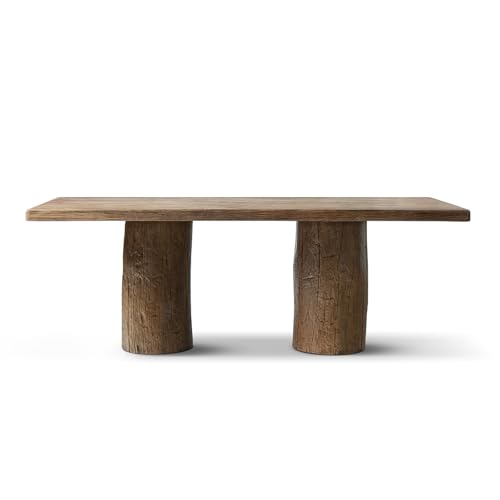
Jennifer Taylor Home Arbor 84" Solid Reclaimed Elm Double Pedestal 8-Person Dining Table, Heritage Medium-Dark Brown Reclaimed Elm
Crafted from solid reclaimed elm wood for sustainable, eco-conscious construction
As an affiliate, we earn on qualifying purchases.
As an affiliate, we earn on qualifying purchases.

Tried & True Original Wood Finish, 8 oz. – Linseed Oil & Beeswax Blend, Ideal for All Woodwork, Long-Lasting Durability, Food Safe Sealer, Non-Toxic Wood Finish
SUPERIOR BLEND OF LINSEED OIL & BEESWAX: Tried and True wood finish is a superior blend of linseed…
As an affiliate, we earn on qualifying purchases.
As an affiliate, we earn on qualifying purchases.