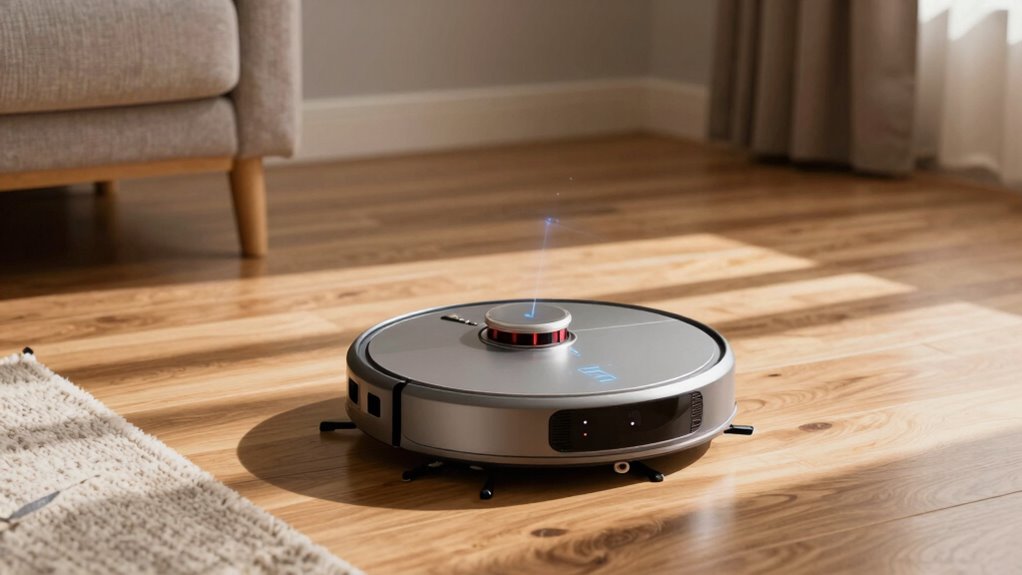

Robot vacuums are smarter than you might think thanks to advanced mapping technologies. Lidar uses laser sensors to create precise, obstacle-proof 3D maps that work well in any lighting, while camera-based systems analyze visuals for detailed mapping, especially in dynamic spaces. Both use sensor fusion to improve accuracy and efficiency. By understanding how these systems differ, you’ll see how they optimize cleaning. Keep exploring to discover even more about what makes these devices so intelligent.

Get decor and gifts delivered free — and shop member deals
- Fast, free delivery on millions of items
- Access to Prime Big Deal Days deals on October 6–7
- Prime Video, Amazon Music and more included
Key Takeaways
- Lidar provides precise 3D mapping and obstacle detection, ideal for complex, cluttered environments.
- Camera-based systems create detailed visual maps, better suited for dynamic, changing surroundings.
- Sensor fusion enhances navigation accuracy, combining data from multiple sensors for reliable cleaning.
- Lidar performs well in various lighting conditions, while cameras may struggle in low light or glare.
- Choosing between lidar and camera depends on home layout, environment complexity, and desired cleaning adaptability.
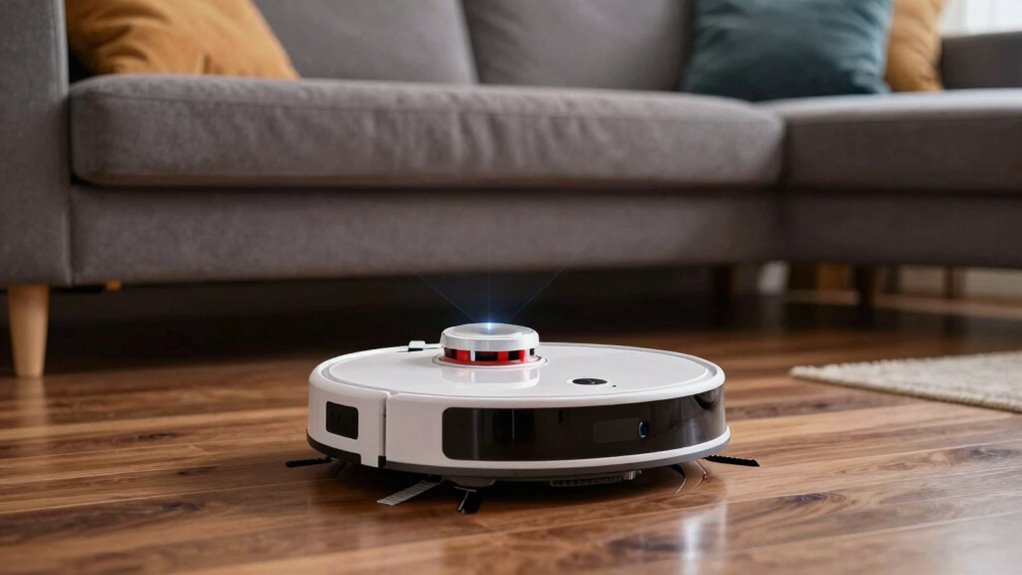
When it comes to robot vacuums, choosing the right navigation system can make a big difference in performance. The core of a robot vacuum’s intelligence lies in its navigation algorithms, which determine how effectively it maps your home and cleans efficiently. Different models use varying approaches, primarily lidar or camera-based mapping, each with its own strengths and limitations. Understanding how these systems work helps you pick the right device for your needs.
Choosing the right navigation system enhances your robot vacuum’s performance and cleaning efficiency.
Lidar-based vacuums rely on laser sensors to create precise, 3D maps of your space. These sensors emit laser beams that bounce off objects, helping the robot detect obstacles and measure distances accurately. The navigation algorithms process this data in real-time, allowing the robot to build a detailed map and plan ideal cleaning paths. Because lidar sensors are less affected by lighting conditions, they perform reliably in both bright and dark environments. This robustness makes lidar a popular choice for those who want a thorough, fuss-free cleaning experience. However, lidar systems often require more complex sensor fusion, combining data from multiple sensors like inertial measurement units (IMUs) and bump sensors to improve accuracy and reliability. Sensor fusion helps the robot compensate for potential blind spots or errors in the laser data, ensuring consistent navigation even in tricky environments.
Camera-based vacuums, on the other hand, utilize visual sensors to map your home. Their navigation algorithms analyze images captured by onboard cameras, recognizing features such as furniture, walls, and even floor patterns. This approach allows the robot to create a detailed visual map, which can be more adaptable in dynamic environments where obstacles might move or new objects are introduced. The advantage here is that cameras can offer more contextual understanding, allowing for more precise navigation around complex furniture arrangements. But cameras tend to be more sensitive to lighting conditions; low light or glare can impact their ability to accurately detect and interpret surroundings. To mitigate this, camera-based systems also employ sensor fusion, combining visual data with other sensors like infrared or ultrasonic sensors. This fusion enhances the robot’s ability to navigate smoothly, even in less-than-ideal lighting or cluttered spaces.
Additionally, advancements in European cloud technology are increasingly supporting the processing and integration of data from these sophisticated navigation systems, enabling smarter and more reliable robot vacuums. Ultimately, your choice depends on your home environment and cleaning priorities. Lidar systems tend to excel in consistent, cluttered spaces, providing reliable, map-based navigation. Camera systems offer more adaptability and detailed visual mapping, which can be beneficial in dynamic or visually complex settings. Both leverage advanced navigation algorithms and sensor fusion to deliver smarter, more efficient cleaning. By understanding these underlying technologies, you can choose a robot vacuum that truly understands your home, making cleaning less of a chore and more of a smart, automated process.
As an affiliate, we earn on qualifying purchases.
Frequently Asked Questions
How Do Robot Vacuums Adapt to Dynamic Obstacles?
You’ll find that robot vacuums adapt to dynamic obstacles through obstacle detection and intelligent path recalculation. When they encounter a new object, sensors instantly recognize it, and the vacuum adjusts its course accordingly. It then recalculates the most efficient path, avoiding the obstacle and continuing cleaning seamlessly. This real-time response guarantees thorough cleaning, even in unpredictable environments, making your robot more effective and reliable around moving or unexpected obstacles.
What Maintenance Is Required for Lidar and Camera Systems?
Imagine your robot vacuum’s sensors as vigilant guardians, tirelessly watching over your home. To keep them sharp, you need to regularly perform sensor calibration and clean the lenses or Lidar units to maintain hardware durability. Check for dust, debris, or misalignment, especially after moving furniture or upgrades. Proper maintenance guarantees your vacuum’s mapping remains accurate, prolonging its lifespan and keeping your home spotless with minimal fuss.
Can These Robots Map Multi-Floor Homes Effectively?
You can rely on these robots to handle multi-floor navigation effectively, especially if they feature advanced obstacle detection. They often use sensors like Lidar or cameras to create accurate maps, allowing seamless movement between floors with minimal user input. Just guarantee the robot recognizes stairs or barriers, and it’ll avoid falls or getting stuck. Regular maintenance and updates help keep obstacle detection sharp, ensuring your robot navigates multi-floor homes smoothly.
How Secure Is the Data Collected During Mapping?
Your data’s security is like a vault, protected through robust data encryption that keeps your privacy concerns at bay. Manufacturers often prioritize secure transmission, but stay vigilant—check privacy policies and settings. While the mapping data is stored temporarily or in the cloud, encryption acts as a shield, ensuring your home’s details stay confidential. Trust in these measures, but always stay informed to safeguard your personal space against potential breaches.
Do Lidar and Camera Systems Work Equally Well in Low Light?
Lidar systems generally perform better in low light because they rely on laser beams, ensuring consistent navigation accuracy regardless of lighting conditions. Camera systems struggle more in dim environments, affecting their navigation accuracy. Additionally, lidar sensors tend to be more durable for long-term use, while camera sensors may be more vulnerable to dust or damage. So, for low-light performance and sensor durability, lidar usually outperforms cameras.
Conclusion
Think of lidar and cameras as the eyes and compass of a robot vacuum, guiding it through your home’s maze. Together, they symbolize trust and intelligence, making your cleaning buddy smarter with each sweep. Just like a seasoned explorer, it navigates obstacles and secrets in your space, quietly mastering the art of cleanliness. So, next time your vacuum whirs to life, remember—it’s not just cleaning; it’s a tiny, tech-savvy explorer charting its way to perfection.
Fall Picks
fall essentials
As an affiliate, we earn on qualifying purchases.