
Lumens measure how much light a bulb produces, while watts show how much energy it uses. Many still confuse them because, in the past, higher wattage meant brighter bulbs, especially with incandescent lights. Today, watts don’t directly indicate brightness thanks to energy-efficient LEDs and CFLs. To choose the right bulb, focus on lumens for brightness and watts for energy savings. Keep going to discover how understanding this difference can help you make smarter lighting choices.
Key Takeaways
- Lumens measure brightness, while watts indicate energy use; they are not directly interchangeable.
- Historically, wattage was used as a brightness proxy, but modern lighting relies on lumens for accuracy.
- LED and energy-efficient bulbs can produce the same lumens as incandescent bulbs with fewer watts, confusing consumers.
- Relying solely on watts can mislead, as higher wattage doesn’t always mean brighter light.
- Checking lumens ensures you select the desired brightness regardless of bulb technology or wattage.
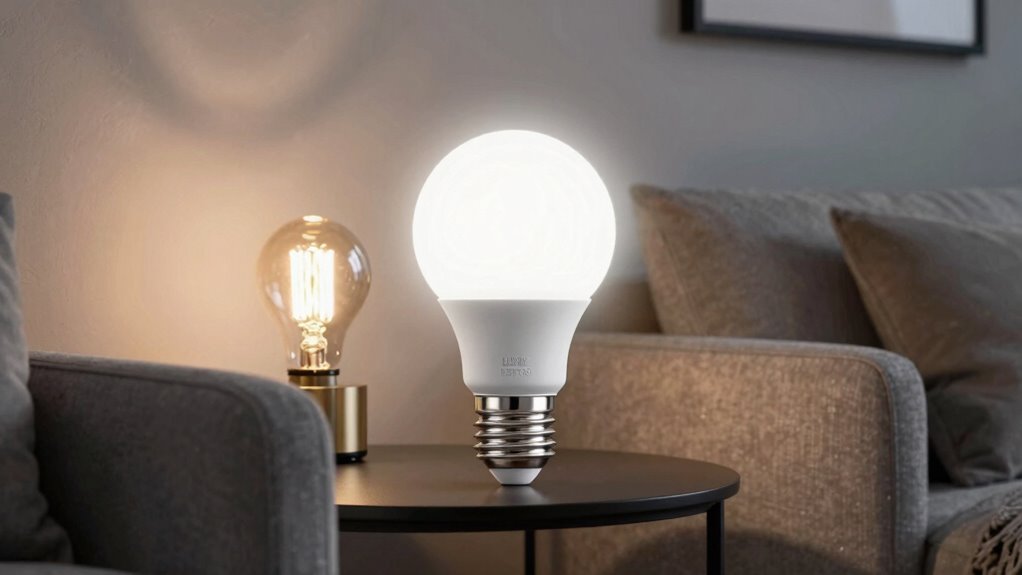
Have you ever wondered what the difference is between lumens and watts when choosing a light bulb? It’s a common question, especially since these terms are often used interchangeably, even though they describe very different things. To understand the distinction, you need to look at both the historical context and how these measurements relate to energy efficiency. Watts have long been used to indicate how much power a bulb consumes, but they don’t directly tell you about brightness. Instead, they show how much energy the bulb uses. In the past, this made sense because older incandescent bulbs had a predictable relationship: a 60-watt bulb produced about 800 lumens. That’s why, historically, consumers looked at wattage to gauge brightness—higher watts meant brighter light.
Wattage once indicated brightness but now mainly shows energy consumption due to technological advances.
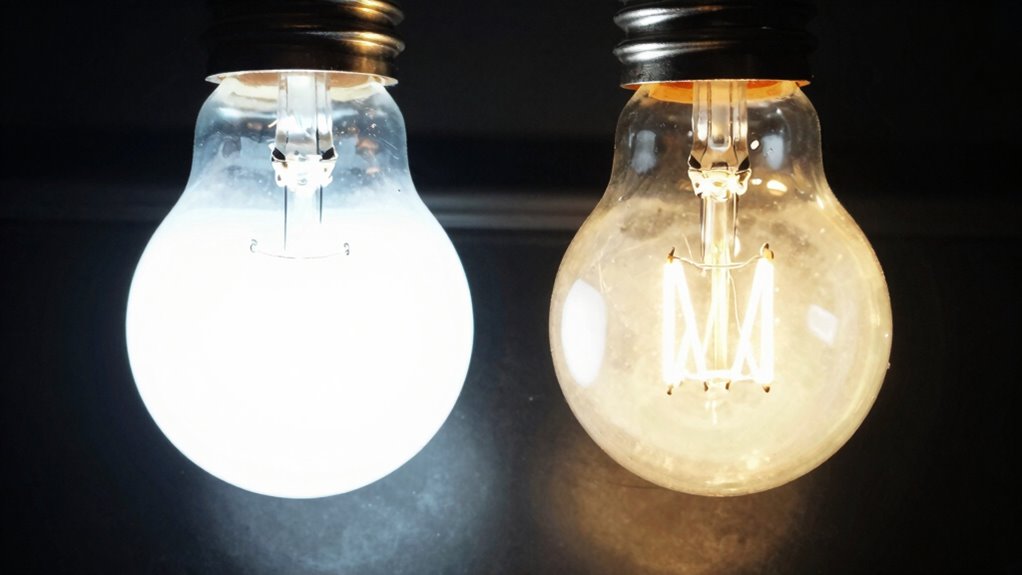
However, this historical context can be misleading today. As technology advanced, manufacturers developed more energy-efficient options like LEDs and CFLs. These newer bulbs produce the same amount of light (lumens) but use fewer watts, making wattage an unreliable measure of brightness. For example, a 10-watt LED can produce the same lumens as a 60-watt incandescent, which helps you see the importance of focusing on lumens for brightness. This shift emphasizes energy efficiency, showing how modern lighting prioritizes the amount of light you get for each unit of energy used. When you understand this, it becomes clear that lumens are a more accurate way to compare brightness across different lighting technologies.
Knowing the historical context helps you realize why wattage was once the primary metric; it was simple and aligned with consumer expectations at the time. But as lighting technology evolved, relying on watts no longer makes sense if your goal is to determine brightness or energy savings. Instead, focusing on lumens allows you to compare lights directly based on their output, regardless of energy consumption. This approach also highlights the benefits of energy-efficient bulbs, which deliver the same brightness with less power. When shopping for bulbs now, look for the lumens rating first, then consider the wattage to understand how much energy you’ll use. This way, you’re making smarter, more informed choices that save money and reduce your environmental impact.
In short, understanding the difference between lumens and watts, especially within their historical context, empowers you to select lighting that fits your needs while being energy efficient. It shifts the focus from simply how much power a bulb consumes to how much light it produces, aligning your choices with current technology and environmental considerations. Recognizing the evolving lighting standards can help you make better decisions in an energy-conscious world.

Maelsrlg 200 Watt LED Bulb Equivalent, A21 22W 3000 Lumen LED Light Bulb, Daylight 5000K, Non-Dimmable E26 Medium Base 120V-High Output 200W LED Light Bulbs for Garage, Shop, Warehouse, 4-Pack
- High-Output Brightness: 3000 lumens for clear visibility
- Energy Efficient: Uses only 22W, replaces 200W bulb
- Standard E26 Base: Easy to install, non-dimmable
As an affiliate, we earn on qualifying purchases.
As an affiliate, we earn on qualifying purchases.
Frequently Asked Questions
How Do Lumens and Watts Relate to Energy Efficiency?
Lumens measure brightness, while watts indicate energy consumption. For better energy efficiency, you want a bulb that provides high lumens with fewer watts. This means you’re getting more light for less energy, making it a smarter choice. When comparing bulbs, look at the efficiency ratio—lumens per watt—to find options that deliver bright light without high energy use, helping you save on electricity bills.
Can Lumens Measure Light Quality or Color Temperature?
Think of lumens as the painter’s brushstrokes, but they don’t capture the entire masterpiece. Lumens measure brightness, not light quality or color temperature. To gauge light quality or the warmth of your glow, you need to look at the light color and color temperature, which tell you whether a space feels cozy or crisp. So, while lumens brighten your room, they don’t reveal the ambiance’s subtle hues.
Are LED Bulbs Brighter Than Incandescent Bulbs With the Same Wattage?
Yes, LED bulbs are generally brighter than incandescent bulbs with the same wattage because they produce more lumens, not just rely on wattage. They also offer better color rendering, making colors appear more natural, and have a longer lifespan. Plus, LEDs consume less energy and last markedly longer, which means you’ll replace them less often, saving money and reducing waste over time.
How Does Room Size Affect the Required Lumens for Proper Lighting?
You should consider your room size to determine the right lumens for proper lighting. Measure your room dimensions to guarantee sufficient lighting coverage, especially in larger spaces. For example, a living room of about 250 square feet generally needs around 2,500 lumens, while smaller rooms require less. Proper lighting coverage ensures the space is evenly lit, creating a comfortable environment without shadows or overly bright spots.
Is Higher Wattage Always Better for Brighter Lighting?
Think of wattage like a car’s speed—more isn’t always better. Higher wattage bulbs can be brighter, but they also consume more energy and tend to burn out faster, shortening bulb lifespan. Instead, focus on lumens for brightness. Opt for energy-efficient bulbs with the right lumen output; you’ll get the brightness you want without wasting energy or replacing bulbs too often. Higher wattage doesn’t guarantee better lighting—just higher costs.
Conclusion
So, don’t let the confusion between lumens and watts turn your next lighting choice into a total nightmare! If you don’t pay attention, you might end up with a bulb that’s brighter than the sun or so dim you’ll think it’s a flashlight from a ghost’s pocket. Keep an eye on lumens for brightness and watts for energy, and you’ll never be left in the dark—literally or figuratively—again!