Human-centric lighting uses smart bulbs that adjust color temperature and brightness throughout the day to sync with your natural hormones and circadian rhythms. During the day, these bulbs boost blue-enriched light to increase alertness and focus. In the evening, they shift to warmer, dimmer tones to signal relaxation and promote melatonin production. By aligning your lighting with your body’s natural cycles, you can improve sleep, mood, and overall well-being—keep exploring to discover how they work to support you.
Key Takeaways
- Human-centric bulbs adjust color temperature throughout the day to support natural hormone production like melatonin and cortisol.
- These bulbs mimic sunlight patterns, promoting alertness in the day and relaxation in the evening.
- They reduce blue light exposure at night, preventing melatonin suppression and aiding sleep.
- The lighting adjusts dynamically to align your circadian rhythm with environmental cues.
- Such bulbs enhance mood, focus, and overall well-being by harmonizing light with your hormonal cycles.
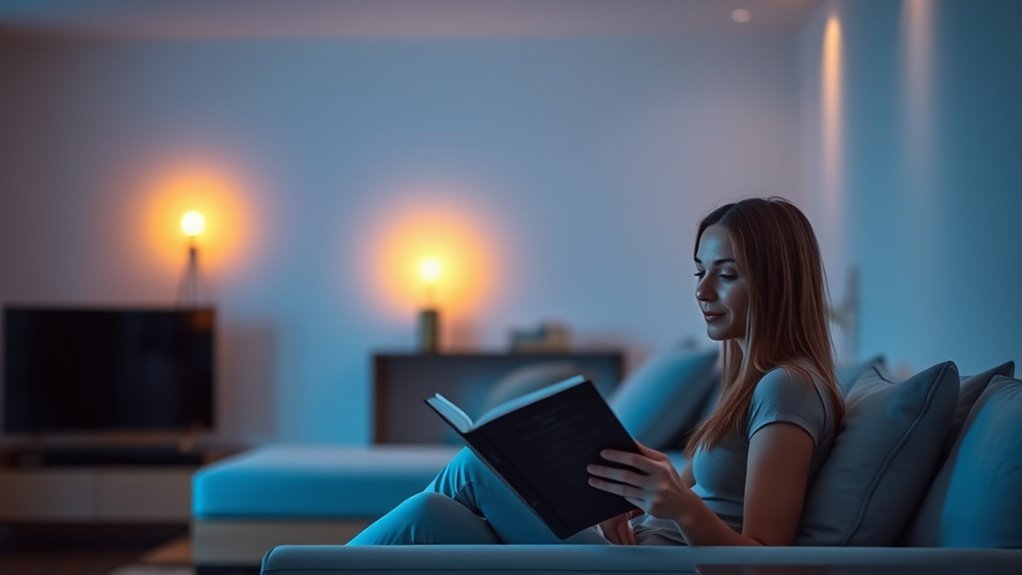
Human-centric lighting is designed to optimize the way artificial light interacts with your body’s natural rhythms. It’s a smart approach that considers your circadian rhythms to help you feel more alert during the day and relaxed at night. Your circadian rhythms are your internal clock, regulating sleep-wake cycles, hormone production, and overall alertness. When these rhythms are aligned with your environment, you experience better sleep, improved mood, and heightened focus. Human-centric lighting adjusts throughout the day to support these natural processes, mimicking the changing patterns of sunlight, so your body can respond appropriately.
One of the key ways this lighting influences your health is through melatonin regulation. Melatonin is the hormone responsible for signaling your body that it’s time to sleep. Its production is naturally stimulated by darkness and suppressed by light. Traditional artificial lighting, especially blue light from screens and bright bulbs, can interfere with melatonin production, making it harder to fall asleep and disrupting your sleep cycle. Human-centric lighting aims to minimize this disruption by adjusting the intensity and spectrum of light in your environment, especially in the evening. As the day winds down, the lighting becomes warmer and dimmer, signaling to your body that it’s time to relax and prepare for sleep.
During the day, these lighting systems boost blue-enriched light to promote alertness and help synchronize your circadian rhythms with the natural cycle. This stimulation enhances your mood, concentration, and productivity. As evening approaches, the lights transition to warmer, softer tones that reduce blue light exposure, supporting melatonin regulation. This careful modulation helps prevent the suppression of melatonin when it’s time to wind down, making it easier for you to fall asleep and achieve restorative rest.

PHILIPS Smart Lighting Connected Light Bulbs, 4-Pack, Color A19 60W 800LM E26 Indoor LED Lights, Smart Bulbs with Motion Detection, Control with Voice or App
- Color Options: 16 million customizable colors
- Human-Centric Lighting: Adjustable warm to cool shades
- Easy Installation: Screw in, download app, connect Wi-Fi
As an affiliate, we earn on qualifying purchases.
As an affiliate, we earn on qualifying purchases.
Frequently Asked Questions
How Does Hormone Fluctuation Affect Lighting Preferences?
Hormonal influence plays a big role in your lighting choices, as your hormones fluctuate throughout the day and month. These changes can make you prefer different lighting conditions—brighter and cooler lights when you’re alert, softer and warmer when you’re winding down. Your body naturally seeks lighting that aligns with your hormonal state, helping you feel more comfortable and supported. Recognizing these patterns can help you select lighting that enhances your well-being.
Are Human-Centric Bulbs Energy-Efficient Compared to Traditional Lighting?
Imagine switching from a traditional bulb to a smart one is like upgrading from a gas-guzzling car to a hybrid. Human-centric bulbs often use LED technology, which offers significant energy savings. Although they may cost more upfront, the long-term cost comparison favors these bulbs due to lower electricity bills. Overall, they’re more energy-efficient and environmentally friendly, making them a smart choice for reducing your energy consumption and costs.
Can These Bulbs Be Installed in Existing Fixtures Easily?
Installation ease varies depending on your existing fixtures. Most human-centric bulbs are designed for standard sockets, making them fairly easy to install if your fixtures are compatible. However, some advanced models might require specific fixture types or additional adapters. Before purchasing, check the product details for fixture compatibility to guarantee a smooth setup. If you’re comfortable with basic wiring, installation generally won’t be complicated.
What Is the Lifespan of Hormone-Responsive Lighting Bulbs?
Coincidence often guides your understanding of biological rhythms and circadian cycles, which impact your daily life. These hormone-responsive lighting bulbs typically last between 15,000 to 25,000 hours, depending on usage and quality. As they adjust to your body’s rhythms, they tend to have a lifespan similar to standard LED bulbs. Proper maintenance and avoiding power surges help maximize their longevity, ensuring consistent support for your natural cycles.
Are There Health Risks Associated With Automated Hormone-Based Lighting?
You might wonder if hormone-based lighting poses health risks. While it’s similar to light therapy used for mood and sleep, overexposure or improper timing could disrupt your natural hormone balance, much like hormone therapy side effects. Always consult a healthcare professional before use, especially if you’re pregnant or have hormone-sensitive conditions. Properly calibrated, this technology aims to support your well-being without significant risks.
Conclusion
Imagine a lighting system that adapts to your hormones, enhancing your well-being. Studies show that human-centric lighting can improve sleep quality by 30%, helping you feel more energized and balanced. By adjusting color temperature and brightness throughout the day, these bulbs support your natural rhythms. As you embrace this technology, you’re not just lighting a room—you’re creating an environment that truly cares for your health and happiness. It’s a bright future tailored just for you.