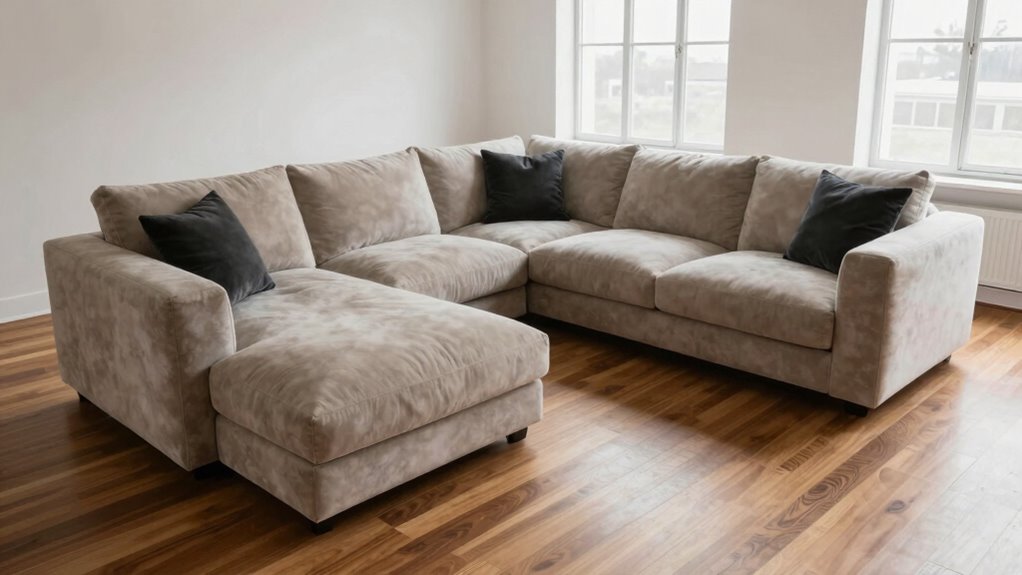

The biggest mistake with modular sectionals is choosing a configuration that doesn’t match your space or needs, which can waste valuable seats and disrupt flow. For example, placing too many small pieces can create gaps or awkward corners, reducing seating capacity. Conversely, an improper layout might block pathways or make the room feel cramped. To maximize both comfort and function, it is crucial to select and arrange modules thoughtfully. Keep exploring to discover how to optimize your sectional’s setup.
Key Takeaways
- Avoid placing modules in a way that blocks pathways, reducing available seating and accessibility.
- Overly symmetrical configurations can waste space; customize layout for optimal seat utilization.
- Failing to consider the room’s shape may lead to awkward arrangements that leave seats unused.
- Neglecting to balance different module sizes can result in uneven seating distribution and wasted capacity.
- Not accounting for traffic flow can cause congestion and prevent efficient use of all seats.
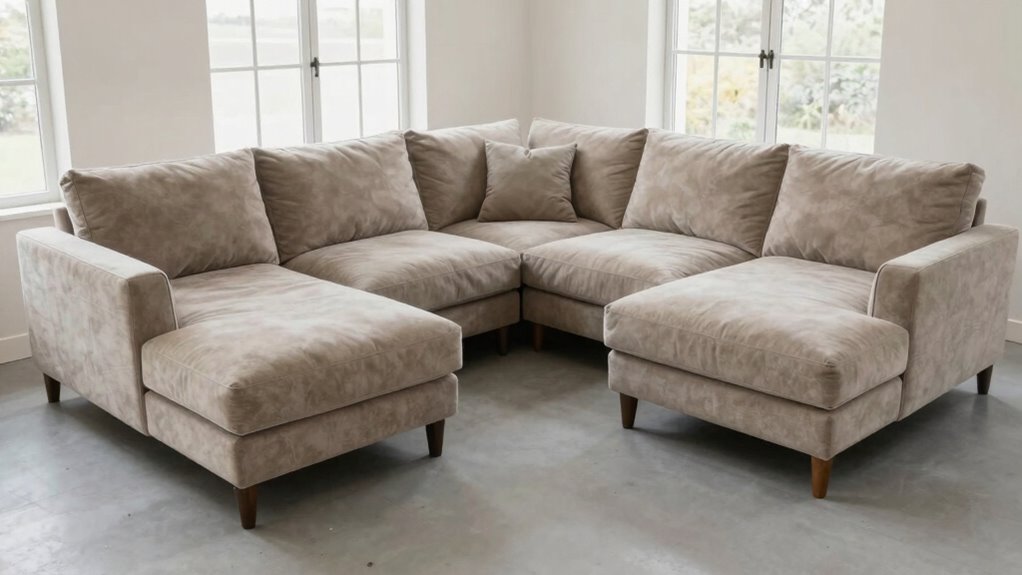
Have you ever wished for furniture that adapts seamlessly to your space and lifestyle? Modular sectionals can offer that flexibility, but only if you make the right choices. One of the most overlooked aspects when configuring your sectional is fabric choices and color coordination. These elements play a vital role in how functional and inviting your space feels. Choosing the right fabrics isn’t just about style; it’s about durability and comfort as well. For daily use, especially in high-traffic areas, you want fabrics that are stain-resistant, easy to clean, and durable enough to withstand the wear and tear. Options like microfiber, performance textiles, or tightly woven fabrics are excellent choices. They help maintain the sectional’s look over time and prevent it from looking worn out prematurely. When selecting fabrics, think about how they’ll feel under your skin and whether they match your lifestyle. If you have kids or pets, opt for fabrics that resist spills and pet hair, so your sectional stays fresh and inviting longer.
Color coordination is equally important when configuring your modular sectional. It’s tempting to pick vibrant shades or contrasting hues that catch the eye, but mismatched or poorly coordinated colors can quickly make your seating look chaotic and waste valuable seating space. Instead, choose a color palette that complements your existing décor and creates a cohesive look. Neutral tones like beige, gray, or taupe offer versatility and make it easier to incorporate accent pillows or throws to add personality. If you prefer bold colors, pick a primary shade that anchors the room, then balance it with subtler tones elsewhere. Keep in mind that the right color choices can make your space feel larger or more intimate, depending on how you coordinate them. The goal is to avoid visual clutter and create a harmonious environment that invites relaxation and conversation.
When configuring your sectional, don’t overlook the importance of fabric choices and color coordination—they’re the foundation for a functional, stylish setup. A poorly chosen fabric can lead to frequent replacements or cleaning headaches, while mismatched colors can make your entire space feel disjointed. Instead, take the time to select textiles that fit your lifestyle and color schemes that enhance your décor. This way, your modular sectional won’t just be flexible; it’ll also be a beautiful, practical centerpiece in your home. By paying attention to these details, you guarantee you’re not wasting seats or sacrificing style for function. Instead, you create a space that’s tailored perfectly to your needs, comfortable to sit on, and visually appealing for years to come.

SUAWY 85 Inch Modular Sectional Sofa with Pull Out Bed,L Shaped 5 Seat Sectional Sleeper Sofa with Storage,Sectional Couches for Living Room,Cloud Modular Couch,Removable Sofa Cover, Dark Grey
Easy Assembly: This sectional sleeper sofa bed Comes with a detailed instruction manual and all necessary tools. Two…
As an affiliate, we earn on qualifying purchases.
As an affiliate, we earn on qualifying purchases.
Frequently Asked Questions
How Can I Measure My Space for a Modular Sectional?
To measure your space for a modular sectional, start with precise space planning. Use measuring techniques like a tape measure or laser measure to record the length, width, and height of your designated area. Account for doorways, walkways, and windows to make certain the sectional will fit comfortably. Sketch a layout to visualize different configurations, helping you avoid the mistake of miscalculating space and wasting seats.
What Materials Are Best for Durability and Comfort?
Did you know that 85% of consumers prioritize durability and comfort when choosing furniture? For modular sectionals, you should pick fabric choices like microfiber or leather, which are both sturdy and easy to maintain. Also, opt for high-density foam for cushions, as it offers long-lasting support and comfort. Combining these materials guarantees your sectional remains inviting and resilient, no matter how often you use it.
Can Modular Sectionals Be Reconfigured Easily Later?
Yes, modular sectionals can be reconfigured later, but you should consider the customization options and potential reconfiguration challenges. Many designs offer flexible pieces that you can rearrange to fit your space, but some configurations may be more difficult or limited by the connectors and hardware used. To avoid frustration, choose modular sectionals with easy-to-use connectors and versatile pieces, ensuring you can adapt your setup as your needs change.
What Is the Average Lifespan of a Modular Sectional?
Like the timeless durability of a classic novel, your modular sectional can last around 10-15 years with proper care. The lifespan depends on the quality of sectional styles and how often you reconfigure it, impacting its seating capacity over time. If you prioritize sturdy frames and quality fabrics, you’ll enjoy its comfort and versatility for years, much like a well-loved story that never fades.
How Do I Clean and Maintain Modular Sectionals?
To keep your modular sectional looking its best, follow simple cleaning tips and maintenance routines. Regularly vacuum to remove dust and crumbs, and spot clean spills immediately with a damp cloth. Use mild detergents for deeper cleaning, and rotate cushions to ensure even wear. Keep fabric protected with slipcovers or fabric protectors, and check the manufacturer’s care instructions for specific guidance. Consistent maintenance helps prolong your sectional’s lifespan and keeps it comfortable.

Tidyard Convertible Modular Sectional Sofa Set in Microfiber Fabric, 85×54.3×23.6 Inches, CertiPUR-US Certified Foam, Machine Washable, Stain Resistant, Soft Brushed Corduroy Cover
1. Enjoy ultimate comfort and versatility with this convertible modular sectional sofa set, featuring a durable microfiber fabric…
As an affiliate, we earn on qualifying purchases.
As an affiliate, we earn on qualifying purchases.
Conclusion
So, before you invest in a modular sectional, remember that the right configuration isn’t just about style—it’s about smart space use. A poorly planned setup can turn your beautiful lounge into a wasted expanse, like a castle built on sand. Think critically, measure carefully, and visualize your needs. Because, after all, a seat saved is a comfort earned—don’t let a simple mistake turn your cozy haven into an empty echo chamber.

ROWHY Oversized Modular Sectional Sofa with Movable Ottoman, 112 Inch 4 Seat Modern Corduroy Sofa Set, Convertible L Shaped Couch for Living Room and Office, Beige
Delivered in 3 Separate Packages: Considering the large volume of product packaging, in order to meet practical needs…
As an affiliate, we earn on qualifying purchases.
As an affiliate, we earn on qualifying purchases.
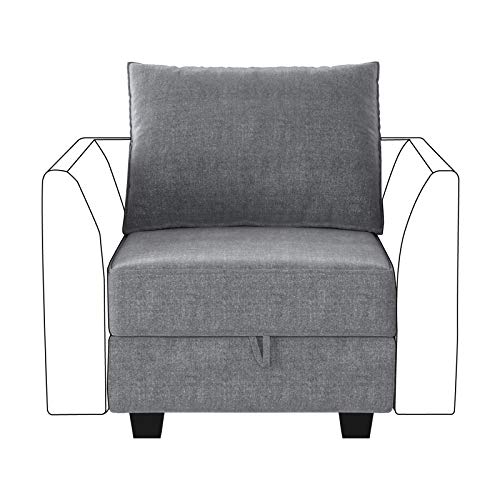
HONBAY Modern Fabric Middle Module for Modular Sofa Customizable Sectional Sofa Couch Accent Armless Chair, Grey
►Middle Module of HONBAY Modular Sofa — Solid wood frame, filled with high-density sponge and wrapped in 100%…
As an affiliate, we earn on qualifying purchases.
As an affiliate, we earn on qualifying purchases.