
To guarantee your induction cooktop works properly, test your pans for compatibility using a simple magnet. If the magnet sticks firmly to the bottom, your cookware is suitable, as induction relies on magnetic properties to generate heat. Avoid using aluminum, copper, or glass unless they have a ferromagnetic layer. Forgetting this step can cause no heat or poor cooking results. Keep exploring to discover more tips for choosing the right pans and optimizing your induction cooking experience.
Key Takeaways
- Use a magnet to test if it sticks to the bottom of the pan; if yes, it’s induction-compatible.
- Look for induction compatibility symbols or labels on cookware before use.
- Check cookware material: ferromagnetic metals like cast iron and some stainless steels work best.
- Avoid aluminum, copper, or glass unless they have a magnetic layer for induction use.
- Conduct a simple “magnet test” to quickly verify if your pans are suitable for induction cooking.
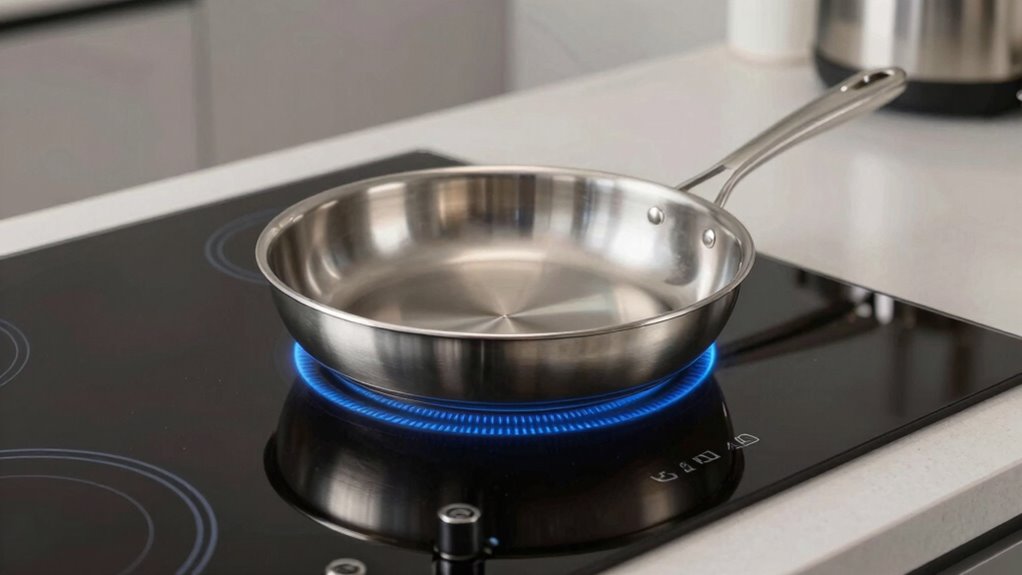
Have you ever wondered how induction cooking works and why it’s gaining popularity? The secret lies in how it uses electromagnetic fields to heat your cookware directly, making it a highly efficient method of cooking. Unlike traditional stoves that heat the burner and transfer heat to the pot or pan, induction stoves generate heat within the cookware itself. This process offers impressive energy efficiency because less heat is lost during transfer, and you get precise control over cooking temperatures. But to enjoy these benefits fully, you need to understand the importance of cookware material, as not all pots and pans are compatible with induction cooktops.
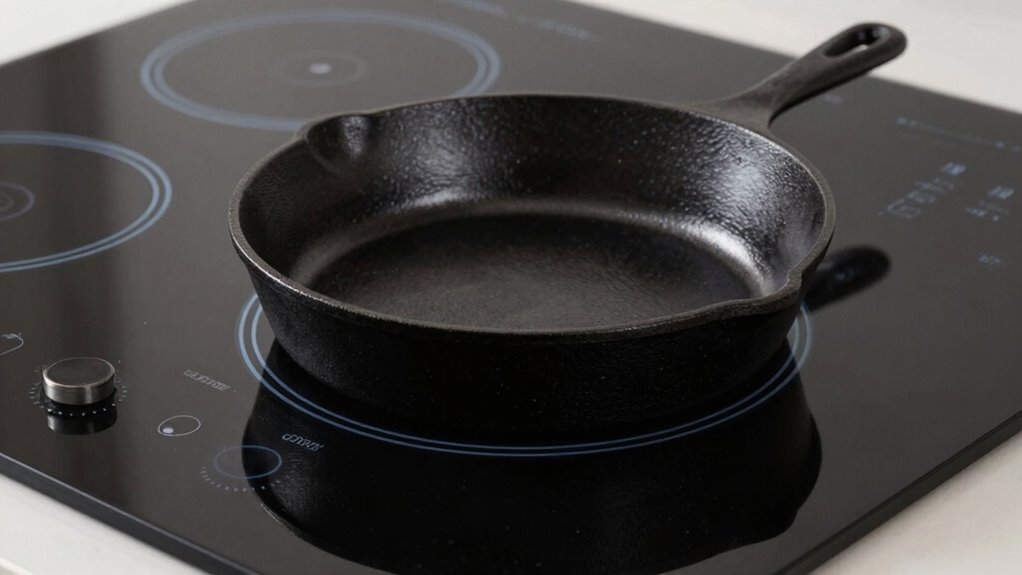
The key to induction cooking is cookware material. Induction stoves require cookware with magnetic properties to work properly. You can’t just use any pot or pan—those made of aluminum, copper, or glass won’t work unless they have a magnetic layer or base. Cast iron and some stainless steel pots are ideal because they contain ferromagnetic materials that respond to the electromagnetic field. When you place compatible cookware on an induction burner, the magnetic field induces electric currents within the cookware, generating heat directly where it’s needed. This not only speeds up cooking but also conserves energy, making induction a more eco-friendly choice compared to traditional electric or gas stoves.
Knowing your cookware material is essential because using incompatible pots and pans means your stove won’t heat up properly or at all. Many new induction cooktops come with sensor technology that detects whether the cookware is suitable, but it’s still smart to double-check. If you’re shopping for new cookware, look for labels indicating compatibility with induction cooking, usually marked with symbols or specific wording. Choosing the right material ensures you maximize energy efficiency, which benefits both your utility bill and the environment. Additionally, understanding cookie categories and how they impact your browsing experience can help you better manage your online interactions and privacy preferences.

Cuisinart Chef’s Classic 11-Piece Stainless Steel Pots and Pans Set, Cookware Set Compatible with Induction, Electric, Gas Cooktops, Aluminum Core for Even Heat, Cool Grip Handles, Dishwasher Safe
KITCHEN COOKWARE SET: This Cuisinart stainless steel cookware set includes 1.5 qt. & 2.5 qt. saucepans w/glass covers,…
As an affiliate, we earn on qualifying purchases.
As an affiliate, we earn on qualifying purchases.
Frequently Asked Questions
Can I Use Non-Magnetic Stainless Steel Pans on Induction Cooktops?
Yes, you can use non-magnetic stainless steel pans on induction cooktops if they have the right magnetic properties. Check if a magnet adheres to the bottom of your stainless steel pan; if it does, it’s compatible. Not all stainless steel has the necessary magnetic properties, so some pans won’t work. Make sure your stainless steel pan is magnetic before using it on your induction cooktop to ensure proper heating.
How Do I Test if My Pan Is Induction-Compatible at Home?
Think of your pan as a key to unfastening induction cooking’s full potential; if it fits, the magic happens. To perform a magnetic test, hold a magnet to your cookware’s base—if it sticks, your cookware materials are compatible with induction. This simple trick quickly reveals whether your pan is induction-compatible, saving you time and ensuring your cooking adventures are smooth and successful.
Are Cast Iron Pans Suitable for All Induction Cooktops?
Yes, cast iron pans are suitable for all induction cooktops due to their durability and magnetic properties. Cast iron durability makes them a reliable choice, and they work well even with high heat. Keep in mind, some stainless steel variations also work, but always check if your stainless steel cookware is magnetic. If it sticks to a magnet, it’s induction-compatible—making cast iron a versatile, long-lasting option.
What Are the Signs My Pan Isn’T Working Properly on Induction?
Your pan’s struggle on induction is like a dancer missing a beat. If it won’t heat evenly, makes strange noises, or the burner stays cool while the pan gets hot, it’s a sign it’s not compatible. Unlike gas, where cookware material isn’t as strict, induction demands magnetic pots—cast iron or stainless steel. Check for a magnetic base to verify your cookware material fits induction vs gas, or your cooktop might be protesting silently.
Do Induction-Compatible Pans Need Special Care or Cleaning?
Yes, induction-compatible pans need special care. You should use gentle cleaning techniques, avoiding abrasive scrubbers that can damage the surface. Wash with warm, soapy water and dry thoroughly to prevent corrosion. For storage, keep your pans in a dry place and stack with soft cloths or paper towels between them to prevent scratches. Proper care guarantees your pans stay efficient and last longer on your induction cooktop.

General Tools AMY6 Magnetic Tester , Blue
EASY TO USE: Easily determine whether something is magnetic.
As an affiliate, we earn on qualifying purchases.
As an affiliate, we earn on qualifying purchases.
Conclusion
Remember, just like a puzzle needs the right pieces to fit perfectly, your cookware must be compatible with induction cooktops. I once tried using a non-magnetic pan and ended up wasting time and energy—until I learned to test with a magnet. Now, I save myself the frustration and cook efficiently. Don’t forget this simple step; it’s the key to revealing your induction stove’s full potential and making every meal a smooth, enjoyable experience.

BEZIA Induction Cookware Set 10 Pieces, Nonstick Pots and Pans Set with Removable Handles, for All Hobs, Stackable Design, Dishwasher/Oven Safe, PFAS Free
Stain-Resistant and Long-lasting: The coating used in non-stick cookware sets is very durable and will not yellow or…
As an affiliate, we earn on qualifying purchases.
As an affiliate, we earn on qualifying purchases.

Lodge Seasoned Cast Iron Skillet Set 8, 10.25 & 12 Inches – PFAS-Free, Non-Toxic Cookware – Use with an Oven, Stove, Grill, or Campfire – Naturally Non-Stick & Oven Safe
Quality Cast Iron Frying Pan: The Lodge Seasoned Cast Iron Skillet is loved for its great heat retention,…
As an affiliate, we earn on qualifying purchases.
As an affiliate, we earn on qualifying purchases.