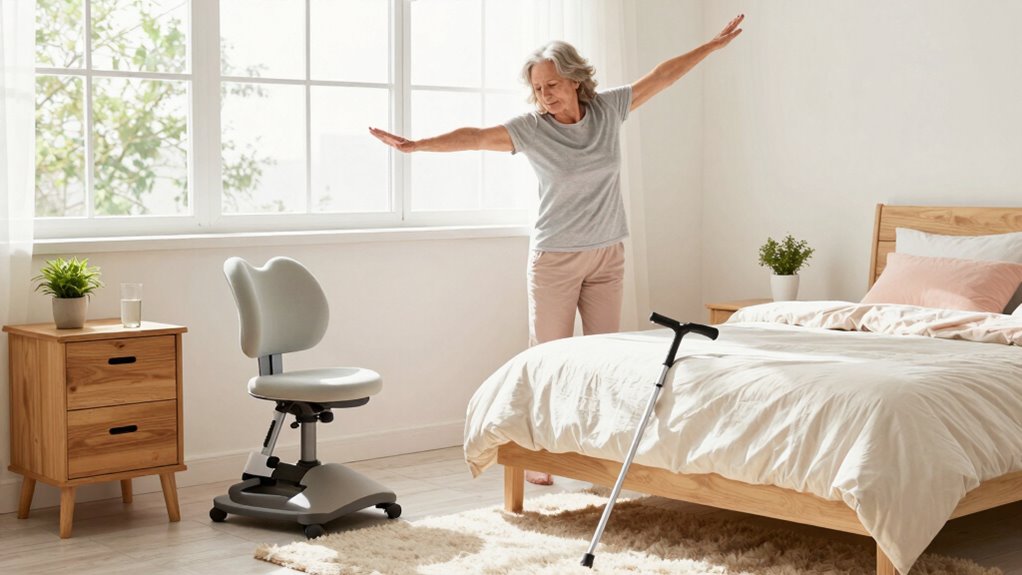

To create a safer morning routine for older adults, establish clear, consistent steps like using pill organizers, turning on bright lights, and keeping essentials within reach. Keep the environment clutter-free and install grab bars near the bed and bathroom. Encourage sturdy footwear and prevent rushing by allowing plenty of time for each activity. Incorporate safety checks and professional advice to maintain ongoing safety. Keep exploring for more tips to help guarantee a safe, comfortable start to each day.
Key Takeaways
- Establish a consistent, predictable morning routine to reduce confusion and anxiety.
- Ensure adequate lighting and turn on lights before getting out of bed to prevent falls.
- Keep pathways clear of clutter and obstacles to promote safe movement.
- Use grab bars, non-slip mats, and supportive footwear to prevent slips and falls.
- Incorporate reminders and alarms for medication and safety checks to maintain punctuality and safety.
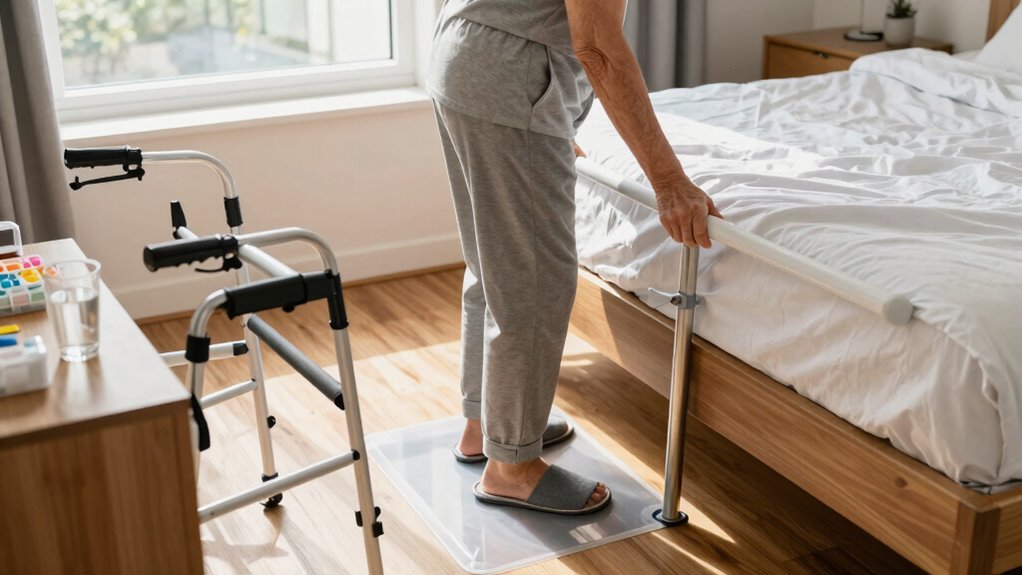
Are mornings becoming more challenging for your loved one? If so, it’s crucial to create a morning routine that promotes safety and independence. One of the most important aspects to contemplate is medication management. Many older adults take multiple medications, and managing them properly can be tricky. Setting up a simple, organized system helps prevent missed doses or accidental overdoses. Use a pill organizer labeled by days and times, and encourage your loved one to follow a consistent schedule. If they have trouble remembering, consider setting alarms or reminders. Regularly reviewing their medications with a healthcare professional ensures they’re taking the right doses and helps catch any potential interactions. Proper medication management is essential for maintaining safety and health. Establishing a medication routine can also help build confidence and reduce anxiety around taking pills.
Fall prevention is another critical element of a safer morning routine. Falls are a leading cause of injury among older adults, especially during morning activities like getting out of bed or walking to the bathroom. To reduce this risk, guarantee their living space is free of clutter. Keep walkways clear of loose rugs, cords, or furniture that could cause tripping. Install grab bars near the bed and bathroom to provide extra support. Non-slip mats in the bathroom and on any slippery surfaces can make a significant difference. Encourage your loved one to wear sturdy, non-slip shoes or slippers, even indoors, to improve stability. Morning routines often involve rushing or feeling hurried, so creating a calm environment helps minimize accidents. Allow plenty of time for each step, and consider placing frequently used items within easy reach to avoid unnecessary stretching or bending. Additionally, proper lighting plays a significant role in safety, especially early in the morning when it’s darker. Ensuring that all areas have adequate illumination can significantly reduce the risk of falls, especially during low-light hours. Bright, even lighting reduces shadows and makes it easier to see potential hazards. Reminding your loved one to turn on lights before getting out of bed can prevent missteps. Establishing a consistent morning schedule helps them know what to expect, reducing feelings of confusion or hurriedness. If they experience dizziness or balance issues, consulting with a healthcare provider for personalized advice is wise. They may suggest balance exercises or medications adjustments to improve stability. Incorporating home safety assessments can identify additional hazards and tailor safety measures to their specific needs.

Odaro Weekly Pill Organizer 4 Times A Day, Daily Pill Box 7 Day, Black
- Easy to Open & Close: Smooth operation for all users
- Large Capacity Compartments: Holds multiple pills per slot
- Food-Grade Safe Material: Made from BPA-free plastic
As an affiliate, we earn on qualifying purchases.
As an affiliate, we earn on qualifying purchases.
Frequently Asked Questions
How Can I Adapt Routines for Varying Mobility Levels?
You can adapt routines for varying mobility levels by incorporating adaptive exercises tailored to each individual’s abilities. Use mobility aids like canes or walkers to enhance stability and safety. Encourage gentle stretching or seated exercises for those with limited movement, and gradually introduce more challenging activities as strength improves. Always prioritize comfort and safety, and consult healthcare providers for personalized recommendations, ensuring each person feels confident and supported during their morning routine.
What Emergency Contacts Should Be Included in the Morning Plan?
Think of emergency contacts as your safety net—crucial yet often overlooked. Include trusted family, close friends, and healthcare providers, making certain their contact updates are current. For example, if your loved one falls, quick access to emergency contacts can make all the difference. Keep a list visible and accessible, so you’re prepared. Regularly review and update contact info to make sure the safety net remains reliable and effective.
How Do I Ensure Medication Safety During Morning Activities?
To guarantee medication safety during morning activities, focus on proper medication management. Use a clear, labeled pill organizer to separate doses for the day, reducing the risk of missed or double doses. Always verify medications with the prescribed instructions, and encourage your loved one to double-check before taking any pills. Additionally, keep medications in a consistent, easily accessible spot to prevent confusion or accidents.
What Are Signs of Morning Health Issues to Watch For?
You might notice signs like sudden dizziness, confusion, or irregular sleep patterns, which could signal morning health issues. Sometimes, these symptoms coincide with changes in heart health, like chest discomfort or rapid heartbeat, especially after waking. Being attentive to these signs helps you catch problems early, ensuring your loved one’s safety. Monitoring sleep and heart health regularly can prevent minor issues from escalating into serious concerns.
How Can Technology Assist in Creating Safer Mornings?
You can use technology like smart home systems and wearable devices to create safer mornings. Smart home features automatically turn on lights, adjust thermostats, and alert caregivers if something’s wrong. Wearable devices monitor essential signs and detect falls, sending alerts immediately. These tools help older adults start their day safely, providing peace of mind for both them and their loved ones. Embracing these technologies makes mornings more secure and manageable.
Conclusion
Creating a safe and smooth morning routine for older adults requires attention, awareness, and a bit of adaptability. By prioritizing proper planning, preventing pitfalls, and promoting patience, you provide a foundation of safety and security. Remember, small steps lead to significant changes, so stay steady and supportive. With consistent care and compassion, you can craft a caring, comfortable start to each day—making mornings more manageable, more manageable, and more meaningful for your loved ones.