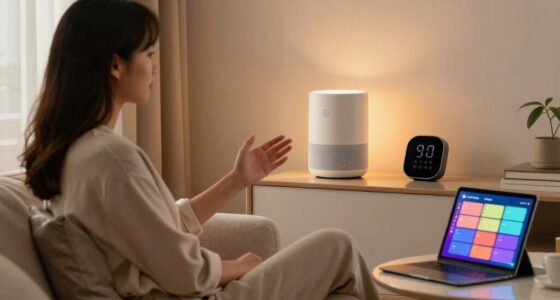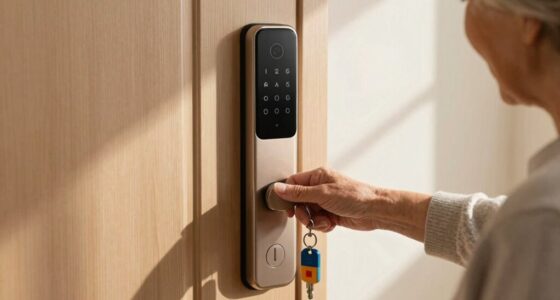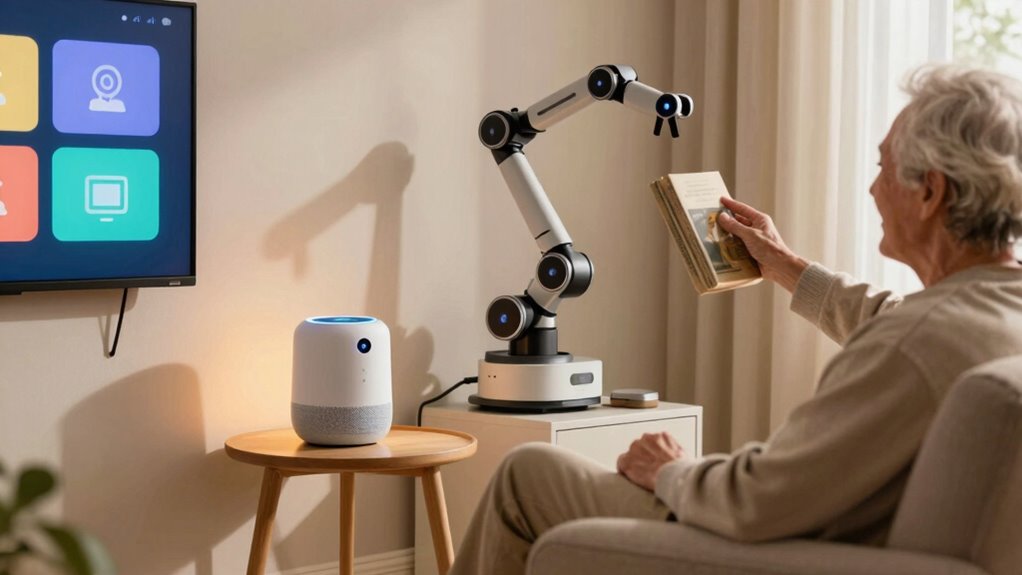

Smart home features like voice activation let you control lights, thermostat, and calls easily, reducing the need to reach for switches. Fall detection technology quietly monitors your safety and alerts emergency contacts right away if needed. Integrated safety systems create a secure environment, giving you confidence to move freely. User-friendly interfaces and ongoing support make these devices simple to use. To discover how these features can enhance your independence and safety even further, keep exploring.

Get decor and gifts delivered free — and shop member deals
- Fast, free delivery on millions of items
- Access to Prime Big Deal Days deals on October 6–7
- Prime Video, Amazon Music and more included
Key Takeaways
- Voice activation simplifies control of devices, reducing the need for physical reach and promoting independence.
- Fall detection technology provides automatic alerts, ensuring quick emergency responses.
- Integrated safety and security systems create a comprehensive environment for enhanced protection.
- User-friendly interfaces and ongoing support make smart systems accessible and easy to operate.
- Seamless connectivity of devices maintains safety, security, and autonomy within the home.
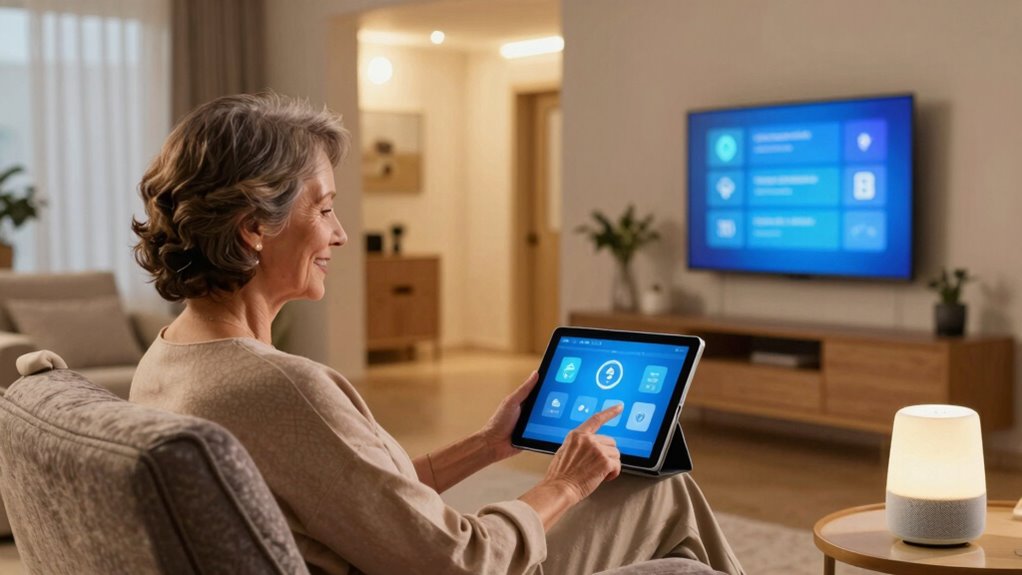
As technology advances, smart home features are becoming increasingly valuable for older adults seeking independence and safety. These innovations are designed to support your daily life, giving you peace of mind while maintaining your autonomy. One of the most practical features is voice activation. With voice-controlled devices, you can effortlessly turn on lights, adjust the thermostat, or call for help without needing to get up or find a remote. Just say what you need, and your smart home responds instantly. This hands-free approach not only simplifies daily routines but also reduces the risk of falls or accidents caused by reaching for switches or buttons, especially if you have mobility challenges. Additionally, integrating caffeine science into smart home routines can enhance alertness and overall well-being, especially in the mornings.
Fall detection is another critical feature that enhances safety in your home. Modern sensors can identify when you’ve fallen and automatically alert emergency contacts or services. Imagine you’re alone in the house, and an accidental fall occurs; instead of trying to reach a phone or waiting for someone to notice, the system detects the event and acts immediately. This quick response can be life-saving, ensuring help arrives promptly. Plus, many fall detection systems can be integrated with other smart devices, creating an all-encompassing safety network. These sensors work quietly in the background, giving you confidence to move around freely, knowing help is just a button or voice command away. The integration of smart sensor technology ensures a comprehensive safety approach that adapts to your needs. Moreover, ongoing advancements in home automation continue to expand how these features can be tailored to individual preferences and safety requirements. Incorporating user-friendly interfaces can further improve accessibility for older adults who may not be as comfortable with complex technology.
Furthermore, regular updates and tech support can help ensure these systems function optimally, providing additional reassurance.
Together, voice activation and fall detection create a safer, more accessible environment tailored to your needs. Voice activation makes everyday tasks easier, reducing physical barriers and allowing you to stay connected and in control. Meanwhile, fall detection provides a safety net, offering reassurance that you’re protected if an accident occurs. These features work seamlessly, often integrating with existing devices like smart speakers, security cameras, and emergency systems, making your home smarter and more responsive to your needs.
smart home voice control devices for seniors
As an affiliate, we earn on qualifying purchases.
As an affiliate, we earn on qualifying purchases.
Frequently Asked Questions
How Much Do Smart Home Features Cost to Install Initially?
The initial cost of installing smart home features varies widely, with a basic setup starting around $100 to $300 for budget options like smart bulbs or plugs. More extensive systems, including security cameras or voice assistants, can cost $1,000 or more. You should do a cost comparison to find what fits your budget. Consider starting small and expanding gradually to manage expenses effectively while enhancing your home’s safety and convenience.
Are Smart Home Devices Easy for Seniors to Operate Independently?
Smart home devices can be quite easy for seniors to operate independently, especially with voice commands and simple user interfaces. Many devices are designed with accessibility in mind, featuring large buttons, clear displays, and intuitive controls. With a little initial guidance, your loved ones can quickly learn to manage their smart devices, making daily routines safer and more convenient without feeling overwhelmed by complex technology.
What Privacy Concerns Are Associated With Smart Home Technology?
Did you know 81% of smart home device users worry about data security? You should be concerned about surveillance privacy, too. Smart devices collect sensitive info, which could be hacked or misused. Protect your privacy by updating security settings regularly, using strong passwords, and understanding data policies. Staying informed helps you enjoy smart technology’s benefits without risking your personal information.
Can These Features Be Customized for Specific Health Needs?
Yes, these features can be customized for your specific health needs. You can explore personalization options that tailor alerts, reminders, and monitoring systems to your health conditions. Health-specific adaptations might include medication reminders, fall detection, or customized lighting to improve mobility and safety. By working with providers, you guarantee your smart home setup aligns with your health requirements, giving you peace of mind and greater independence.
Do Smart Home Systems Require Professional Installation or Setup?
Smart home systems often don’t require professional installation; many are designed for easy setup. You can typically install features like voice control and remote access yourself through simple instructions or app guidance. These features allow you to control devices hands-free and monitor your home remotely, enhancing safety and convenience. However, for complex setups or integrations, professional help might be beneficial to guarantee everything functions smoothly and securely.
Conclusion
Incorporating smart home features can genuinely enhance safety and independence for older adults, but it’s worth questioning whether these technologies truly deliver on their promises. While many claim they foster greater autonomy, research suggests that user comfort and proper training are vital for effectiveness. Ultimately, embracing smart home tech should be tailored to individual needs, ensuring it’s not just a trend but a meaningful tool. When thoughtfully implemented, these features can indeed make a real difference.
Fall Picks
fall essentials
As an affiliate, we earn on qualifying purchases.