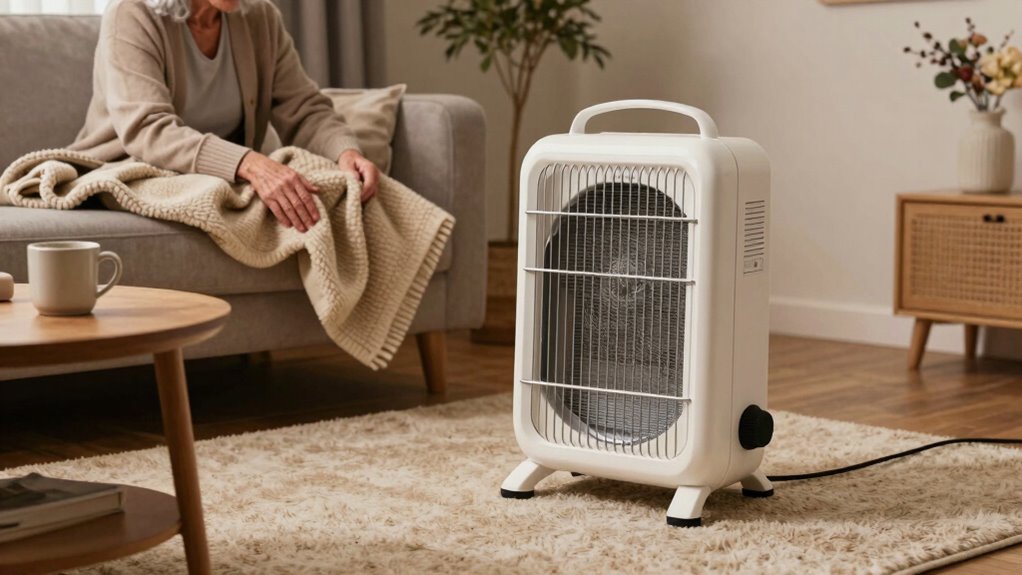
If you use portable heaters in an older adult’s home, you need to adopt stronger safety habits. Always choose models with automatic shut-off and tip-over protection, and keep them clear of flammable items at least three feet away. Never leave a heater unattended or plug it into extension cords. Regularly check for damage and maintain good ventilation. Staying vigilant with these habits helps prevent fires and guarantees safer, warmer living spaces—continue on to discover helpful safety tips to keep everyone secure.
Key Takeaways
- Older adults should keep heaters away from flammable materials and maintain at least three feet of clearance for safety.
- Regularly inspect heaters for damage and avoid using extension cords to prevent fire hazards.
- Install and test smoke alarms regularly, ensuring fire safety devices are functioning properly.
- Develop and practice emergency plans, including clear exit routes and safe meeting spots.
- Turn off and unplug heaters when unattended or before going to bed to reduce fire risk.
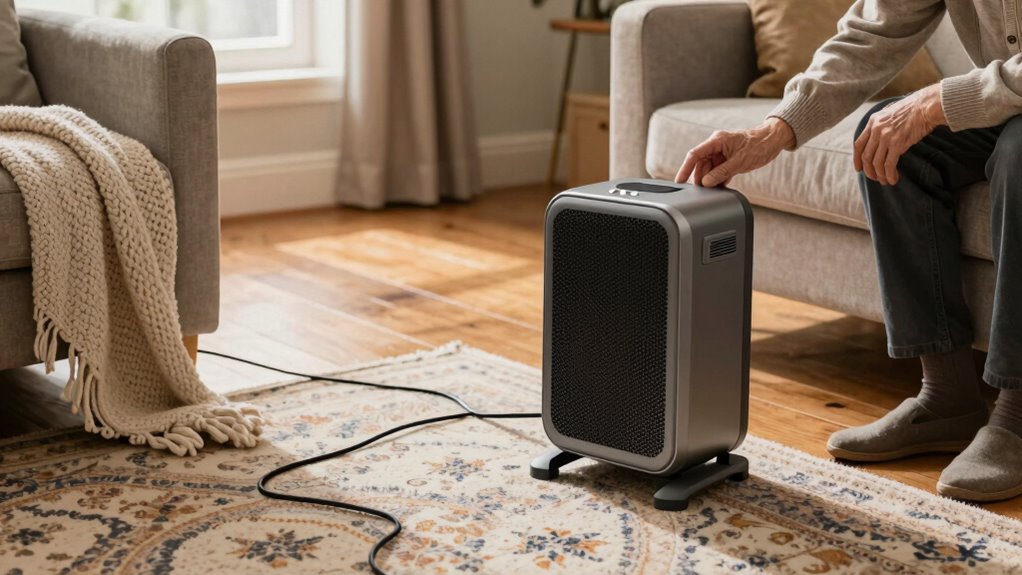
As temperatures drop, many older adults rely on portable heaters to stay warm, but these devices pose significant safety risks if not used carefully. It’s crucial to understand that proper safety habits can prevent fires and keep you safe during the colder months. Fire prevention starts with choosing the right heater. Always pick models with automatic shut-off features and tip-over protection. These safety features can reduce the risk of accidental fires if the heater tips over or overheats. It’s also important to keep heaters away from flammable materials like curtains, bedding, and paper. Maintain at least three feet of clearance around the heater at all times, and never leave it unattended while it’s on.
In addition to choosing a safe heater, you need to establish good habits for fire prevention. Always inspect your heater for signs of damage before use—frayed cords, cracks, or burn marks mean it’s time for a replacement. Never use extension cords with portable heaters; plugging directly into a wall outlet ensures a safer connection. When you’re done using the heater, turn it off and unplug it, especially if you’re leaving the room or going to bed. Regularly cleaning the heater’s vents and filters helps prevent overheating and dust buildup, which could ignite. Understanding indoor air quality and ensuring proper ventilation can also improve safety by reducing dust and contaminants that may accumulate around heating devices. Additionally, ensuring proper heating device maintenance can extend the lifespan of your heater and enhance safety. Regularly checking for fire safety guidelines specific to heating devices can further help prevent accidents and promote a safer environment. Incorporating proper safety habits can further minimize the risk of accidents and ensure peace of mind. Staying informed about biodiversity and environmental impact can also encourage more sustainable choices in heating and home safety practices.
Emergency preparedness is just as vital as fire prevention. Have working smoke alarms installed on every level of your home, especially near bedrooms and common areas. Test them monthly and change the batteries twice a year. Keep a fire extinguisher nearby, and make sure you know how to use it. It’s also wise to develop an emergency plan with your family or caregivers. Know two ways to exit each room and establish a safe meeting spot outside your home. Practice this plan regularly so everyone knows what to do if a fire occurs.
You should also keep a phone within reach and have emergency numbers saved in your contacts. In case of a fire or if you suspect one, call 911 immediately. Having a plan in place reduces panic and helps you act quickly. Remember, safety isn’t just about preventing fires—it’s about being prepared for emergencies. By practicing fire prevention and emergency preparedness habits, you help protect yourself and others from the dangers that portable heaters can pose during colder months. Staying vigilant and proactive ensures you stay warm safely without putting yourself at unnecessary risk.
portable space heater with automatic shut-off
As an affiliate, we earn on qualifying purchases.
As an affiliate, we earn on qualifying purchases.
Frequently Asked Questions
Are There Specific Portable Heaters Recommended for Older Adults?
You should consider heater brand recommendations like Dyson, Vornado, or Honeywell, which offer reliable portable heaters with safety-focused features. Look for models with automatic shut-off, tip-over protection, and cool-touch exteriors. These portable heater features help prevent accidents and provide peace of mind. Always choose a heater that’s easy to operate, energy-efficient, and has safety certifications to guarantee it’s suitable for older adults’ homes.
How Often Should Portable Heaters Be Inspected for Safety?
You should inspect your portable heater at least once a month for safety. During electrical inspections, check for frayed cords, loose plugs, or signs of wear. Make sure the heater is clean, vents are unobstructed, and it’s placed away from flammable materials. Regular checks help prevent fire safety hazards and electrical issues, keeping your home safe. Always unplug the heater when not in use and follow manufacturer instructions for maintenance.
Can Portable Heaters Be Used Safely With Oxygen Therapy?
Using portable heaters with oxygen therapy is like walking a tightrope—you must prioritize heater safety and oxygen compatibility. You shouldn’t use them together unless your healthcare provider gives the green light. Oxygen makes fires burn faster, so even a small spark can turn dangerous quickly. Always keep heaters away from oxygen sources, guarantee proper ventilation, and follow manufacturer instructions closely. Safety first keeps your home warm without risking a fire.
What Should I Do if a Portable Heater Tips Over?
If a portable heater tips over, you should quickly unplug it and move it to a safe, flat surface to prevent fire hazards. Always keep a fire extinguisher nearby and verify smoke detectors work. Practice emergency response by having a fire escape plan. Regularly check your heater for stability, and never leave it unattended while in use. These steps help with fire prevention and guarantee safety during emergencies.
Are There Legal Safety Standards for Portable Heaters in Senior Homes?
You might think safety standards are strict, but legal regulations for portable heaters in senior homes guarantee safety compliance. These standards require features like tip-over switches, automatic shut-offs, and proper electrical wiring. Following these regulations helps prevent accidents. While some heaters might seem safe, always verify they meet legal safety standards before use. This proactive step safeguards residents and ensures you’re complying with local safety laws.
Conclusion
You might think portable heaters are a quick fix for staying warm, but the truth is, they demand stronger safety habits, especially in older adult homes. Some say that a simple mistake, like placing a heater too close to furniture, can cause a fire. This theory isn’t just scare tactics—it’s backed by real risks. Stay vigilant, follow safety guidelines, and keep your loved ones safe. After all, a little caution can prevent a big tragedy.