
To improve your outdoor motion lights, you need better path planning to cover all key areas effectively. Proper placement helps avoid blind spots and guarantees lights respond quickly to movement. Adjusting sensor sensitivity and calibrating each fixture prevents false alarms from animals or passing cars. Incorporating your property’s layout and using smart technology can enhance coverage and energy efficiency. Want to find out how to optimize your system for maximum security? Keep exploring for useful tips.
Key Takeaways
- Proper light placement ensures critical areas and pathways are effectively covered, reducing blind spots and improving security.
- Strategic positioning of lights prevents obstructions and maximizes detection of movement along key routes.
- Incorporating property layout into planning enhances coverage while minimizing unnecessary fixtures and energy use.
- Dynamic, smart lighting systems can adapt to changing environments for better path coverage and responsiveness.
- Calibration of sensors aligned with planned paths reduces false triggers and ensures reliable detection.
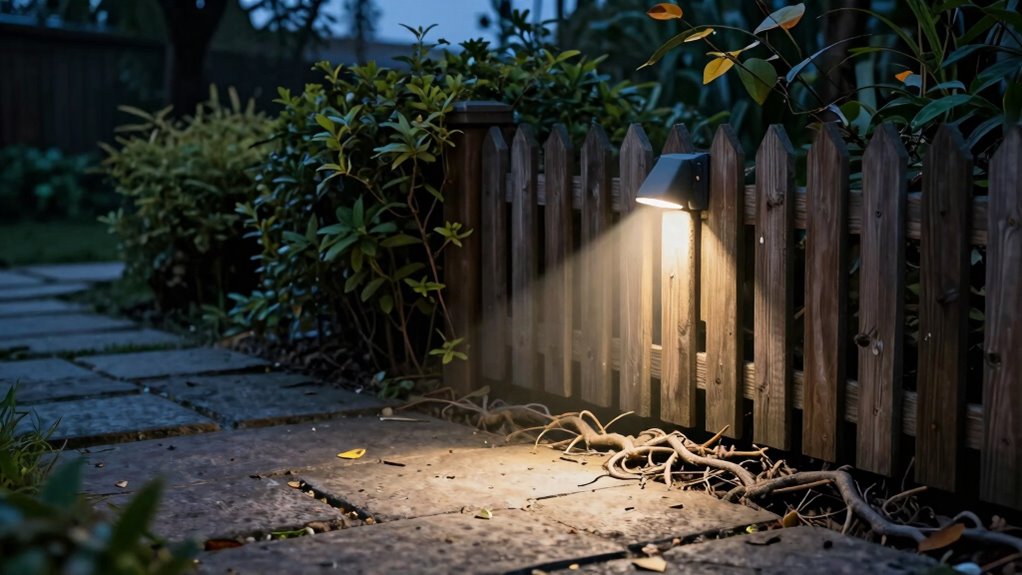
Outdoor motion lights are a popular security feature, but many don’t provide the coverage or responsiveness homeowners need. One of the main issues is that they often turn on too late or miss areas entirely, leaving your property vulnerable. To improve their effectiveness, better path planning is essential. This involves strategically placing lights and making sure their sensors are properly calibrated to detect movement accurately. Sensor calibration is critical because it adjusts the sensitivity of the motion detectors, preventing false alarms from small animals or passing cars while still catching genuine intruders. When sensors are correctly calibrated, your outdoor lights respond more reliably, providing peace of mind and a safer environment.
However, sensor calibration isn’t just about sensitivity; it also plays a role in energy efficiency. When motion sensors are set too high, they might trigger lights unnecessarily, wasting electricity and increasing your utility bill. Conversely, if calibration is too low, the lights may not turn on when you need them, defeating the purpose of having outdoor security lighting. Striking the right balance ensures that the lights activate only when necessary, conserving energy without sacrificing security. Proper sensor calibration, combined with thoughtful placement, guarantees that your outdoor lighting system functions at its best.
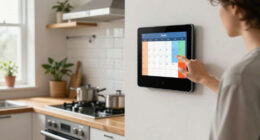
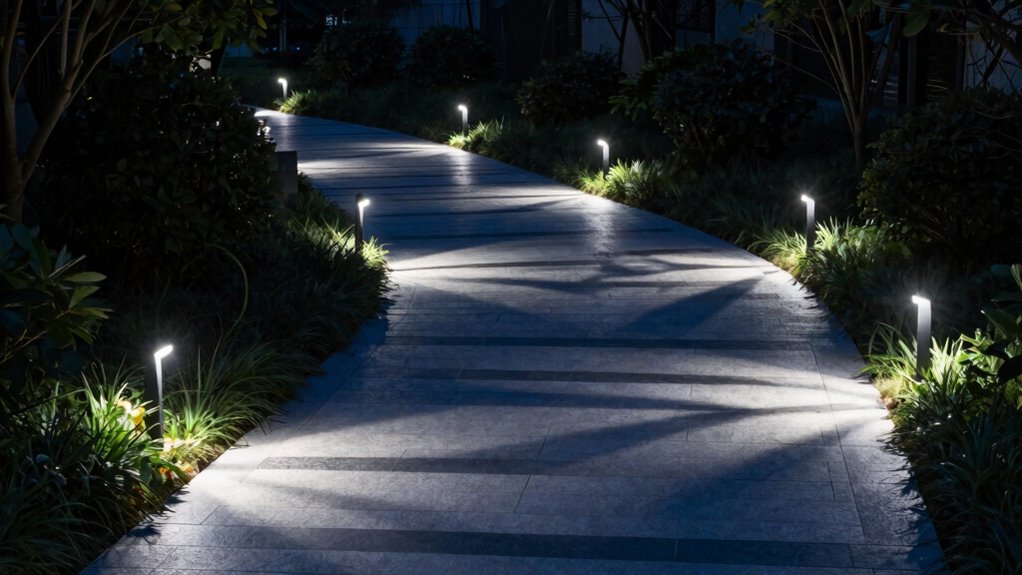
Path planning is equally important in guaranteeing your outdoor lights cover all critical areas. Simply installing a few lights isn’t enough if they’re not positioned correctly. You need to take into account the layout of your property and identify blind spots where movement could go unnoticed. By mapping out the most frequented paths and vulnerable spots, you can determine the best locations for your lights. Thoughtful placement reduces the number of fixtures needed, which not only saves money but also enhances energy efficiency. When lights are strategically positioned, they illuminate the right areas quickly and effectively, deterring intruders and guiding visitors safely. Incorporating sensor calibration into your overall plan can further optimize coverage and responsiveness. Additionally, considering the property layout during planning can help avoid obstructions and maximize light coverage. Ensuring that the lighting system is adaptable to your property’s unique features is essential for comprehensive security. Implementing smart technology can further enhance your path planning by allowing dynamic adjustments based on activity patterns or environmental conditions.
outdoor motion sensor lights with adjustable sensitivity
As an affiliate, we earn on qualifying purchases.
As an affiliate, we earn on qualifying purchases.
Frequently Asked Questions
How Do Motion Sensors Differentiate Between Humans and Animals?
Motion sensors differentiate between humans and animals through animal detection features and adjustable sensor sensitivity. You can set the sensitivity to ignore smaller animals, reducing false alarms. Many sensors use infrared technology to analyze movement patterns, size, and heat signatures. By customizing these settings, you guarantee the lights activate only when humans are detected, making your outdoor lighting more efficient and reliable, especially in areas with frequent animal activity.
What Are the Best Placement Strategies for Outdoor Motion Lights?
To get the most out of your outdoor motion lights, you should place them at key entry points, along walkways, and near valuable landscapes. Position lights at a height that prevents glare but still covers the desired area. Consider lighting aesthetics for a seamless look, and prioritize energy efficiency by choosing LEDs and adjusting sensitivity. Remember, a well-placed light is worth its weight in gold, enhancing safety and style.
How Do Weather Conditions Affect Motion Light Performance?
Weather conditions greatly impact motion light performance. Heavy rain, snow, or fog can cause false triggers or reduce sensor sensitivity, making lights less reliable. Cold temperatures may slow down sensor responsiveness, while wind-driven elements can set off lights unnecessarily. To guarantee consistent performance, choose weather-resistant fixtures and adjust sensor sensitivity settings accordingly, especially during extreme weather, so your outdoor lighting remains effective and dependable regardless of weather impact.
Can Motion Lights Be Integrated With Smart Home Systems?
Yes, motion lights can be integrated with smart home systems, making your life way easier than you’d imagine. With smart integration, you can automate and customize how your lights turn on or off, based on your routines or preferences. This seamless connection lets you control everything from your phone or voice commands, transforming your outdoor lighting into a smart, efficient, and personalized experience—like having a personal lighting assistant at your command.
What Maintenance Is Required for Outdoor Motion Lights?
You need to regularly check your outdoor motion lights for proper operation. To maintain them, guarantee the batteries are fresh to maximize battery longevity and prevent sudden failures. Replace bulbs when they burn out to keep the lights functioning properly. Also, clean the fixtures and sensors to prevent dirt or debris from obstructing motion detection. Performing these simple steps helps your outdoor motion lights stay reliable and effective.
Conclusion
To truly transform your outdoor space, better path planning is paramount. By blending bright beams with clever cues, you can create a safer, more secure sanctuary. Imagine a seamless symphony of synchronized sensors, silently scanning and signaling, guiding you with grace. When your motion lights master meaningful mapping, your yard becomes a welcoming wonderland rather than a wandering wilderness. Shape your space, streamline your safety, and shine brighter with smarter, strategic lighting solutions.