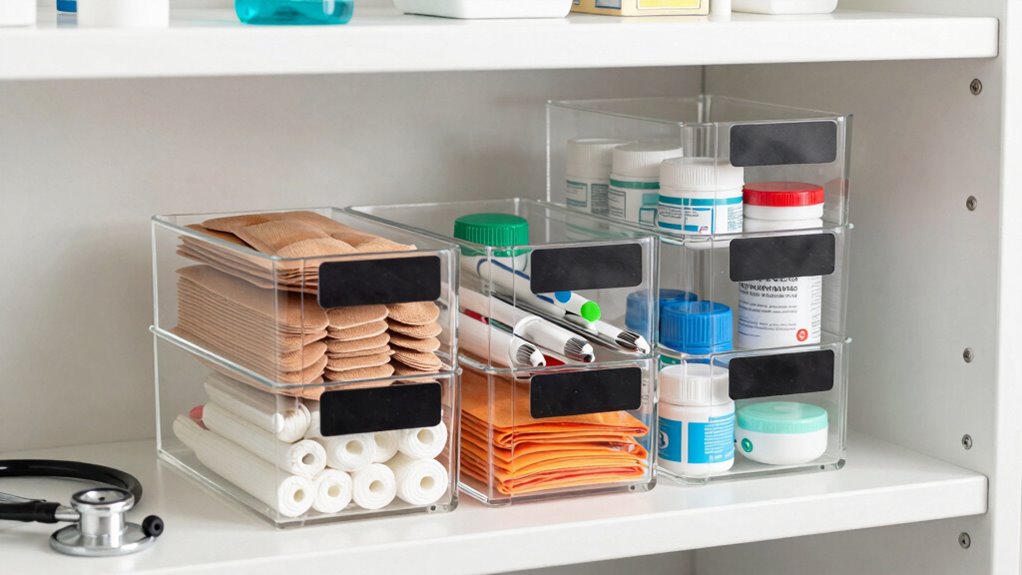
To organize your care supplies efficiently in one place, use durable, clearly labeled containers, and keep frequently used items within easy reach. Create designated zones for different categories like medications or wound care, and incorporate space-saving storage options like stackable bins or wall-mounted organizers. Regularly review and update your system to discard expired or damaged items and stay eco-friendly with sustainable containers. Keep everything simple and accessible—continuing with these tips will help you master a smooth, safe caregiving space.

Get decor and gifts delivered free — and shop member deals
- Fast, free delivery on millions of items
- Access to Prime Big Deal Days deals on October 6–7
- Prime Video, Amazon Music and more included
Key Takeaways
- Use clearly labeled, durable containers and transparent bins for quick identification and easy access.
- Implement designated zones for different supply categories to reduce clutter and streamline routines.
- Conduct regular inventory reviews to track supplies, discard expired items, and prevent shortages.
- Incorporate eco-friendly storage options and sustainable practices to promote environmental responsibility.
- Utilize movable carts or wall-mounted organizers for flexible, accessible, and efficient storage solutions.
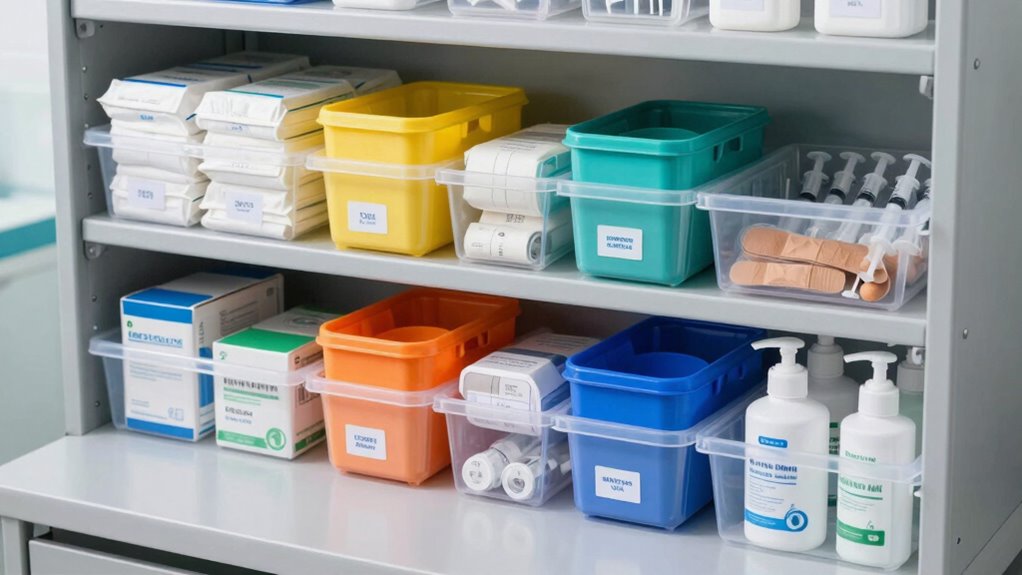
Organizing your care supplies can make a significant difference in guaranteeing safety and efficiency when tending to loved ones or managing health needs. The key is to develop a system that keeps everything accessible, clearly labeled, and easy to maintain. Start by taking stock of everything you have—this supply inventory helps you understand what items are essential and what might be outdated or unnecessary. Once you’ve identified your needs, you can design storage solutions that maximize space and keep supplies organized. Think about creating designated zones for different types of items, such as medications, wound care supplies, or daily essentials. This zoning can help reduce clutter and streamline your caregiving routines. This way, you won’t waste precious time searching for a specific item during an emergency or busy moment.
Organize care supplies with labeled zones and regular inventory checks for safety and efficiency during emergencies.
Your supply inventory should be thorough and regularly updated. Keep a detailed list of all supplies, noting quantities, expiration dates, and storage locations. This not only prevents overstocking but also helps you reorder before supplies run out. When it comes to storage solutions, choose containers that are durable, clearly labeled, and easy to access. Transparent bins or labeled drawers allow you to quickly identify contents at a glance, reducing frustration and streamlining your routines. Consider stacking or modular storage options to make the most of limited space, especially if you’re working with a small area. For frequently used items, keep them in a readily accessible spot, such as a countertop caddy or a dedicated shelf, so you’re never hunting through multiple containers in a hurry.
Labeling is critical in maintaining an organized system. Use clear, legible labels on all containers and storage areas, including expiration dates where relevant. This step prevents mix-ups and ensures you use supplies before they expire. Regularly review your supply inventory to discard expired or damaged items and to restock essentials. Establishing a routine, such as weekly or monthly checks, keeps your organization current and prevents shortages during critical times. Incorporating biodiversity principles into your storage solutions, such as choosing environmentally friendly containers, can further promote sustainable living. Additionally, utilizing storage containers made from eco-friendly materials can support your efforts in reducing environmental impact. Being mindful of sustainable storage practices can also inspire more eco-conscious caregiving routines. An organized system that considers environmentally friendly options can enhance both safety and sustainability. For added convenience, consider using wall-mounted organizers or portable carts that can be moved easily depending on your needs. This flexibility can be especially helpful if caregiving duties shift from room to room.
Ultimately, the goal is to create a streamlined, easy-to-maintain system that makes caregiving less stressful. Well-maintained storage solutions combined with a thorough supply inventory give you peace of mind—knowing that everything you need is in one place, ready whenever you need it. Proper organization doesn’t just save time; it enhances safety and ensures you’re prepared for any situation.
medical supply storage containers
As an affiliate, we earn on qualifying purchases.
As an affiliate, we earn on qualifying purchases.
Frequently Asked Questions
How Often Should Care Supplies Be Restocked?
You should restock care supplies regularly, ideally weekly or biweekly, depending on usage. Use inventory tracking to monitor stock levels and identify when supplies run low. Practice storage rotation, ensuring older items are used first to prevent waste. Regular checks help you stay prepared, avoid shortages, and keep supplies fresh. Adjust your restocking schedule based on how quickly supplies are used to maintain ideal inventory.
What Safety Measures Ensure Organized Supplies Are Hygienic?
Ever wonder how you can keep your organized supplies hygienic and safe? You should implement strict storage safety and hygiene protocols, such as regularly disinfecting storage areas and ensuring supplies are sealed properly. Use clean, designated containers and wear gloves when handling supplies. Do you check expiration dates regularly? These measures help prevent contamination and maintain a sterile environment, keeping both caregivers and patients protected.
How Can Fragile Supplies Be Stored Safely?
You can store fragile supplies safely by using sturdy, padded storage containers that protect them from impacts. Handle these items with gentle handling techniques, such as supporting their weight fully and avoiding sudden movements. Label containers clearly, and keep fragile supplies separate from heavier or bulkier items. Regularly inspect storage areas to guarantee containers remain intact and supplies stay protected, reducing the risk of damage or accidents.
Are There Eco-Friendly Organization Options?
Yes, eco-friendly storage options are like a refreshing change for your organization. You can choose sustainable organization solutions such as bamboo bins, recycled plastic containers, or biodegradable bags that minimize environmental impact. These options blend functionality with eco-consciousness, helping you create a greener space. By opting for sustainable organization, you’re not just tidying up — you’re making a positive difference for the planet with every carefully stored supply.
What Is the Best Way to Label Care Supplies?
You should use clear labeling techniques combined with color coding systems to organize your care supplies effectively. Opt for waterproof labels and bold lettering to guarantee readability. Incorporate different colors for categories like medications, bandages, and cleaning supplies to quickly identify items. Color coding not only speeds up access but also reduces mistakes, making your organization system more efficient and user-friendly.
Conclusion
By organizing your care supplies efficiently, you guarantee quick access during emergencies and reduce stress. Imagine Sarah, a caregiver who kept her supplies in disarray, struggling to find bandages when her child needed immediate attention. Once she reorganized everything into one accessible spot, she felt more confident and prepared. Taking this step not only saves time but also provides peace of mind, knowing you’re ready for anything. Start organizing today and make caregiving safer and simpler.
Halloween Picks
halloween
As an affiliate, we earn on qualifying purchases.