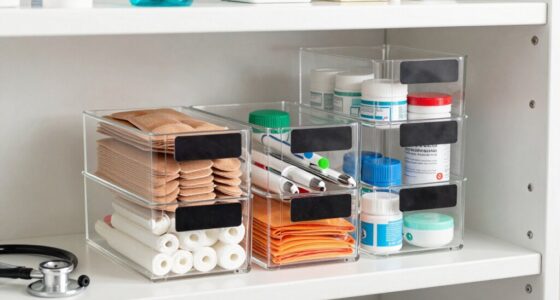

To organize your medications smartly at home, use clear labels with permanent markers or printed tags, and consider color-coding to easily identify each one. Store medicines out of reach of children, in cool, dry, and opaque containers that shield from light and moisture. Keep a routine of weekly checks for expiration dates and refill pill organizers regularly. Proper storage and maintenance guarantee safety and effectiveness. If you want to learn specific tips, keep going to find out more.

Get decor and gifts delivered free with Prime
- Fast, free delivery on millions of items
- Prime Video, Amazon Music and more included
- Member-only deals all year
Key Takeaways
- Use labeled, color-coded pill organizers to simplify medication identification and adherence.
- Store medications in cool, dry, high, and locked cabinets away from children and pets.
- Regularly review and dispose of expired or unused medicines to maintain safety.
- Implement a routine for weekly checks, refills, and organization to prevent errors.
- Opt for eco-friendly storage containers to promote sustainability and protect medication potency.
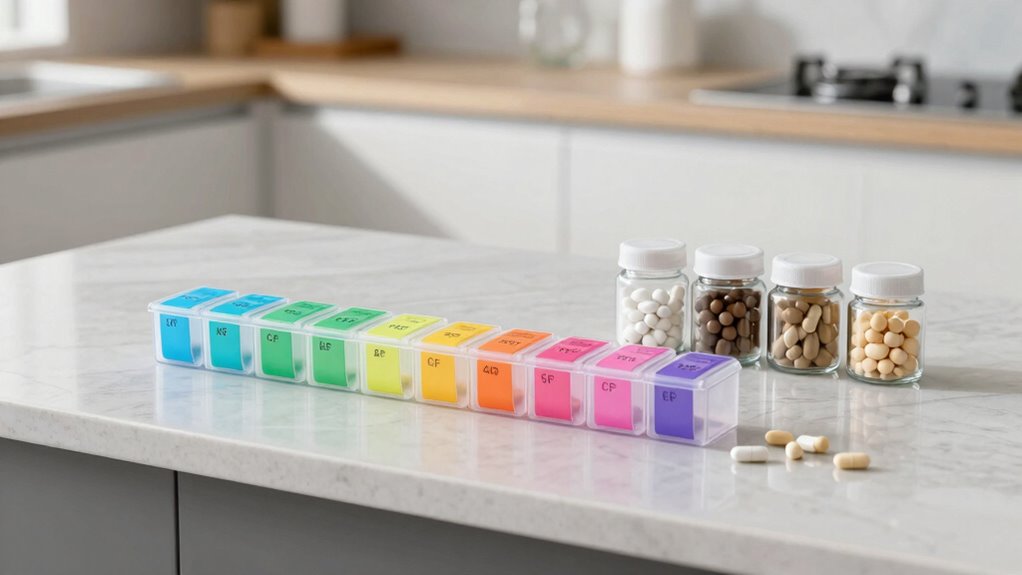
Have you ever wondered how to manage your medications safely and effectively at home? Keeping your medicines organized isn’t just about preventing clutter; it’s vital for your health and safety. The key lies in understanding pill safety and choosing the right storage solutions. When medications are stored improperly, they can become less effective or even dangerous. To avoid these risks, you need a system that keeps your pills accessible yet secure, especially if you have children or pets. Clear, labeled containers are a great start—they help you quickly identify what you need without rummaging through drawers. Consider using a pill organizer with separate compartments for each dose, which can help you stay on schedule and prevent accidental overdoses.
Organize medications with clear labels and secure storage to ensure safety and ease at home.
The first step in pill safety is to keep medications out of reach of children and pets. Store them in a high, locked cabinet or a dedicated medicine box that only you have access to. Avoid keeping medicines in places with high humidity or temperature fluctuations, like the bathroom or kitchen, as these can degrade the medication. Instead, opt for a cool, dry spot in your bedroom or a dedicated shelf in your linen closet. When choosing storage solutions, consider containers that are opaque, so light doesn’t affect the medication’s potency. Also, look for ones that are airtight to prevent moisture from getting in, which can spoil pills or cause them to stick together. Proper medication storage is essential for maintaining the effectiveness and safety of your medicines. Incorporating biodiversity and conservation principles into your home environment can also help promote safer and more sustainable living practices. Using environmentally friendly storage options can reduce waste and support overall home sustainability. Additionally, selecting eco-friendly containers can contribute to a greener lifestyle by reducing plastic waste.
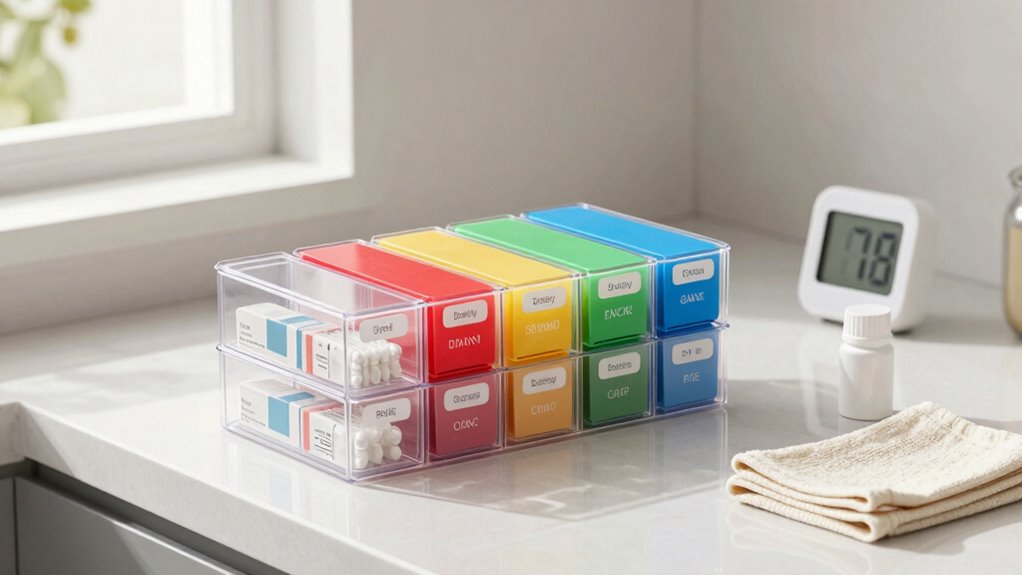
Labeling is another essential aspect of pill safety. Use permanent markers or printed labels to clearly mark the medication name, dosage instructions, and expiration date. This prevents mix-ups and ensures you take the right medicine at the right time. If you’re on multiple medications, a color-coded system might help you distinguish between different types or doses more easily. Keep your medication list updated and review it regularly to discard expired pills and restock your supplies. Developing a medication management routine can also help prevent errors and keep your health on track. Finally, establish a routine for organizing your medications. Set a specific day each week to check your supplies, refill your pill organizer, and discard expired or unused medicines. This habit helps you stay on top of your medication schedule and reduces the risk of accidental overdose or missed doses. By prioritizing pill safety with proper storage solutions and organized routines, you can take control of your health at home and make certain your medications remain effective and safe to use.
pill organizer with multiple compartments
As an affiliate, we earn on qualifying purchases.
As an affiliate, we earn on qualifying purchases.
Frequently Asked Questions
How Often Should I Review and Update My Medication List?
You should review and update your medication list at least every six months, or sooner if you experience medication allergies or get new prescriptions. Regular reviews help catch outdated prescriptions and guarantee your list reflects any changes. Keep track of prescription renewals to avoid missed doses or expired medications. Updating your list regularly helps you stay organized and informed, making it easier to communicate with healthcare providers and avoid potential medication errors.
What Are the Best Practices for Storing Liquid Medications?
Did you know that improper storage causes 30% of medication errors? To guarantee medication safety, store liquid medications in their original containers, keep them tightly closed, and away from direct sunlight and heat. Use dedicated storage solutions like a secure, child-proof cabinet or a labeled bin to prevent mix-ups. Regularly check expiration dates and avoid storing liquids in the bathroom to maintain their effectiveness and safety.
How Can I Ensure Children Can’t Access Medications?
To keep children from accessing medications, you should implement childproofing strategies like using lockable cabinets or high shelves out of their reach. Store medications in their original containers with child-resistant caps, and never leave them unattended. Follow medication safety tips by educating your kids about medication dangers, keeping pills away from their sight, and regularly checking that safety measures remain effective. These steps help guarantee their safety at all times.
What Should I Do With Expired or Unused Medications?
You should dispose of expired or unused medications safely to maintain medication safety. Use recommended disposal methods like taking them to a drug take-back program or following FDA guidelines for disposal at home, such as mixing medications with unappealing substances and discarding them in the trash. Never flush medications unless specifically instructed, as improper disposal can harm the environment. Proper disposal helps prevent misuse and keeps your household safe.
Are There Specific Containers Recommended for Different Medication Types?
Think of your medication storage like a well-oiled machine—each part has its place. You should use specific containers, like pill organizers for daily doses and labeled bottles for liquids or creams, to keep everything clear. Medication labels help you identify each item instantly, preventing mix-ups. This organized system guarantees your meds stay safe, accessible, and easy to manage, giving you peace of mind and control over your health routine.
Conclusion
Now that you’ve organized your medications, you’re practically a superhero with a pharmacy at your fingertips—ready to conquer any health crisis in seconds. Imagine a sleek, bulletproof cabinet that keeps chaos at bay, turning your home into a fortress of health. No more frantic searches or missed doses—just pure, unstoppable control over your wellness. With your new system, you’re not just managing meds; you’re wielding the power to keep yourself safe and unstoppable every single day.
Fall Picks
fall essentials
As an affiliate, we earn on qualifying purchases.