
TL;DR

Get decor and gifts delivered free with Prime
- Fast, free delivery on millions of items
- Prime Video, Amazon Music and more included
- Member-only deals all year
House Beautiful interviewed interior designers about seven paint strategies they use to change the perceived scale of small rooms. The advice includes painting an accent wall or ceiling, color-drenching, testing undertones and choosing colors in response to natural light; these are design recommendations, not guarantees that a room will physically appear larger.
House Beautiful has published a report outlining seven paint strategies interior designers say can change how a small room feels, including carrying one color across walls and ceiling, painting a partial wall and selecting shades based on a room’s light. The suggestions address visual perception rather than physical space, and their effect will depend on the room and its lighting.
The report features comments from Joe Waroquier, founder and principal designer of Joe Waroquier Home; Amber Guyton, founder of Blessed Little Bungalow; and interior designer Jewel Marlowe. Their recommendations range from relatively limited color changes to painting multiple surfaces in one shade.
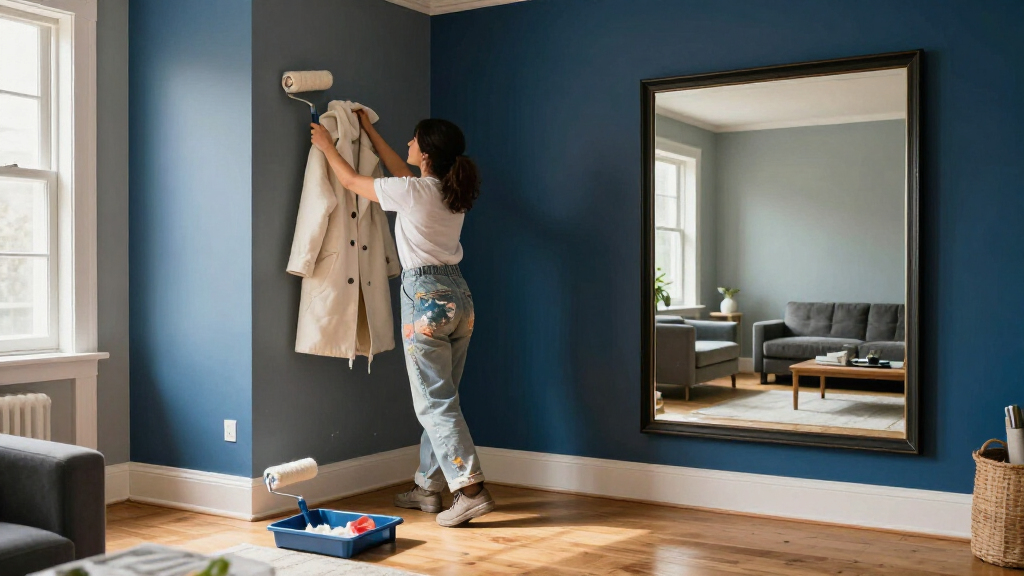
Guyton recommends an accent wall for people who want to introduce color without covering the entire room. She says it can add a focal point and make a room seem longer. For a more enveloping approach, Marlowe suggests color-drenching: using one color on walls, trim, doors and ceiling. She says doing so can make the boundaries between surfaces less apparent. A difference in finish—matte walls with glossy trim or cabinetry—is another option she offers for adding variation.
Other ideas include painting the ceiling, using color on the lower four to six feet of a wall, considering dark saturated shades, and testing paint undertones. Waroquier advises trying large swatches in the actual room and checking them at different times of day. He also cautions that stark white can look flat or gray in rooms with little natural light, where a softer neutral or a more saturated color may work better.
How Paint Changes Room Perception
The advice matters to renters and homeowners considering a room refresh because paint is a surface-level change that can alter the way boundaries, height and depth are perceived. A ceiling painted to match the walls, for example, may make the transition between them less distinct; a partial-height treatment can add color without committing to a full wall.
These approaches are not a substitute for increasing floor area, and the report does not establish that any single color or technique will work in every room. Its practical takeaway is to treat paint choice as part of the room’s overall visual composition, taking account of natural light, undertones and the surfaces being painted rather than relying on the assumption that pale colors always make a space feel larger.
Products Worth Considering

Philips Hue Large Smart Light Tube, Black – White and Color Ambiance LED Color-Changing Light – 1 Pack

Blueair Blue Pure 211i Max Smart Air Purifier for Large Rooms

Philips Hue Festavia Globe Outdoor String Lights, 32 Bulbs, 91 ft
As an affiliate, we earn on qualifying purchases.
Seven Approaches From Designers
The report places paint alongside familiar small-room strategies such as mirrors, which reflect light, and reducing clutter. Its featured designers instead focus on how color can shape the perception of a room’s edges and proportions. The seven approaches are accent walls, color-drenching, checking undertones, painting the ceiling, splitting the wall with a partial-height treatment, considering dark hues, and letting natural light guide color selection.
The techniques do not all aim for the same mood. Guyton describes partial-height painting as a way to add a controlled pop of color, while Waroquier says darker shades can create a cocooning effect and visual depth. Marlowe’s color-drenching suggestion can use either light or saturated colors. The shared theme is that the result depends on how color relates to the room, rather than on a simple light-versus-dark rule.
“Paint is a great way to make a small room feel larger because it changes the visual perception of the space.”
— Joe Waroquier, founder and principal designer of Joe Waroquier Home
Results Depend on Each Room
The report presents designers’ opinions and recommendations; it does not provide measured tests comparing how much larger rooms appear under each technique. It also does not identify one approach as universally effective. The perceived result may vary with room dimensions, windows, existing finishes, furnishings and the specific paint color.
The source material does not state when the report was published, and it offers no cost estimates, product comparisons or quantified outcomes. Readers should treat the ideas as options to test in their own space, rather than as a guaranteed way to make any small room feel bigger.
Test Colors Before Committing
The report’s immediate practical guidance is to sample several shades on a large area and view them under the room’s changing light before choosing a final color. Readers considering color-drenching can also compare finishes on walls and trim, while those uncertain about a bold change may try an accent wall or partial-height treatment first.
No follow-up study or further milestone is identified in the source. The next step for anyone applying the advice is a room-by-room decision based on the light, surfaces and effect they want; the final appearance remains specific to each space.
Key Questions
What paint approach does the report describe as most effective?
Designer Jewel Marlowe calls color-drenching her favorite and likely most effective approach: painting the walls, trim, doors and ceiling one color. That is her professional view, not a tested guarantee for every room.
Do designers recommend only light colors for small rooms?
No. The designers say dark, saturated shades can create visual depth and a cocooning effect. They also recommend considering undertones and the room’s natural light instead of choosing by lightness alone.
How should I choose paint for a room with little natural light?
Waroquier says stark white can look flat or gray in a darker room. He suggests considering a softer neutral or a more saturated shade, then testing large swatches in the space at different times of day.
What is a partial-height paint treatment?
Guyton suggests painting roughly four to six feet up a wall, around chair-rail height, or pairing the treatment with wainscoting. The approach adds color without covering the full wall.
Will these paint tricks physically make a room bigger?
No. The report describes changes to visual perception; paint does not change the room’s physical dimensions. The effect can vary with the layout, light and chosen colors.
Source: housebeautiful.com