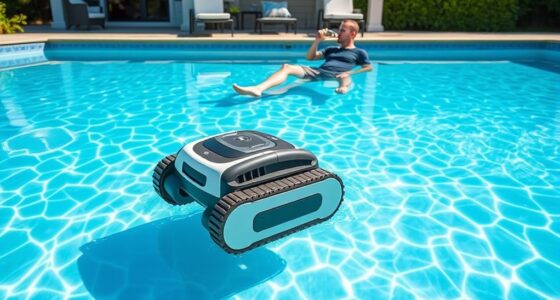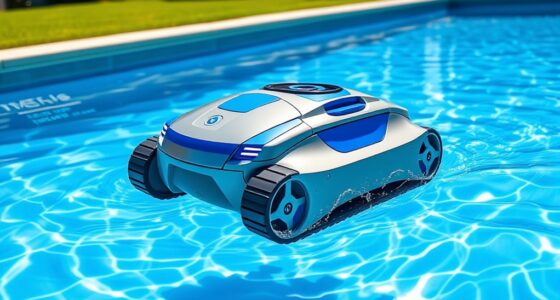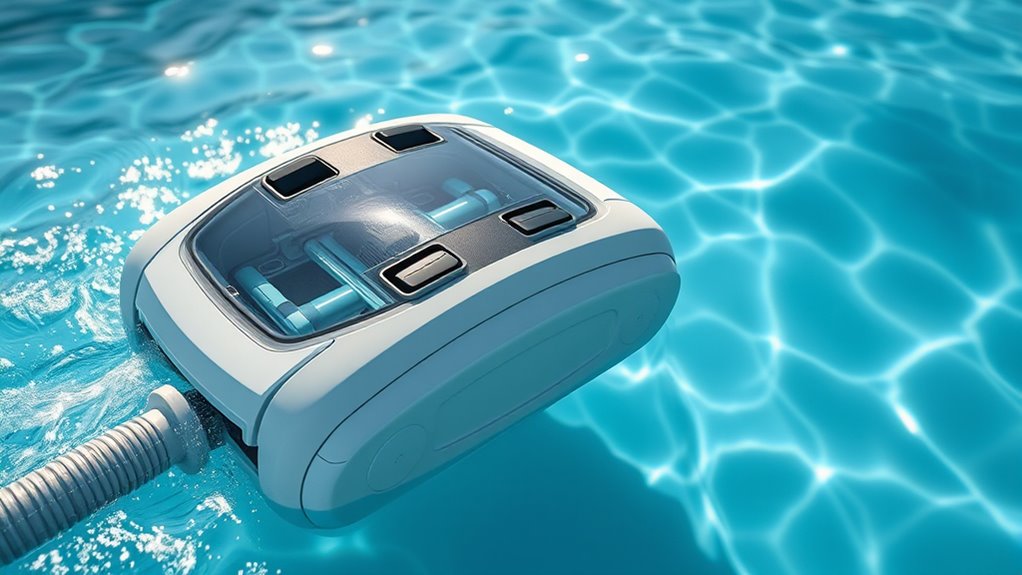

To prevent suction loss in your pool cleaner, regularly clean and inspect the sensors, filters, hoses, and seals. Keep the sensors free of dirt and properly calibrated for smooth navigation. Check filters frequently and clean or replace them to guarantee steady water flow. Ensure hoses and connections are secure and free of leaks. Staying on top of maintenance helps your cleaner work efficiently; continue with these tips to learn more about keeping your pool spotless.
Key Takeaways
- Regularly clean and inspect navigation sensors to prevent steering errors and suction loss.
- Check and maintain filters, ensuring they are clean and properly seated for optimal water flow.
- Monitor hose connections and seals for leaks, replacing damaged parts promptly.
- Avoid air leaks by securing all hoses and fittings tightly during operation.
- Conduct routine maintenance on all components to ensure consistent suction and cleaning performance.

Have you ever noticed your pool cleaner losing suction and stopping mid-clean? It can be frustrating, especially when you’re eager for a spotless pool. Many times, this issue stems from problems with robotic navigation or clogged filters. Understanding how these factors affect suction can help you prevent future interruptions and keep your cleaner running smoothly.
Robotic navigation plays a key role in how effectively your pool cleaner covers the entire surface. If the robot isn’t steering properly—perhaps due to sensors being dirty or misaligned—it might not reach all areas or could get stuck. When the cleaner’s navigation falters, it often results in inconsistent suction because the device isn’t moving as intended, causing it to stall or lose suction altogether. Regularly inspecting and cleaning the navigation sensors ensures they stay clear of debris and grime, which maintains ideal movement. Proper calibration of the navigation system also helps your cleaner map the pool accurately, reducing the chances of it getting stuck or missing spots where debris accumulates. Additionally, using high-quality filters can improve water flow and overall suction performance. Keeping the filter system well-maintained is crucial for optimal operation, as it directly impacts water flow and suction power. Regularly replacing or upgrading filters can also prevent deterioration in performance over time. Also, staying aware of the filter pressure readings can warn you of potential clogging before it severely impacts suction.
Properly maintained navigation sensors ensure your pool cleaner moves efficiently and avoids loss of suction.
Filter maintenance is equally vital when it comes to preventing suction loss. Over time, filters collect dirt, leaves, and other debris that restrict water flow. When filters become clogged, the suction power diminishes, and your pool cleaner can’t operate efficiently. To keep it running at peak performance, you should routinely check and clean the filters. Depending on your model, this might mean removing and rinsing the filter basket, checking the cartridge, or backwashing the sand or DE filter. Don’t wait until you notice a decrease in cleaning performance—regular maintenance prevents buildup that could cause a substantial drop in suction. Also, ensure the filters are properly seated after cleaning, as a loose filter can cause leaks or reduce suction further. Furthermore, inspecting hoses, connections, and seals regularly helps identify potential issues before they lead to suction problems. Air leaks or damaged hoses can also compromise suction, making it seem like the cleaner is losing power. Maintaining all parts in good condition, along with keeping filters clean and sensors unobstructed, will greatly reduce the chances of suction loss. Additionally, checking hose connections periodically can help catch leaks early, preventing loss of suction during operation. Properly securing all connections and replacing worn seals when necessary are key steps to sustain optimal water flow.

2Pack 400LED Smart 4th of July String Lights | 164FT App Controlled Red White and Blue Lights, Waterproof Patriotic RGB Color Changing String Lights with Remote & Timer Indoor Outdoor for Memory Day
RGB String Lights with 16 Million Colors | The smart 4th of July color changing string lights can...
As an affiliate, we earn on qualifying purchases.
Frequently Asked Questions
How Often Should I Check My Pool Cleaner’S Hoses for Leaks?
You should inspect your pool cleaner’s hoses regularly to guarantee leak prevention. It’s best to do a hose inspection at least once a month, especially before and after heavy use or in the off-season. Look for cracks, holes, or loose fittings that could cause leaks. Promptly fixing any issues helps maintain peak suction and keeps your cleaner working efficiently, saving you time and effort in the long run.
Can Debris Buildup Inside the Cleaner Cause Suction Loss?
Imagine your pool cleaner working tirelessly, then suddenly losing power. Could debris buildup inside be the culprit? Yes, debris accumulation and filter clogging can block the suction path, causing a drop in performance. As debris and dirt gather, they restrict water flow, leading to suction loss. Regularly inspect and clean your cleaner, ensuring no debris or clogged filters hinder its suction, so it keeps working efficiently and your pool stays spotless.
What’S the Best Way to Store My Pool Cleaner During Off-Season?
When storing your pool cleaner during the off-season, focus on proper maintenance tips and storage solutions. First, clean the filter and brushes thoroughly to remove debris. Next, rinse the unit with fresh water and let it dry completely. Store it in a cool, dry place away from direct sunlight. Using a storage bag or container helps protect it from dust and damage, ensuring it’s ready for use when swimming season returns.
Are There Specific Pool Types More Prone to Suction Problems?
You might think all pools are the same, but some are like suction loss magnets! Sand pools and saltwater pools are especially prone to suction problems because their unique debris and water chemistry can clog filters or damage seals. If you own one, stay vigilant—regular maintenance and proper cleaning are your best defenses. Don’t let these pool types turn into suction loss horror stories!
How Do I Troubleshoot if My Cleaner’S Suction Drops Suddenly?
If your cleaner’s suction drops suddenly, start troubleshooting by inspecting the hose for kinks, cracks, or blockages that could restrict flow. Check the pressure adjustment to verify it’s set properly for maximum suction. Also, examine the skimmer and pump baskets for debris that might reduce suction. Regularly inspecting these components helps maintain consistent suction and keeps your pool cleaner working efficiently.

Dirnun 4th of July Decorations Red White and Blue Lights with 40 Led Big Stars, 4th of July Lights for Indoor Outdoor Home Garden Golf Cart Patriotic Theme Memorial Independence Day Decorations
Perfect 4th of July Lights: These red white and blue star string lights which is similar to the...
As an affiliate, we earn on qualifying purchases.
Conclusion
Think of your pool cleaner as a loyal guardian, tirelessly protecting your oasis. When suction loss occurs, it’s like a shield weakening, leaving your pool vulnerable to dirt and debris. By maintaining your cleaner and checking for leaks, you keep that shield strong. Remember, a well-maintained cleaner is your pool’s faithful knight—always ready to defend its crystal-clear waters. Keep it in top shape, and your pool will stay pristine, a shining jewel in your backyard kingdom.

LAMPHOME 100 LED Red White and Blue Lights, 4th of July Decorations String Lights Plug in Indoor Outdoor, 16 Modes Waterproof Patriotic Light for Independence Day Holiday Memorial Day Party Decor
Patriotic Red, White & Blue String Lights: Features a premium 32.5ft white wire with 100 vibrant red, white,...
As an affiliate, we earn on qualifying purchases.

ReyeeInc Solar 4th of July String Lights, 100 Stars and 39.4FT Outdoor Waterproof Patriotic Lights, Solar Battery Operated Fourth of July Lights for Golf Cart, Camping, Outside Decorations
Show Your Patriotism: ReyeeInc red white and blue outdoor lights are a stunning and patriotic addition to Memorial...
As an affiliate, we earn on qualifying purchases.