TL;DR

Get decor and gifts delivered free with Prime
- Fast, free delivery on millions of items
- Prime Video, Amazon Music and more included
- Member-only deals all year
A Livingetc design report explains how more than one rug can help define areas in an open-plan room or add depth when layered. Designers recommend linking rugs through color, texture or contrast and caution that side-by-side rugs can make a room feel disconnected if the layout is too small or the join is exposed.
Livingetc has published advice from interior designers on using more than one rug in a room, focusing on how rugs can define separate areas in an open-plan layout without putting up walls. The report says success depends on choosing a layout that fits the room and connecting the rugs through color, texture, pattern or scale.
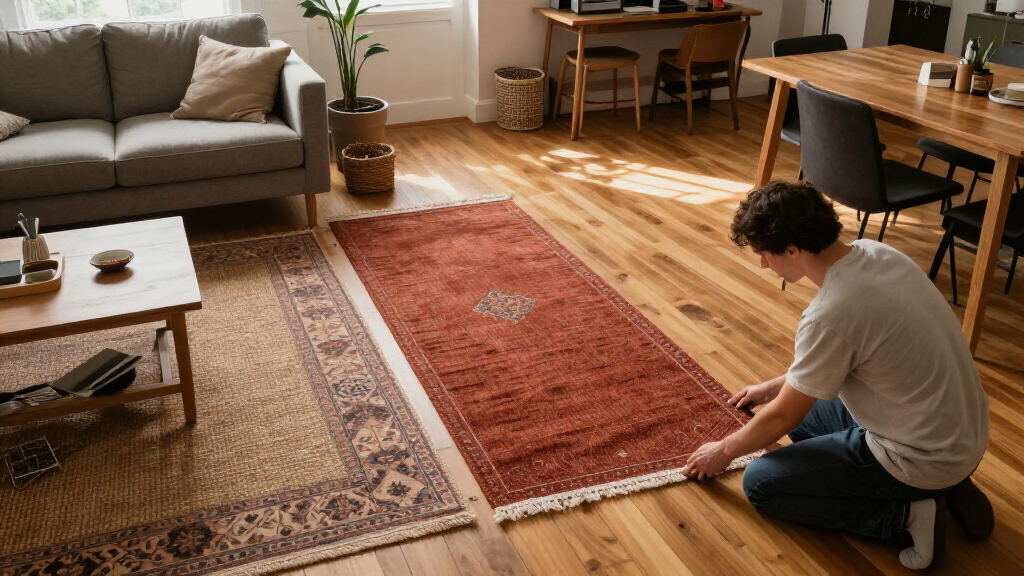
In an open-plan home where the kitchen, dining area and lounge share one footprint, separate rugs can help mark out where activities happen. The report suggests placing a larger rug beneath a sofa and chairs and another under a dining table, so each furniture group has a visual anchor while the overall space remains open.
For one seating area, the report describes layering as an alternative to side-by-side placement. A large, relatively plain rug can ground the arrangement, with a smaller accent rug on top bringing in a stronger pattern, vintage design or accent color. Designer Marie Flanigan recommends that the top rug be smaller and serve as a more expressive layer.
Two rugs do not need to match, but they should have a point of connection. The report suggests repeating a color, balancing a bold pattern with a quieter one, or linking designs through texture. It also notes that a flatweave can suit a dining area, while a softer pile may be more inviting in a seating zone.
Rugs Can Mark Zones Without Walls
Rugs can provide visual boundaries without closing off an open-plan room. That can make a shared space easier to read and give living and dining areas distinct identities, while preserving sightlines and movement between them.
The advice also points to a practical trade-off: multiple rugs may add flexibility and character, but poor placement can make a room feel fragmented. In smaller rooms, two rugs may leave an awkward strip of flooring between them. Where no single rug is large enough, placing two together may work in a spacious room if the join can be hidden beneath a coffee or dining table.
The report presents these points as design guidance, not a universal rule. The effect depends on the room’s dimensions, furniture arrangement and wider decor, so the same approach may work in one home and feel disjointed in another.
Products Worth Considering

LEVOIT Vital 200S-P Smart Air Purifier for Large Rooms

Dyson W1 PencilWash Cordless Wet and Dry Floor Cleaner with Dock

Philips Hue Festavia Globe Outdoor String Lights, 8 Bulbs, 22 ft
As an affiliate, we earn on qualifying purchases.
Choosing Between Zones and Layers
The Livingetc report frames the question around two different uses. Side-by-side rugs can mark separate functional zones, such as a living area and dining area; layering is intended to build depth within a single grouping, most often a seating arrangement. The layout and intended function should guide the choice.
Designer Ann Marie Cousins, founder of AMC Design, says rugs are useful for zoning open-plan spaces. She also advises that two rugs can be placed together when a room is large and a suitably sized single rug is hard to find, with the join concealed under furniture where possible.
Flanigan’s guidance in the report is more cautious about placing two rugs side by side, warning that the arrangement can feel disconnected. The two views are not necessarily in conflict: Cousins discusses larger rooms and concealed joins, while Flanigan cautions against a layout that separates the space without a clear visual connection.
““Rugs are a great way to zone a space within your home, working particularly well in open-plan layouts such as a living room.””
— Ann Marie Cousins, founder of AMC Design
The Right Layout Depends on the Room
The source offers design recommendations rather than measured results or a fixed sizing formula. It does not specify minimum room dimensions, exact rug sizes, or how much space should remain between rugs. Those decisions depend on the room, the furniture and the look a resident wants.
The report also does not establish that one approach works for every open-plan layout. It advises that side-by-side rugs can be effective in a large room, while warning they may feel disconnected, particularly in a smaller space. Whether a particular arrangement succeeds remains a matter of proportion and placement.
Plan the Furniture Before the Rugs
The practical next step, based on the report’s advice, is to decide what each area needs to do and arrange the furniture before choosing rug placement. For distinct living and dining zones, select rugs that anchor their respective furniture groupings and share a visual link. For one seating area, consider a subtle base rug with a smaller accent layer.
Where two rugs meet, check whether the join can sit beneath a table and whether the arrangement leaves a narrow, unintended gap. The report gives no further scheduled development or follow-up; its guidance is intended to help readers assess their own room and furnishings.
Key Questions
Can you have two rugs in an open-plan room?
Yes. The Livingetc report says two rugs can help define living and dining zones while leaving the space open. Their colors, patterns or textures should relate so they feel part of the same room.
Should two rugs be placed side by side or layered?
Use side-by-side rugs for separate zones and consider layering for one seating area. The report cautions that side-by-side rugs can feel disconnected, especially if the room is small or the join is conspicuous.
How can layered rugs look cohesive?
Choose a larger, quieter rug as the base and a smaller accent rug with more color or pattern on top. A shared color, complementary textures or balanced pattern contrast can help connect the two.
Can two rugs be used in place of one large rug?
The report says this can work in a larger room when a single rug is difficult to find. If possible, position the seam beneath a coffee table or dining table to make the join less visible.
Source: livingetc.com