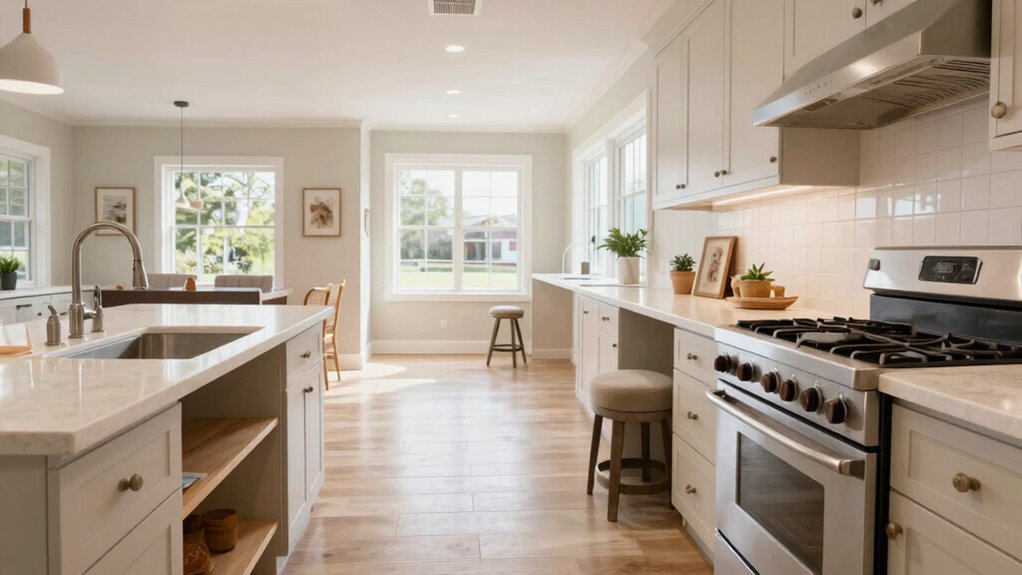

A truly age-friendly kitchen is safe, accessible, and easy to use for everyone. You’ll find touchless sinks and smart appliances that simplify tasks, along with ergonomic countertops and well-placed storage to reduce strain. Good lighting, non-slip floors, and rounded edges make it safer, while open layouts and adjustable surfaces improve movement and comfort. By incorporating these features, your kitchen can support independence and adapt to changing needs—keep exploring to discover more ways to enhance your space.

Get decor and gifts delivered free with Prime
- Fast, free delivery on millions of items
- Prime Video, Amazon Music and more included
- Member-only deals all year
Key Takeaways
- Features adaptive technology like touchless faucets and smart appliances to support independence and ease of use.
- Incorporates ergonomic design with adjustable countertops, proper lighting, and safety features to reduce strain and prevent falls.
- Utilizes open layouts and the “work triangle” for easy movement and accessible access to key areas.
- Includes innovative storage solutions like pull-out shelves and lazy Susans for effortless item retrieval.
- Ensures safety with non-slip flooring, rounded edges, and good lighting to promote a secure environment.
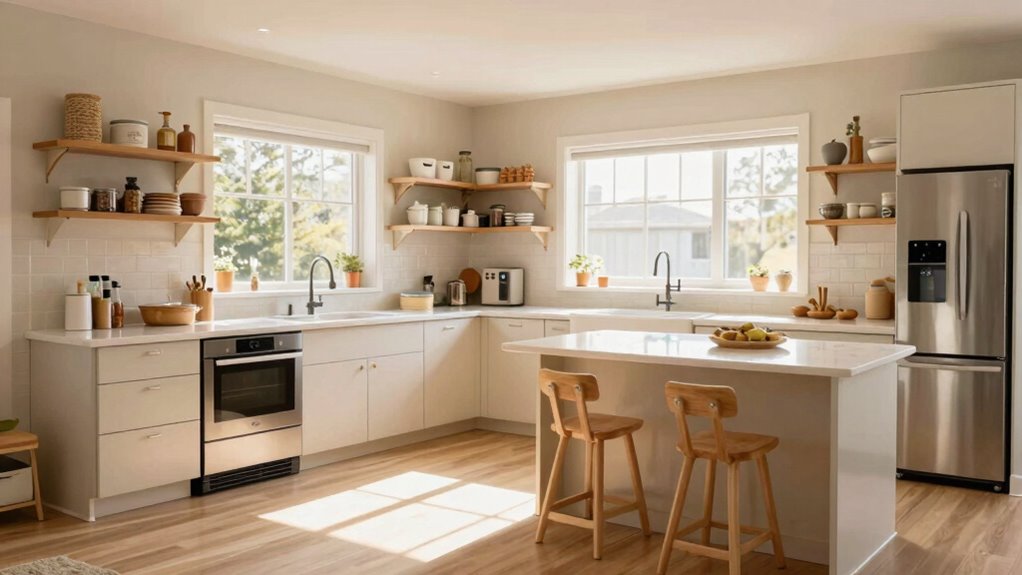
Have you ever considered how your kitchen can adapt to your changing needs as you age? An age-friendly kitchen isn’t just about avoiding accidents; it’s about creating a space that supports your independence and safety at every stage. One of the key features is incorporating adaptive technology. This can include touchless faucets, which reduce the need to grip and turn handles, making everyday tasks easier and safer. Smart appliances that respond to voice commands or can be controlled remotely also add convenience, allowing you to operate your kitchen with minimal effort. These technologies help you maintain independence and make daily routines smoother.
Create an accessible kitchen with adaptive tech and ergonomic design for safety and independence at every age.
Equally important is ergonomic design, which emphasizes comfort and accessibility. When designing an age-friendly kitchen, you want countertops at a height that minimizes strain on your back and shoulders. Installing pull-out shelves and drawers ensures everything you need is within easy reach, eliminating the need to bend or stretch excessively. You should also consider the placement of frequently used items—keeping them at waist level prevents unnecessary bending and reaching. Good lighting is essential, especially task lighting that illuminates work surfaces clearly, reducing the risk of slips or cuts. Non-slip flooring and rounded countertop edges further enhance safety, reducing the chance of falls or injuries. Incorporating ergonomic principles can further optimize the overall comfort and safety of your kitchen layout. Additionally, using adaptive technology can help accommodate changing mobility levels and make the space more versatile. Integrating assistive devices can also significantly enhance usability for those with limited mobility. A thoughtful combination of these features can make a significant difference in daily safety and ease of use.
An age-friendly kitchen also involves thoughtful layout planning. You want a smooth, open flow that minimizes movement and avoids clutter, which can be a tripping hazard. A well-designed kitchen often employs the “work triangle” concept, positioning the sink, stove, and refrigerator in a way that allows you to move easily between them without backtracking or awkward reaching. This setup reduces physical strain and makes cooking more comfortable. Additionally, adjustable-height work surfaces or seated workstations can make food preparation more accessible, especially if mobility is limited. Incorporating accessible design principles can further ensure the space accommodates diverse needs and abilities. Proper storage solutions, like pull-out shelves and lazy Susans, also contribute to a safer, more efficient kitchen environment.
Storage solutions are another essential aspect. Deep cabinets, pull-out shelves, and lazy Susans make it easier to access items without overreaching or climbing on stools. Organizing your kitchen efficiently ensures everything is within arm’s reach, decreasing the risk of accidents and making daily tasks less tiring. For added safety, consider using non-slip surfaces on floors and mats in high-traffic areas. Overall, an age-friendly kitchen combines adaptive technology with ergonomic design principles to create a space that’s safe, functional, and adaptable to your evolving needs. It’s about crafting a kitchen that encourages independence, reduces hazards, and makes your time in the space enjoyable regardless of age or ability.
As an affiliate, we earn on qualifying purchases.
Frequently Asked Questions
How Do I Budget for an Age-Friendly Kitchen Remodel?
To budget for an age-friendly kitchen remodel, start by researching universal design features and ergonomic tips that fit your needs. Then, list essential updates like accessible countertops, lever handles, and non-slip flooring. Prioritize these elements, get estimates from contractors, and set aside a contingency fund for unexpected costs. This approach helps you plan financially while ensuring your kitchen remains safe, functional, and adaptable as you age.
Are There Specific Brands Known for Durable, Age-Friendly Kitchen Products?
You’ll find brands like Kohler, Moen, and Americans with Disabilities Act (ADA)-compliant lines are known for durable, age-friendly kitchen products. Look for non-slip flooring options and accessible storage solutions, such as pull-out shelves and lower cabinets, to enhance safety and ease of use. These brands prioritize quality and safety, ensuring your kitchen remains functional and secure as you age. Always check product reviews for durability and accessibility features.
What Are Common Mistakes to Avoid When Designing an Age-Friendly Kitchen?
You should avoid cluttering your space, as it can cause accidents. Don’t forget to incorporate ergonomic tools that reduce strain, and opt for visual enhancements like contrasting colors or good lighting to improve visibility. Also, steer clear of high shelves or deep cabinets that are hard to reach. By focusing on these aspects, you’ll create a safer, more accessible kitchen that’s easy to use at any age.
How Can I Incorporate Technology Into an Age-Friendly Kitchen?
You can incorporate technology into your age-friendly kitchen by choosing smart appliances that simplify cooking and cleaning, like voice-activated ovens or refrigerators. Focus on ergonomic design by installing touchless faucets and easy-to-reach controls, reducing strain and enhancing safety. Using smart technology and ergonomic features together creates a more accessible, efficient space that adapts to your needs, making daily tasks easier and more enjoyable.
What Are the Best Materials for Safety and Longevity in an Age-Friendly Kitchen?
You should choose non-slip flooring like textured vinyl or rubber to prevent falls and guarantee safety. Opt for durable materials such as quartz or stainless steel for countertops and backsplashes, which resist stains and wear. Incorporate ergonomic tools with easy-to-grip handles to reduce strain and improve comfort. These choices enhance safety and longevity, making your kitchen more accessible and practical for everyday use.
Conclusion
Creating a truly age-friendly kitchen isn’t just about clever counters or easy-access appliances—it’s about cultivating comfort, convenience, and connection. By blending thoughtful design with practicality, you can craft a space that welcomes everyone, regardless of age. So, take small steps today to design a delightful, durable, and dynamic kitchen. Make it modern, manageable, and most importantly, memorable—because an accessible kitchen isn’t just functional; it’s a foundation for fostering family, friendship, and freedom.
Fall Picks
fall essentials
As an affiliate, we earn on qualifying purchases.