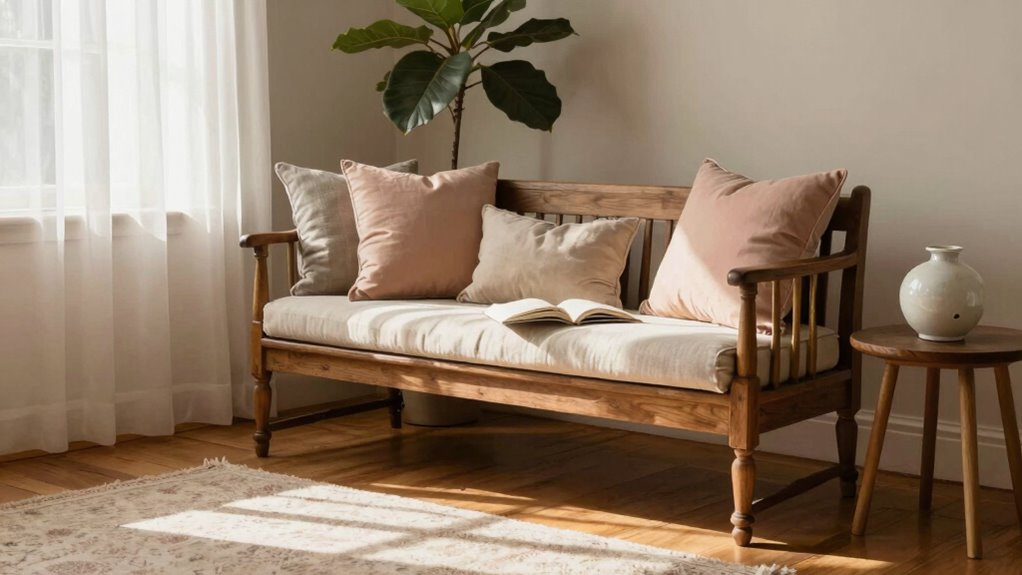

The best place to add a bench in your home is near the entryway, where you can sit comfortably to remove shoes or organize keys, reducing the risk of falls. Outside, a bench in the garden offers a relaxing spot to enjoy nature and stay active. Placing a sturdy, slip-resistant bench in high-traffic or frequently used areas can boost safety and comfort throughout the house. For more helpful tips, keep exploring how placement can support safety and independence.

Get decor and gifts delivered free with Prime
- Fast, free delivery on millions of items
- Prime Video, Amazon Music and more included
- Member-only deals all year
Key Takeaways
- Place near the entryway for easy sitting during shoe removal or quick rest.
- Install in outdoor garden or patio areas for relaxation and safe resting spots.
- Add in high-traffic zones like hallways or living rooms for convenient breaks.
- Position in bathrooms or near stairs to enhance safety and support mobility.
- Ensure benches have supportive features, non-slip feet, and appropriate height for comfort and safety.
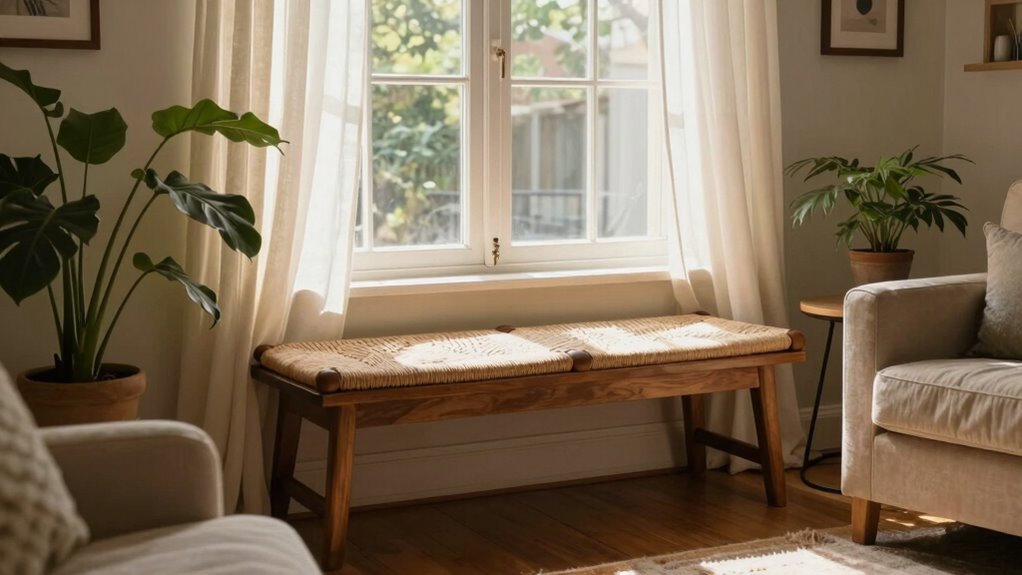
Adding a bench to an older adult’s home can considerably enhance safety and convenience, especially in areas where balance or endurance might be a concern. When considering the best spot for a bench, think about places where the person frequently needs to sit or rest. One prime location is the entryway, where a bench can provide immediate comfort upon arrival or departure. Sitting down to put on or take off shoes becomes easier, reducing the risk of falls or slips. An entryway bench also offers a convenient spot to set down bags or keys temporarily, helping keep the area organized and clutter-free. This added comfort can make daily routines smoother and safer. Incorporating biodiversity elements into outdoor seating areas can also promote a calming environment that encourages outdoor activity and mental well-being.
A bench in the entryway eases shoe removal, reduces falls, and keeps belongings organized for safer, smoother daily routines.
Another excellent spot for a bench is in the garden or outdoor seating area. Garden seating becomes a perfect retreat for relaxation and enjoying nature without the strain of standing or walking long distances. Placing a sturdy, comfortable bench in the garden allows an older adult to sit and appreciate the scenery, encouraging outdoor activity and mental well-being. It also offers a safe resting point during gardening activities, which can sometimes be physically demanding. If the garden has uneven terrain, consider adding a bench with supportive features, like armrests, to make getting on and off easier. Including ergonomic design considerations in outdoor furniture can further improve comfort and safety. This outdoor seating can become a favorite spot for socializing or simply taking a break, helping promote a more active and engaged lifestyle.
Think about other high-traffic or frequently used spaces in the home, such as hallways or near the bathroom. A bench in these areas can serve multiple purposes: a resting spot, a place to lay out clothing or supplies, or a safety feature in case of dizziness or fatigue. When selecting a bench, guarantee it’s the right height and sturdy enough to support weight safely. Non-slip feet and a stable design are essential for preventing accidents. Additionally, choosing a bench with a soft, cushioned seat can make sitting more comfortable, especially for longer periods.
Ultimately, the best place to add a bench depends on your loved one’s daily routines and specific needs. Whether it’s the entryway for quick convenience or the garden for outdoor relaxation, placing a bench thoughtfully will boost safety, comfort, and independence. By focusing on areas where they spend a lot of time or may need support, you create a safer environment that encourages more active and enjoyable living.
sturdy slip-resistant entryway bench
As an affiliate, we earn on qualifying purchases.
As an affiliate, we earn on qualifying purchases.
Frequently Asked Questions
How Do I Choose a Bench That Fits My Home Decor?
To choose a bench that fits your home decor, consider your decor style—modern, traditional, or rustic—and pick a design that complements it. Focus on color coordination by selecting a bench in hues that match or subtly contrast with your existing furniture. Opt for materials and fabrics that blend seamlessly with your decor, ensuring the bench enhances your space without feeling out of place.
What Safety Features Should I Look for in a Bench?
You should look for a bench with a non-slip surface and sturdy construction to guarantee safety. A non-slip surface prevents falls, especially when the floor is wet or slippery, while sturdy construction offers stability and support. Check that the bench has no sharp edges and is made from durable materials. These features help reduce fall risks and provide confidence when sitting or standing, making the space safer for older adults.
Are There Specific Materials Best for Older Adults?
You should choose a bench made from sturdy, non-slip materials like rubber or textured wood, which offer slip-resistant surfaces to prevent falls. Look for ergonomic support with a comfortable seat and appropriate height to reduce strain. Avoid slippery or overly smooth surfaces, and consider padded or cushioned options for added comfort. Prioritizing these materials helps guarantee safety and comfort for older adults when using the bench.
How Do I Determine the Right Height for the Bench?
To determine the right height for a bench, focus on height adjustment and ergonomic design. You want the seat height to allow the older adult to sit comfortably with feet flat on the floor and knees at a 90-degree angle. Measure their knee height or consult ergonomic guidelines, then choose or customize a bench that supports easy sitting and standing, reducing strain and increasing safety.
Can a Bench Be Easily Moved or Repositioned?
Yes, a bench can be easily moved or repositioned if it has a lightweight design and portable mobility features. Look for benches made from lightweight materials like aluminum or plastic, which are easy to lift and carry. Some benches come with handles or wheels, making them even more convenient to reposition around the home. This flexibility allows you to adapt the space as needed, ensuring safety and comfort for the older adult.
Conclusion
Adding a bench in your home is like planting a sturdy tree—it offers support, comfort, and a place to pause amidst life’s busy branches. Whether in the hallway, near the entryway, or by the favorite chair, a well-placed bench becomes a trusted anchor for your loved one’s daily routine. So, consider where it can best serve as a steadying presence, turning everyday moments into a smooth journey rather than a stumble.
Halloween Picks
halloween
As an affiliate, we earn on qualifying purchases.