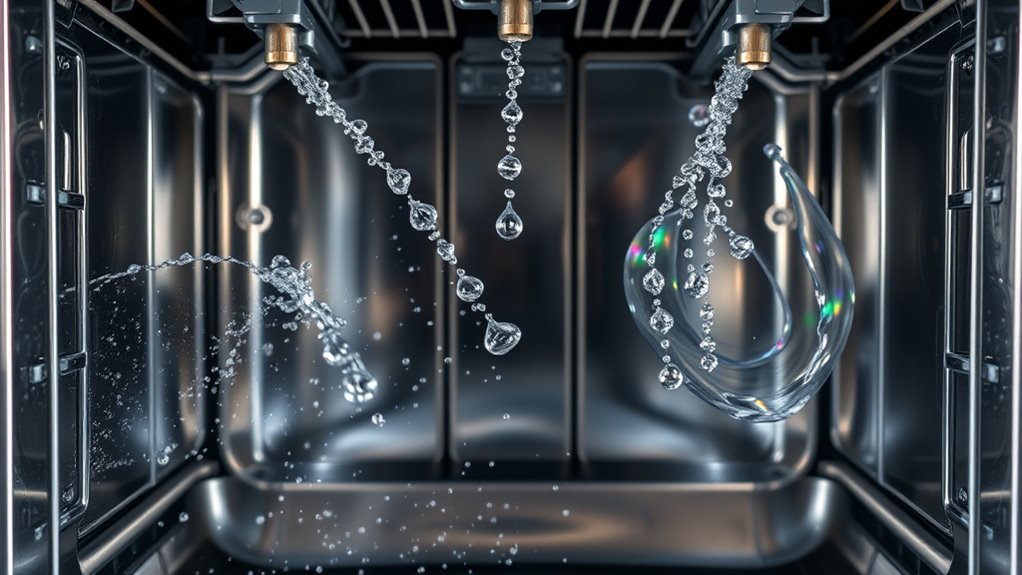

In your dishwasher, high-pressure water jets create a powerful spray that loosens dirt and grease, while specially formulated detergents, containing surfactants and enzymes, break down stubborn stains effectively. This synergy between intense water flow and chemistry guarantees your dishes come out spotless. Proper maintenance, like cleaning spray arms, keeps everything functioning smoothly. If you’re curious how these elements work together to make your dishes sparkle, discovering more about dishwasher science can reveal even more cleaning secrets.
Key Takeaways
- High-pressure water jets in dishwashers ensure thorough coverage and dislodging of debris from all dish surfaces.
- Detergent chemistry, including surfactants and enzymes, breaks down and lifts away food residues effectively.
- Optimal cleaning results depend on the synergy between water jet force and specially formulated detergents.
- Proper maintenance of spray arms and water flow maximizes jet efficiency and cleaning performance.
- Effective drying involves water evaporation, heat, and sometimes specialized agents to prevent residue and streaks.
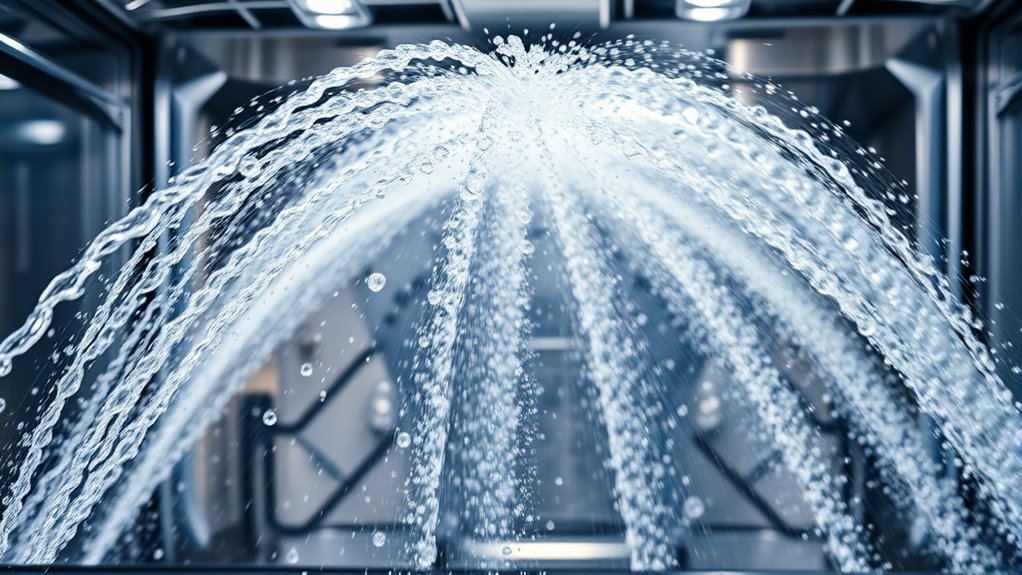
Have you ever wondered how your dishwasher cleans your dishes so effectively? It all comes down to a combination of factors working together behind the scenes. One of the most essential elements is the water pressure. When you start a cycle, your dishwasher’s pump generates a powerful flow of water, shooting it through jets positioned strategically to cover every inch of your dishes. The high water pressure ensures that food particles and grease are dislodged from plates, glasses, and utensils, washing away debris that might otherwise cling stubbornly. Without sufficient pressure, even the best detergent can’t do its job properly, leaving residues or streaks. That’s why modern dishwashers are designed to optimize water flow, creating a dynamic spray pattern that reaches all surfaces.
But water pressure alone isn’t enough. The detergent formulation plays an equally important role. You might not realize it, but the chemistry of your dishwasher detergent is carefully engineered to complement the water’s force. Detergents contain surfactants—special molecules that reduce surface tension—allowing water to penetrate grease and grime more effectively. Additionally, enzymes in the formula target specific stains like proteins, starches, or fats, breaking them down into smaller, more manageable molecules. When combined with the high-pressure water jets, these enzymes can work more efficiently, loosening dirt from even the most stubborn spots. Modern formulations also include water softeners and anti-redeposition agents, which prevent minerals from depositing on dishes or dirt from settling back onto surfaces.
The synergy between water pressure and detergent formulation is what makes your dishwasher so effective. The jets propel a powerful stream of water at high velocity, hitting every surface with force, while the detergent’s chemistry ensures that dirt is broken down and lifted away. This delicate balance is essential—if the water pressure drops or the detergent isn’t properly formulated, cleaning performance suffers. That’s why regular maintenance, like cleaning spray arms and using the right detergent, is so important. When these elements work together seamlessly, your dishwasher transforms dirty, greasy dishes into sparkling, spotless ware with minimal effort on your part. It’s a clever combination of physics and chemistry, designed to make your life easier and your dishes cleaner.
Frequently Asked Questions
How Do Different Water Pressures Affect Cleaning Efficiency?
Higher water pressure boosts cleaning efficiency by increasing water flow, allowing jets to reach every surface more effectively. If pressure regulation is too low, water may not remove stubborn residues, leading to less clean dishes. Conversely, excessive pressure can damage dishes or the machine. You should find a balanced pressure level to optimize water flow, ensuring thorough cleaning without risking damage. Adjust your dishwasher’s settings accordingly for the best results.
What Role Does Temperature Play in Detergent Effectiveness?
Temperature acts like a key to unlock detergent effectiveness, making it crucial for cleaning. When you optimize temperature, you enhance your detergent formulation’s ability to break down grime and grease. Warmer water usually boosts cleaning power by increasing chemical reactions, but too hot can damage delicate items. So, you need to find the right temperature for optimal performance, ensuring your dishwasher works efficiently and your dishes come out sparkling clean.
How Do Modern Dishwashers Detect and Prevent Water Leaks?
Modern dishwashers detect and prevent water leaks using leak sensors that monitor for unusual moisture or water accumulation. When a leak is detected, these sensors trigger an automatic shutoff, stopping water flow to prevent damage. This system provides peace of mind, ensuring your appliance stops leaks early and minimizes potential water damage, making your dishwasher safer and more reliable.
Can Dishwasher Jets Remove Stubborn Mineral Deposits?
Dishwasher jets, with their powerful jet power, can tackle stubborn mineral buildup. While they excel at loosening grime, thick mineral deposits may require a special descaling agent first. Think of it as a duel: the jets’ force versus tough mineral deposits. Regularly cleaning your dishwasher and using the right detergent prevents future buildup, ensuring the jets stay effective and your dishes come out sparkling.
How Does Drying Technology Vary Between Models?
Drying technology varies between models by offering different methods like heated dry, fan-assisted, or condensation drying. You can improve energy efficiency with models that have sensor-based cycle customization, adjusting drying time based on load moisture levels. Some models use innovative air circulation or energy-saving features, helping you reduce power consumption while ensuring your dishes dry thoroughly. Choose a dishwasher with advanced drying options to balance efficiency and effective results.
Conclusion
Now that you understand how water jets, detergent chemistry, and drying work together, you hold the secret to spotless dishes. Think of your dishwasher as a tiny symphony, each part playing its role perfectly. When you appreciate the science behind it, every cycle becomes a performance. So next time you load your dishes, remember—you’re not just cleaning, you’re orchestrating a technological masterpiece. Who knew science could make your kitchen feel like a grand finale?