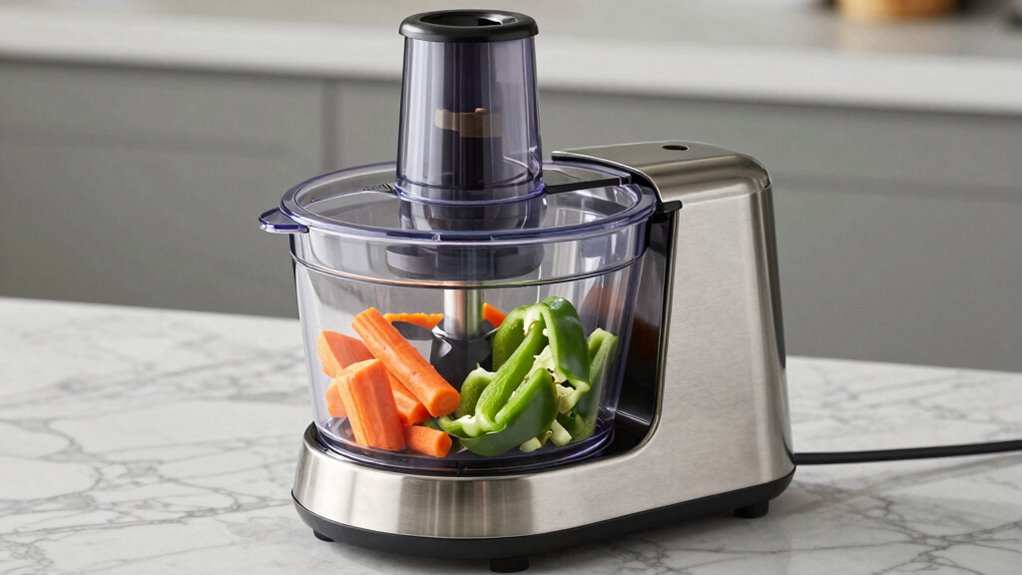

Wattage might seem like the main factor in choosing a food processor, but it’s not the whole story. A higher wattage doesn’t guarantee smoother or faster results if the motor isn’t efficient or if the blades aren’t well-designed. Motor efficiency, blade sharpness, and placement all play a role in performance. To get the best appliance for tough tasks, focus on the whole system—there’s more to explore if you look closer.

Get decor and gifts delivered free — and shop member deals
- Fast, free delivery on millions of items
- Access to Prime Big Deal Days deals on October 6–7
- Prime Video, Amazon Music and more included
Key Takeaways
- Wattage indicates capacity but doesn’t ensure performance; motor efficiency and blade design are crucial.
- An efficient motor produces more torque with less power, outperforming higher-wattage but less optimized models.
- Blade quality and design significantly impact processing effectiveness, regardless of wattage.
- Real-world performance depends on how well motor efficiency and blade engineering work together.
- Focusing solely on wattage may lead to choosing less capable food processors for tough tasks.
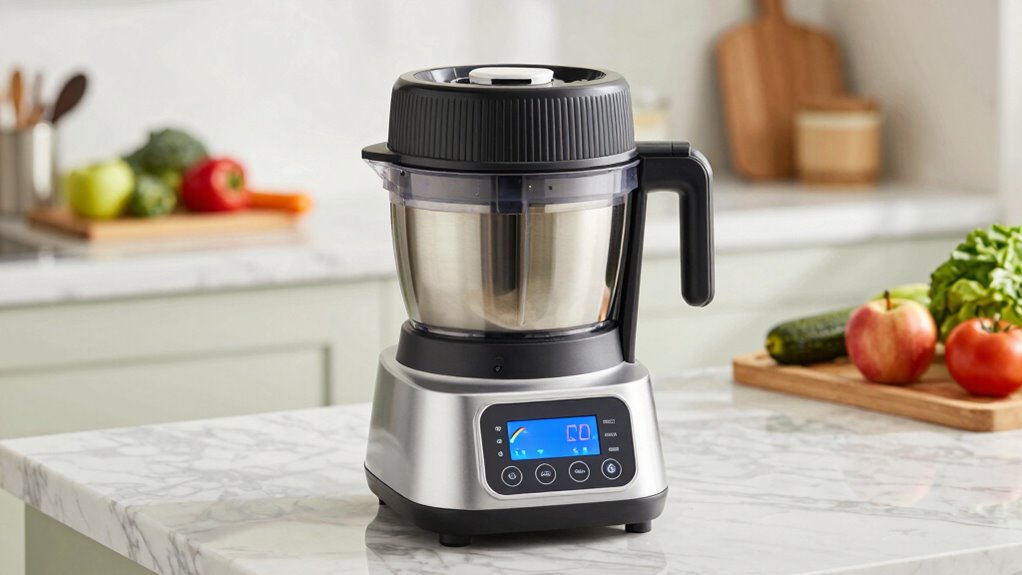
Have you ever wondered what determines a food processor’s effectiveness? It’s tempting to assume that wattage alone tells you the whole story, but that’s not entirely true. While power ratings give you a rough idea of a machine’s capacity, other factors like motor efficiency and blade design play vital roles in how well your food processor performs. A high wattage doesn’t automatically guarantee smoother, faster results if the motor isn’t efficient or if the blades aren’t designed to handle tough ingredients effectively. Additionally, local automation features such as smart controls and preset functions can enhance usability and performance. Motor efficiency is key here. Think of it as how well the motor converts electrical energy into mechanical power. An efficient motor uses less energy to produce more torque, meaning it can handle dense ingredients without bogging down or overheating. When shopping, look beyond the wattage number and consider how the motor is engineered. A more efficient motor often operates quieter, generates less heat, and maintains consistent power during extended use. This means your food processor can tackle tough tasks like kneading dough or chopping hard vegetables without losing speed or risking damage. Blade design is just as important. The blades are the workhorses that cut, chop, and blend your ingredients. Their shape, sharpness, and placement determine how effectively they process food. Well-designed blades create ideal airflow and cutting angles, reducing strain on the motor and ensuring even results. For example, a multi-tiered blade system can handle different textures better than a simple single blade, giving you finer purees or chunkier mixes depending on what you need. Additionally, blades made from high-quality materials stay sharper longer, which means less frequent sharpening or replacement, keeping your food processor performing at peak levels. While wattage provides a quick reference for a machine’s potential, focusing on motor efficiency and blade design gives you a clearer picture of real-world performance. A lower-wattage unit with a highly efficient motor can outperform a higher-wattage model that relies on less sophisticated engineering. Similarly, even the most powerful motor won’t reach its full potential if the blades aren’t designed to maximize cutting efficiency. When choosing a food processor, consider how these elements work together rather than just the wattage number. By doing so, you’ll select a device that’s capable of handling your toughest tasks with ease, lasting longer, and delivering consistent results every time.
As an affiliate, we earn on qualifying purchases.
Frequently Asked Questions
How Does Blade Design Affect Food Processing Efficiency?
You’ll notice that blade design directly impacts food processing efficiency by enhancing cutting precision and durability. Sharp, well-crafted blades cut ingredients more evenly, reducing processing time and effort. Durable blades resist dulling over time, maintaining efficiency. When choosing a food processor, look for blades made from high-quality materials with precise cutting edges, ensuring consistent performance and longer-lasting durability for all your chopping, slicing, and pureeing needs.
What Role Does Motor Type Play in Performance Longevity?
Imagine you’re in a vintage kitchen, where reliable tools matter. The motor type markedly impacts your food processor’s performance longevity. Brushless motors, for example, offer greater durability and are less prone to wear, making them ideal for frequent use. Factors like motor durability and build quality determine how long your appliance lasts. Choosing a high-quality motor means your processor stays powerful and dependable, saving you money and frustration over time.
Can a Lower-Wattage Processor Still Handle Tough Ingredients?
Yes, a lower-wattage processor can handle tough ingredients if you use proper cooking techniques and focus on ingredient versatility. You should cut ingredients into smaller pieces, pulse instead of continuous processing, and avoid overloading the bowl. By applying these methods, you can maximize the processor’s capabilities, ensuring it performs well even with challenging ingredients, regardless of wattage. Proper technique makes all the difference in your cooking results.
How Important Is the Speed Setting Variety in Power?
It’s a coincidence that the speed setting variety substantially impacts your food processor’s versatility. You’ll find that a broad power range combined with multiple speed options allows you to handle delicate tasks and tough ingredients with ease. With more speed versatility, you can precisely control texture, blending, and chopping, making your food prep more efficient. So, don’t overlook the importance of having a variety of speed settings to maximize your processor’s potential.
Does Brand Reputation Influence Actual Processing Power?
Brand reputation can influence your perception of processing power, but it doesn’t always reflect actual performance. You might trust a well-known brand due to loyalty or marketing claims, yet the real power depends on motor design and build quality. Don’t rely solely on brand loyalty; check reviews and specifications. A reputable brand might offer consistency, but the true processing power comes from specific features, not just the name.
Conclusion
Remember, wattage isn’t the whole story when it comes to a food processor’s power. Focus on factors like blades, motor design, and performance to find your perfect match. Don’t be deceived by numbers alone—delve deeper, and you’ll discover a device that delivers, delights, and transforms your culinary creations. Power, precision, and passion come together when you consider all aspects. Choose wisely, and watch your cooking confidence soar, turning simple ingredients into spectacularly satisfying meals.
Fall Picks
fall essentials
As an affiliate, we earn on qualifying purchases.