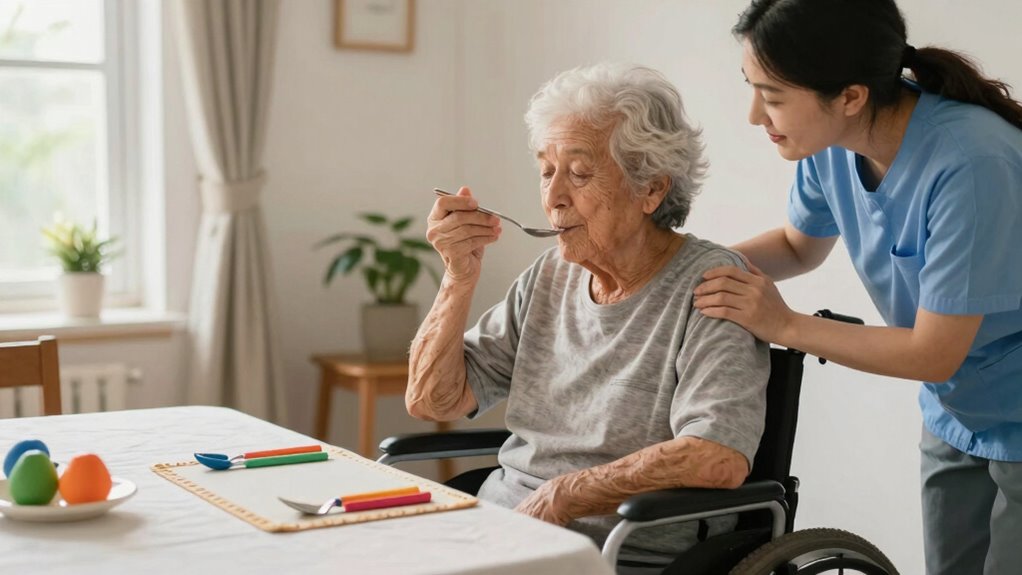

To make mealtimes easier in home care, plan meals around your loved one’s preferences, routines, and dietary needs. Use adaptive tools like non-slip mats and easy-grip utensils to promote independence and safety. Create a calm, cozy environment free from distractions, and support proper positioning to prevent choking. Offer gentle encouragement and assist with cutting or holding food as needed. Keep exploring for more ideas to make mealtimes smoother and more enjoyable.

Get decor and gifts delivered free — and shop member deals
- Fast, free delivery on millions of items
- Access to Prime Big Deal Days deals on October 6–7
- Prime Video, Amazon Music and more included
Key Takeaways
- Plan meals in advance, considering preferences and dietary needs, to ensure ingredients are available and reduce last-minute stress.
- Use adaptive tools and proper positioning to support independence and safety during self-feeding.
- Create a calm, quiet environment by minimizing noise and distractions during mealtimes.
- Provide gentle assistance with cutting, holding utensils, and swallowing support as needed.
- Engage in simple conversations or reminiscence to make mealtimes more enjoyable and relaxing.
Mealtimes can be challenging in home care settings, but with the right strategies, they can become more manageable for both caregivers and those receiving care. One of the most effective ways to ease the process is by implementing thoughtful meal planning. Take time to understand the preferences, dietary needs, and routines of the person you’re caring for. Planning meals ahead ensures you have the right ingredients on hand, reduces last-minute stress, and helps maintain a balanced diet. Keep a simple meal schedule that fits their daily rhythm, whether that’s three main meals or smaller, more frequent snacks. This consistency can help reduce confusion and make mealtimes more predictable and comfortable. Incorporating technology reviews or helpful gadgets designed for easier feeding can also support independence during meals.
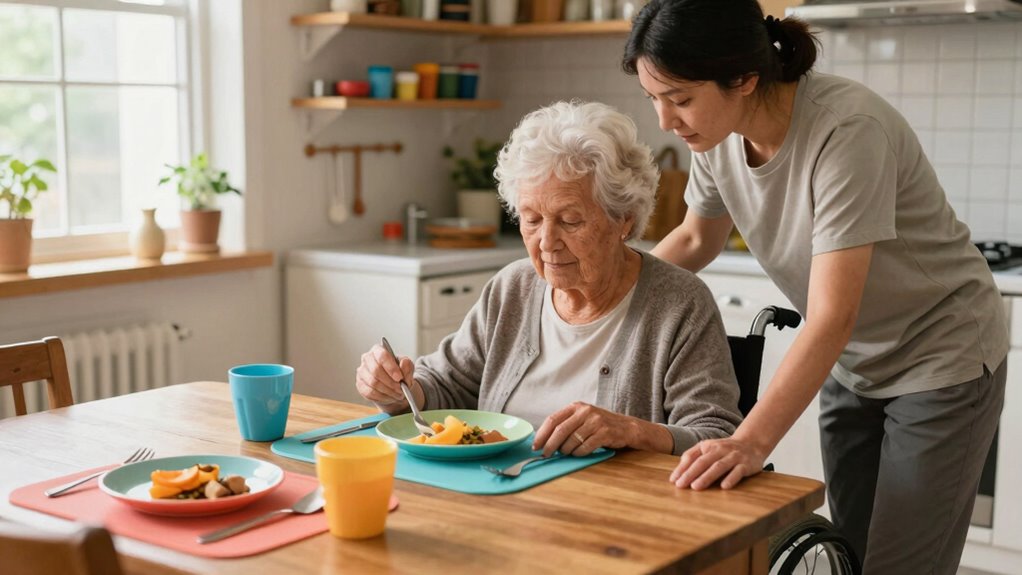
Feeding assistance plays a crucial role in making mealtimes smoother. If your loved one has difficulty swallowing, uses mobility aids, or struggles with hand coordination, providing gentle support can encourage independence while ensuring safety. Sit at eye level with them, speak clearly, and offer encouragement. You might need to assist with cutting food into manageable pieces or helping them hold utensils. Patience is key—rushing can cause frustration. Using adaptive tools like non-slip placemats, easy-grip utensils, or plate guards can boost confidence and independence during meals. Additionally, understanding the importance of proper positioning can significantly improve swallowing safety and comfort during meals. It’s also helpful to be aware of how mealtime environment** impacts their focus and comfort, as a calm** setting can promote better eating habits.
Creating a calm, inviting atmosphere during mealtimes can make a significant difference. Turn off televisions and minimize noise to foster conversation and connection. Engage your loved one in simple chats or reminiscence to make the experience more pleasant and less hurried. Serving meals at a comfortable temperature and in appealing presentation can stimulate appetite and enjoyment. If your loved one has specific dietary restrictions or preferences, incorporate those into your meal planning to promote better intake and satisfaction.
As an affiliate, we earn on qualifying purchases.
Frequently Asked Questions
What Are the Best Adaptive Utensils for Seniors?
The best adaptive utensils for seniors feature ergonomic designs that improve grip and control. Look for utensils with larger, non-slip handles that are easy to hold, even with limited dexterity. Adaptive tools like angled spoons or forks help reduce wrist strain, making eating more comfortable. These tools promote independence and confidence during mealtimes, ensuring seniors can feed themselves with less frustration and more ease.
How Can I Encourage Independence During Mealtime?
Did you know that maintaining independence during mealtime boosts seniors’ confidence and well-being? To encourage independence, involve your loved one in meal planning and establish consistent dining routines. Allow them to choose their meals and assist with simple tasks, fostering a sense of control. This approach not only promotes autonomy but also makes mealtimes more enjoyable, helping your loved one feel empowered and engaged during every meal.
What Should I Do if My Loved One Has Swallowing Difficulties?
If your loved one has swallowing difficulties, consult a speech therapist for an assessment and personalized strategies. They might recommend texture modification, like softer or pureed foods, to prevent choking. Always supervise meals closely, encourage small bites, and guarantee they sit upright. Using specialized utensils or cups can also help. Regularly monitor their condition and follow professional advice to keep mealtime safe and comfortable.
How Do I Handle Food Allergies or Dietary Restrictions?
Think of managing food allergies and dietary restrictions as your own secret recipe for safety. You handle food allergy management by reading labels carefully and avoiding known allergens. For dietary restriction planning, always consult health professionals and prepare meals that meet specific needs. Be vigilant, keep an up-to-date list of allergies, and communicate clearly with your loved one about their preferences. This proactive approach guarantees mealtimes stay safe and enjoyable.
Are There Specific Seating Arrangements That Improve Mealtime Comfort?
You can improve mealtime comfort by arranging your dining room with supportive, easy-to-access seating. Choose chairs with padded cushions and armrests to enhance seating comfort and stability. Position the table at a comfortable height, ensuring the person can sit upright without strain. Avoid clutter around the seating area, giving ample space for movement. These adjustments create a cozy, accessible environment that encourages relaxed, enjoyable meals.
Conclusion
By incorporating these simple strategies, you can make mealtimes more enjoyable and less stressful for both you and your loved ones. Remember, a little preparation and patience go a long way. Some might think that adjusting routines takes too much effort, but the benefits—improved nutrition, better mood, and strengthened bonds—are well worth it. With consistent effort, mealtimes can become a cherished, seamless part of your home care routine.
Fall Picks
fall essentials
As an affiliate, we earn on qualifying purchases.