
Tiny sensors inside your fridge constantly monitor temperature, humidity, and ethylene gas levels. They automatically adjust cooling, humidity controls, and airflow to create ideal conditions for different foods. This real-time feedback helps slow down ripening and spoilage, extending freshness by up to nine days. By actively managing internal environments, these sensors reduce waste and keep food fresher longer. Curious how these tiny guardians work behind the scenes? Keep exploring to uncover more secrets.
Key Takeaways
- Tiny sensors monitor temperature, humidity, and ethylene gas to optimize fridge conditions and slow food ripening.
- Real-time data allows automatic adjustments of cooling, ventilation, and humidity for ideal storage environments.
- Detecting ethylene gas helps control ripening, extending freshness of fruits and vegetables by up to nine days.
- Humidity sensors prevent mold and dehydration, maintaining optimal moisture levels for various food types.
- Overall, these sensors transform fridges into proactive systems that significantly reduce food spoilage and waste.
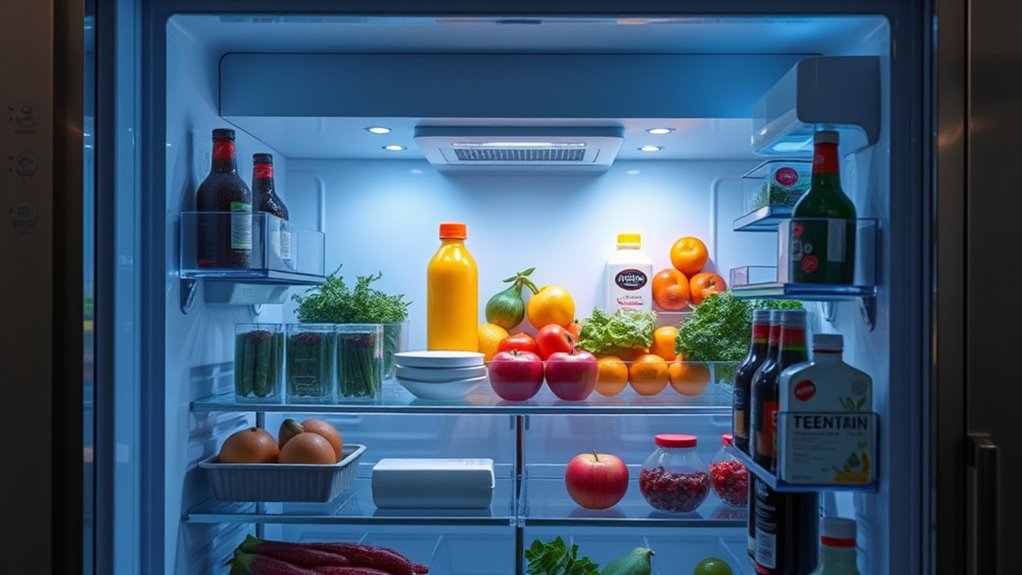
Have you ever wondered if there’s a hidden trick to keeping your fridge organized and food fresher longer? It turns out, small yet powerful sensor technology is making a big difference in food preservation. These tiny sensors, often integrated into smart refrigerators or even as standalone devices, monitor various factors like temperature, humidity, and ethylene gas levels. Instead of relying solely on fixed temperature settings, these sensors provide real-time data that help optimize the environment inside your fridge. As a result, your perishable items stay fresh longer, often extending shelf life by up to nine days or more.
Sensor technology works by continuously tracking conditions inside your fridge. When sensors detect that a certain area is getting too warm or the humidity levels are off, they send signals to adjust cooling systems or activate fans. This constant feedback loop ensures that the temperature remains steady, preventing spoilage caused by fluctuations. It’s a significant upgrade from traditional fridges that operate on basic thermostats, which don’t account for the unique needs of different foods. By customizing the environment based on data, these sensors enhance food preservation, reducing waste and saving you money.
Tiny sensors constantly monitor fridge conditions, adjusting settings to keep food fresh longer and reduce waste.
Furthermore, some advanced sensors monitor ethylene gas, which is released by ripening fruits and vegetables. When ethylene levels rise, the system can trigger specific compartments or drawers to be cooled or ventilated differently, slowing down ripening processes. This targeted approach means produce stays fresh and crisp for much longer. Imagine not having to throw away spoiled greens or moldy berries because your fridge adapts dynamically to their needs. It’s the kind of smart technology that transforms how you store food, making it easier to plan meals and avoid unnecessary trips to the store.
Another advantage is that sensor technology helps manage moisture levels inside the fridge. Too much humidity can cause mold and spoilage, while too little can dry out produce. Sensors detect these changes and adjust humidity controls automatically, creating an ideal environment for different types of food. This precise regulation prevents spoilage and keeps fruits, vegetables, and dairy products in prime condition. It’s like having a personalized food steward that’s always working behind the scenes to keep your groceries fresher, longer.
In essence, these tiny sensors are revolutionizing food preservation by providing smarter, more responsive refrigeration. They take the guesswork out of fridge management and help you extend the life of your groceries naturally. With sensor technology, your fridge becomes a proactive guardian of freshness, making sure your food stays delicious and safe for days longer than traditional methods. It’s a small innovation with a big impact—one that’s quietly transforming your kitchen into a smarter, more efficient space.
Frequently Asked Questions
Are Tiny Sensors Safe for Food and Humans?
Are tiny sensors safe for food and humans? It’s natural to wonder about sensor safety and food compatibility. Rest assured, these sensors are designed with strict safety standards, using biocompatible materials that don’t leach harmful substances. They undergo rigorous testing to guarantee they’re safe for food contact and human health. So, you can trust that these small devices help extend freshness without compromising safety or your well-being.
How Much Do These Sensors Cost to Install?
You’ll find that installation costs for these sensors vary depending on your fridge model and the sensor’s complexity. Typically, the costs cover sensor durability and integration into your appliance. DIY options might be cheaper, but professional installation guarantees proper setup and longevity. On average, expect to pay between $50 and $200, considering the sensor’s quality, compatibility, and the labor involved. This investment helps extend freshness and reduces food waste.
Do Sensors Require Special Maintenance or Replacement?
Sensors generally don’t need much maintenance, but you should regularly check their calibration to guarantee accuracy. Over time, sensor lifespan can vary, so replacement might be necessary after several years. Keep an eye on performance, and if readings become inconsistent, consider recalibrating or replacing the sensors. Proper maintenance helps keep your fridge’s smart system working efficiently, ultimately extending the freshness of your food.
Can Sensors Detect All Types of Food Spoilage?
Imagine your fridge’s sensors as vigilant guardians, constantly scanning for signs of food spoilage. While they excel at detecting bacterial growth and gas emissions, their limitations mean they can’t catch every type of spoilage, like mold hidden behind packaging or subtle chemical changes. So, for perfect food freshness, trust the sensors but also rely on your senses and proper storage to stay ahead of spoilage’s sneaky tricks.
Will Sensor Technology Increase My Electricity Bill?
You might wonder if sensor technology will hike your electricity bill. The good news is, these sensors are designed to be energy-efficient, so they don’t substantially increase your energy consumption. While there are some cost implications for installing and maintaining the system, the savings from longer-lasting food and reduced waste can outweigh those expenses. Overall, the impact on your electricity bill is minimal, making it a smart upgrade.
Conclusion
Thanks to these tiny sensors, your fridge becomes a superhero guarding your food like a fortress. Imagine never wasting a crumb again, with your groceries staying fresh long enough to outlive even your wildest leftovers plans. It’s like having a magic wand that doubles your food’s lifespan, turning your kitchen into a futuristic paradise. So, get ready to say goodbye to spoiled food forever — your fridge is now smarter, fresher, and more unstoppable than ever!