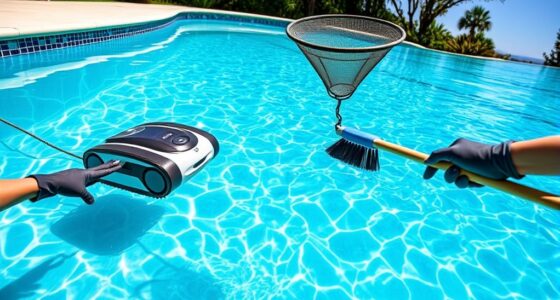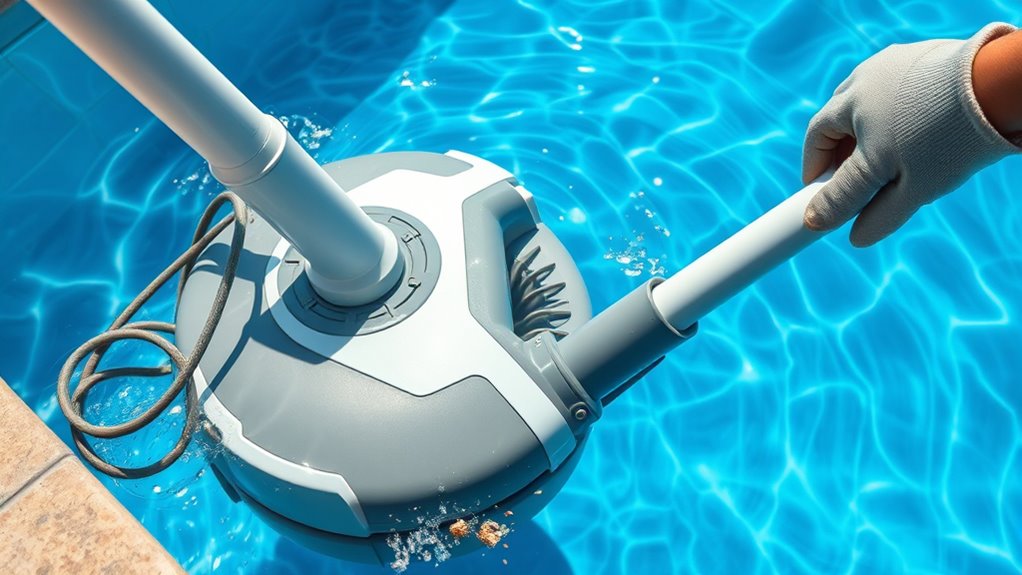

The true cost of owning a suction pool cleaner includes the initial purchase, which typically ranges from $100 to $300, and ongoing expenses like maintenance, filter replacements, and energy use. Energy-efficient models help save money on electricity, but regular upkeep is crucial for performance and durability. Properly maintaining your cleaner extends its lifespan and ensures effective cleaning. To uncover more about managing costs and maximizing your investment, keep exploring the key factors involved.
Key Takeaways
- Initial purchase costs typically range from $100 to $300, depending on brand and features.
- Energy-efficient models reduce ongoing electricity expenses over their lifespan.
- Regular maintenance, including filter cleaning and part replacement, extends the cleaner’s longevity and reduces repair costs.
- Choosing models with easy access and simple upkeep minimizes time and money spent on maintenance.
- Proper operation and routine care optimize performance, saving money by preventing costly repairs and early replacements.
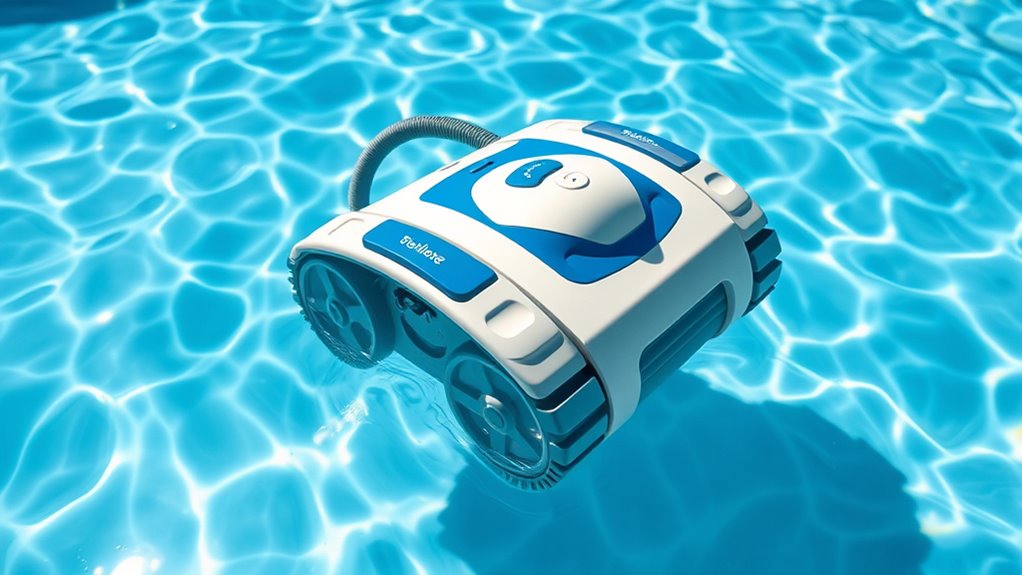
Are you wondering how much a suction pool cleaner costs? The price can vary depending on the brand, features, and size of your pool, but generally, these cleaners are quite affordable compared to other types. On average, you can expect to spend between $100 and $300 for a decent model. While the initial investment is relatively low, it’s important to consider the ongoing costs associated with ownership, especially if you want to keep your pool in top shape without breaking the bank. One key to getting the most value is choosing an energy-efficient model. These cleaners use less power, which can substantially reduce your electricity bills over time. Many newer models come with smart technology or adjustable settings that optimize energy consumption, helping you save money while maintaining a clean pool.
Beyond the purchase price, maintenance is a vital factor that influences the overall cost of owning a suction pool cleaner. Regular maintenance tips can extend the lifespan of your device and guarantee it functions smoothly. For instance, periodically cleaning the filter bag or basket prevents clogs and maintains suction power. Checking the hose and connections for leaks or damage is also essential, as leaks can reduce efficiency and cause unnecessary wear. Additionally, inspecting and replacing worn-out brushes or seals keeps the cleaner operating at peak performance. Performing these simple maintenance tasks regularly will keep your cleaner working efficiently, saving you money on repairs or premature replacements. Proper tuning and maintenance practices, similar to those used in automotive tuning, can also enhance the performance and longevity of your pool cleaner. Moreover, consulting the manufacturer’s guidelines can provide specific maintenance routines tailored to your model, ensuring optimal operation.
Furthermore, choosing a model with easy maintenance features can reduce the time and effort needed for upkeep, making ongoing care more manageable. Implementing preventive maintenance routines can further prevent costly repairs and extend the lifespan of your pool cleaner. Staying vigilant about the manufacturer’s recommended maintenance schedule can help catch potential issues early before they lead to expensive repairs.
Frequently Asked Questions
How Long Do Suction Pool Cleaners Typically Last?
Suction pool cleaners usually last around 3 to 8 years, depending on usage and maintenance. To prolong their lifespan, you should regularly check replacement parts and replace worn components promptly. Many models come with warranty coverage, which can help reduce repair costs if issues arise early. Proper care and timely replacements ensure your cleaner stays effective longer, saving you money and hassle over its lifespan.
Are There Hidden Maintenance Costs for Suction Pool Cleaners?
Imagine your suction pool cleaner suddenly stops working, and you discover hidden repairs are needed. You might face unexpected costs for replacement parts like hoses or tracks, which aren’t always obvious at purchase. These hidden maintenance costs can add up over time, especially if you ignore minor issues early. Regular inspections and prompt repairs can help prevent larger expenses down the line, saving you money in the long run.
Can Suction Pool Cleaners Work on All Pool Surfaces?
You might wonder if suction pool cleaners can handle all pool surfaces. Generally, they work well on standard surfaces like concrete, vinyl, and fiberglass. However, surface compatibility can vary based on material limitations; for example, textured or pebble finishes may pose challenges. Always check your cleaner’s specifications to guarantee it suits your pool’s surface, preventing damage and ensuring effective cleaning.
Do Suction Pool Cleaners Require Professional Installation?
Suction pool cleaners generally don’t require professional installation, making them convenient for most pool sizes. You simply connect the hose to your skimmer or dedicated suction port, and it starts cleaning. The installation complexity is low, but larger pools might need more hose length or adjustments. Usually, you can handle it yourself, saving you time and money, unless your pool has unique features or plumbing that complicate setup.
How Do Energy Costs Compare With Robotic Pool Cleaners?
Your energy costs are a small price compared to the energy savings robotic pool cleaners offer. They typically have lower power consumption, making them more efficient and cost-effective over time. Robotic cleaners often use advanced technology to optimize cleaning cycles, reducing electricity use. So, if you want to save money on energy bills, robotic pool cleaners are a smarter choice. Your wallet and the environment will thank you!
Conclusion
Ultimately, owning a suction pool cleaner isn’t just about the initial price—it’s about the ongoing costs that quietly add up. Think of it as planting a garden; the more you nurture it, the more it blossoms. So, before you plunge into it, weigh the true cost beneath the surface. Will the convenience outweigh the expenses? Remember, a well-maintained cleaner can save you money and time—if you’re willing to invest wisely in its care.