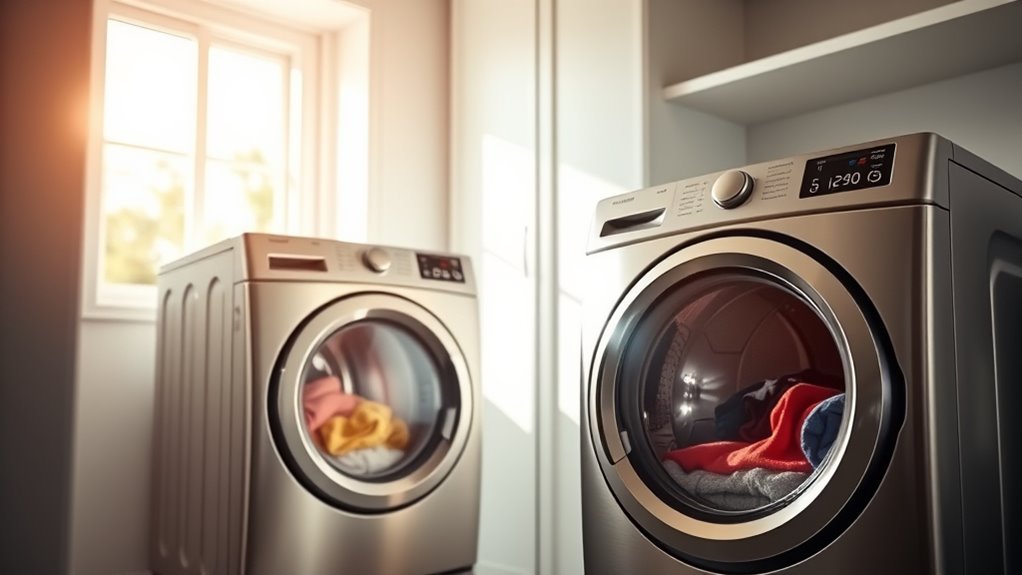

Heat-pump dryers save you more money in the long run compared to ventless models because they recycle heat during operation, which considerably cuts energy use. They use a closed-loop system, making them more efficient and eco-friendly, even though they usually cost more initially. Ventless models, like condenser dryers, are cheaper at first but tend to consume more electricity over time. Keep exploring to discover how choosing the right dryer can boost your savings and efficiency.

Get decor and gifts delivered free with Prime
- Fast, free delivery on millions of items
- Prime Video, Amazon Music and more included
- Member-only deals all year
Key Takeaways
- Heat-pump dryers are more energy-efficient due to heat recycling, leading to lower utility bills over time.
- Ventless models, including condenser dryers, generally consume more electricity, increasing operational costs.
- Although heat-pump dryers have higher upfront costs, their savings on energy bills often outweigh initial expenses.
- Ventless dryers are easier and cheaper to install but may result in higher long-term energy costs.
- Scientific data shows that heat-pump dryers offer significant savings through reduced energy consumption compared to ventless models.
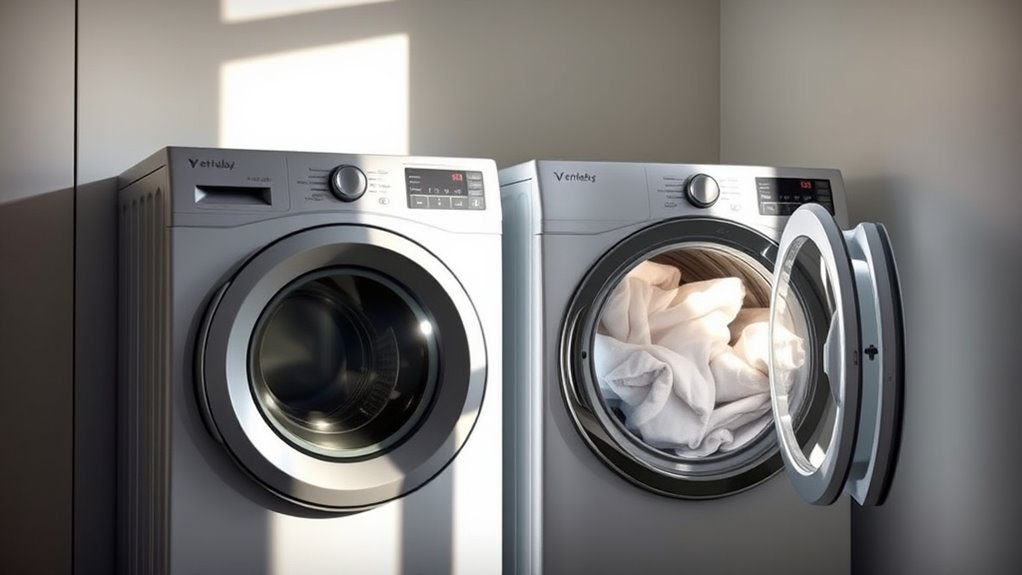
When choosing a new clothes dryer, understanding the differences between heat-pump dryers and ventless models can help you make an informed decision. One of the main considerations is energy efficiency. Heat-pump dryers excel in this area because they recycle heat during the drying process. Instead of venting hot, moist air outside like traditional dryers, they use a closed-loop system that captures and reuses heat, considerably reducing energy consumption. If you’re looking to lower your utility bills and minimize your environmental impact, a heat-pump dryer is a smart choice. Ventless models, which often include condenser dryers, also don’t require external venting but tend to be less energy-efficient compared to heat-pump units. They rely on air circulation and condensation to dry clothes, which can use more electricity over time.
Installation costs are another vital factor. Heat-pump dryers usually come with a higher upfront price tag, partly because of their advanced technology and energy-saving features. However, their installation is often straightforward, especially if you already have the necessary electrical connections. Since they don’t need external venting, you won’t face the additional expense of installing ducts or vents, which can be costly and complicated in some homes. Ventless models, on the other hand, are generally more affordable initially and easier to set up because they don’t require venting infrastructure. They are a good option if you live in an apartment or a space where installing vents isn’t feasible. Yet, the trade-off is that they tend to consume more energy, which can lead to higher operating costs over time.
When weighing these options, consider your long-term expenses. Although heat-pump dryers might cost more upfront, their superior energy efficiency can lead to lower monthly utility bills, offsetting the initial investment. Conversely, ventless models might save you money initially but could cost you more in electricity over the years. Additionally, think about your living situation and space constraints. If venting outside is difficult or impossible, a ventless dryer becomes a practical choice. Overall, understanding how energy efficiency and installation costs impact your household budget will guide you toward the best decision suited to your needs. These factors are central to evaluating which dryer type will save you money and energy in the long run, helping you make a smarter, more sustainable choice.
energy-efficient heat pump dryer
As an affiliate, we earn on qualifying purchases.
As an affiliate, we earn on qualifying purchases.
Frequently Asked Questions
How Long Do Heat-Pump Dryers Typically Last Compared to Ventless Models?
You might wonder about the lifespan of heat-pump dryers compared to ventless models. Generally, heat-pump dryers tend to last longer because their energy-efficient design reduces wear and tear. On average, they last around 10 to 15 years, while ventless models may last slightly less. This lifespan comparison highlights the durability benefits of heat-pump dryers, making them a smart, energy-efficient choice for long-term savings and reliable performance.
Are There Specific Climate Conditions That Favor One Type Over the Other?
You might find that climate adaptability influences your choice between heat-pump and ventless dryers. In regions with high humidity or cold temperatures, heat-pump models excel due to their regional efficiency and ability to operate effectively without external venting. Conversely, ventless dryers perform well in milder climates. Consider your local climate when choosing, as regional efficiency can markedly impact drying performance and energy savings.
What Is the Environmental Impact of Manufacturing Each Dryer Type?
Did you know manufacturing each dryer type produces about 20-30% of their total environmental impact? You should consider manufacturing emissions and material sustainability, as heat-pump dryers often require rare materials, increasing their ecological footprint. Ventless models, with simpler components, tend to have lower manufacturing emissions. Your choice impacts the environment, so prioritize dryers made with sustainable materials and eco-friendly manufacturing processes to reduce your carbon footprint.
Can These Dryers Be Integrated With Smart Home Systems?
You can absolutely integrate these dryers with smart home systems. Many modern models come with connectivity features that enable smart home integration, allowing you to control and monitor your dryer remotely. With compatible apps, you can start, pause, or check cycle status from your smartphone or voice assistants. This seamless connectivity enhances convenience and efficiency, making your laundry routine smarter and more streamlined.
How Do Maintenance Costs Compare Between Heat-Pump and Ventless Dryers?
Think of maintenance costs as the tolls on your journey. With heat-pump dryers, you typically face lower repair costs and less frequent maintenance because they have fewer moving parts. Ventless models might require more upkeep due to potential filter or condenser cleaning. Overall, heat-pump dryers tend to be more economical long-term, saving you money on repairs and maintenance frequency, making them a smart choice for hassle-free drying.
Conclusion
Choosing between heat-pump dryers and ventless models is like picking the right key for your home’s energy savings. Heat-pump dryers are the smart, efficient choice, slicing your energy bills like a hot knife through butter. While ventless models might seem appealing, they often cost you more in the long run. Think of it as planting a seed today for a greener, more economical tomorrow—you’ll reap the benefits for years to come.
Columbus Day / Indigenous Peoples' Day Picks
long weekend sales
As an affiliate, we earn on qualifying purchases.