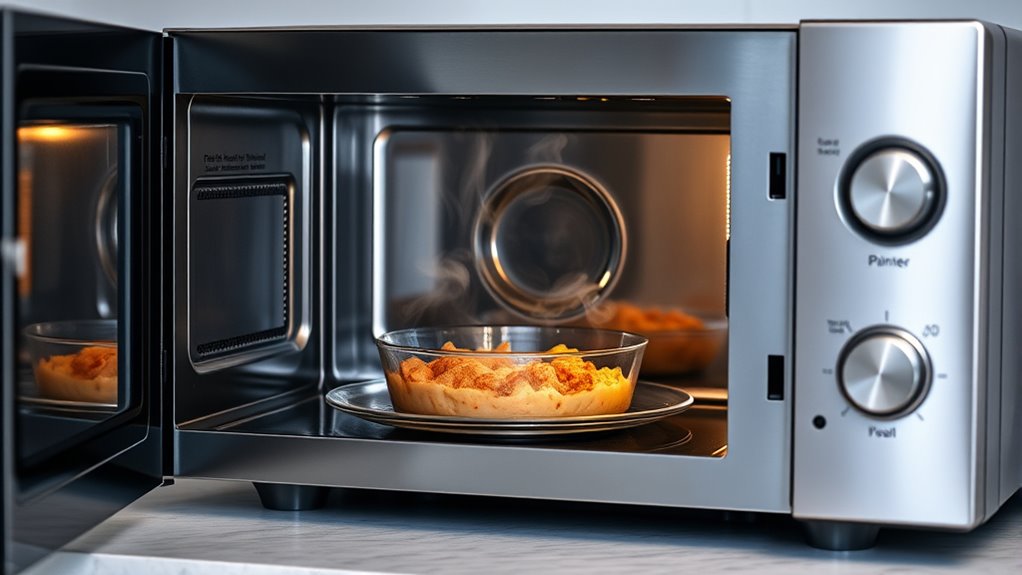
When you turn on a microwave oven, it emits electromagnetic waves called microwaves at about 2.45 gigahertz. These waves target water, fat, and sugar molecules in your food, making them vibrate rapidly and produce heat directly inside the food. This process heats your meal quickly and efficiently, without needing to warm the surface first. To understand more about how wave frequency and materials affect this process, keep exploring further.
Key Takeaways
- Microwave ovens emit electromagnetic waves that target water, fat, and sugar molecules in food, causing them to vibrate rapidly and produce heat.
- The typical wave frequency of around 2.45 GHz efficiently causes polar molecules like water to rotate, generating friction and heat.
- Microwave-safe containers are transparent to microwaves, allowing energy to pass through and heat food evenly, unlike metal which reflects waves.
- Metal objects reflect microwaves, which can cause sparks or arcing due to electric currents induced by the electromagnetic fields.
- Understanding microwave wave frequency is crucial for safe, efficient heating and preventing hazards like sparks, arcing, or damage to the oven.
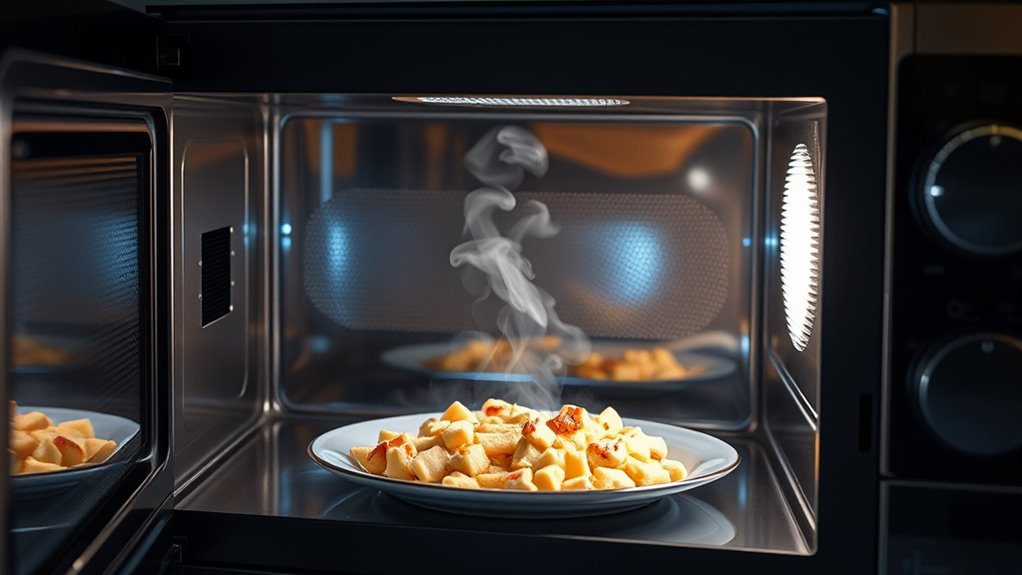
Microwave ovens have become an essential appliance in many kitchens because they quickly and conveniently heat or cook food. They work by emitting electromagnetic waves, specifically microwaves, which have a particular wave frequency designed to target water molecules in your food. When you turn on the microwave, it generates these waves inside the oven cavity, causing water, fat, and sugar molecules to vibrate rapidly. This vibration produces heat, which then evenly warms or cooks your meal. The process is efficient because it directly heats the molecules within the food, rather than relying on conduction from the outer surface inward. Understanding wave frequency is key to grasping how microwave ovens operate. Microwaves in these appliances typically operate at a frequency of around 2.45 gigahertz. This specific frequency is chosen because it is highly effective at causing polar molecules like water to rotate rapidly, creating friction and heat. However, this frequency also influences how the microwave interacts with different materials inside the oven. For example, microwave-safe containers are designed to be transparent to these waves, allowing the energy to pass through and heat the food without absorbing the waves themselves. Conversely, materials like metal reflect microwaves rather than allowing them to penetrate. This reflection is vital because it can lead to unwanted metal interaction within the oven. When metal objects are placed inside a microwave, the waves reflect off the metal surfaces, which can cause sparks or arcing. This sparks because the electric fields of the microwaves induce currents in the metal, especially if the metal has sharp edges or points. These sparks not only damage the oven but can also pose fire hazards. That’s why most microwave manufacturers advise against putting metallic items inside the oven unless they are specifically designed for microwave use, such as certain microwave-safe metal racks. The key is understanding how the wave frequency influences these interactions; it’s what determines whether the metal will simply reflect the waves harmlessly or cause sparks and potential damage. Additionally, understanding the wave frequency helps in designing microwave-safe materials and understanding potential hazards associated with metal inside microwaves.
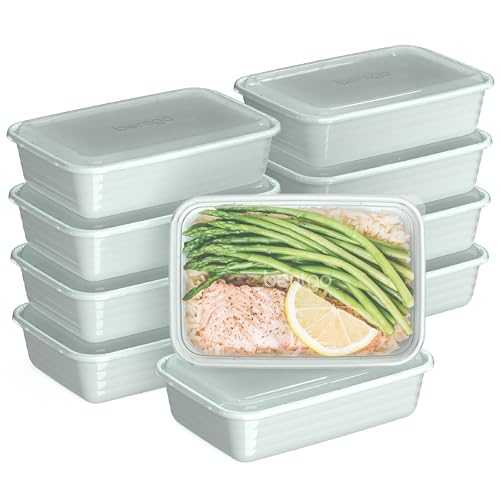
Bentgo Prep – 20-Piece 1-Compartment Reusable Meal Prep Containers with Lids, PFAS & BPA Free Materials, Durable, Microwave, Freezer, & Dishwasher Safe To Go Food Storage (Mint)
- Top Brand for Meal Prep: Lightweight, portable 20-piece set
- Easy Portion Control: 4-cup capacity with embossed measurements
- Keeps Food Fresh: Stackable lids for organization
As an affiliate, we earn on qualifying purchases.
As an affiliate, we earn on qualifying purchases.
Frequently Asked Questions
How Do Microwave Ovens Prevent Food From Overheating?
Microwave ovens prevent food from overheating through effective microwave temperature regulation and overheating prevention techniques. You’ll notice they often include a built-in timer and sensors that monitor the food’s temperature, automatically stopping the microwave when it reaches the desired heat. Some models even adjust power levels during cooking. By employing these methods, your microwave guarantees your food heats evenly and safely, avoiding burns or overheating.
Can Microwaves Cook All Types of Food Evenly?
You might find that microwaves don’t cook all types of food evenly because microwave power can vary, causing hot and cold spots. Foods with different textures, like dense meats or delicate baked goods, may not heat uniformly. To improve even cooking, stir or rotate food during microwaving. Using a turntable helps distribute microwave energy more evenly, ensuring better results for a variety of food textures.
What Safety Features Do Microwave Ovens Have?
You might think microwave safety is just a myth, but it’s actually well-designed. Modern microwave ovens include safety features like oven interlocks that automatically shut off the microwave when the door opens, preventing radiation leaks. These interlocks guarantee you’re protected from microwave exposure, making cooking safer. Additionally, manufacturers incorporate heat sensors and shielding to prevent overheating, so you can confidently use your microwave without worry.
Do Microwave Ovens Emit Harmful Radiation?
You don’t need to worry about harmful microwave radiation from your microwave oven. These appliances are designed to contain microwave radiation within the oven, ensuring food safety and preventing leaks. The microwave radiation heats food by causing water molecules to vibrate, which generates heat. When used properly, microwave ovens are safe and don’t pose health risks, so you can cook your meals confidently without concern about radiation exposure.
How Do I Troubleshoot Common Microwave Problems?
Think of your microwave as a trusty sidekick that occasionally needs a check-up. If it’s not heating properly, make sure it’s plugged in, the door seals tightly, and the turntable spins freely. Check for blown fuses or a faulty magnetron, which affects microwave energy. Regular maintenance can extend your appliance lifespan. If problems persist, it’s best to consult a professional—your microwave’s health depends on it!
Conclusion
Now that you understand how microwave ovens heat your food, you can appreciate their quick, efficient magic—almost like having your own personal robot chef. Just remember, even in the age of smartphones and space travel, the simple act of heating up leftovers remains a marvel. So next time you nuke your dinner, think of it as a futuristic feat, right out of a 1950s sci-fi comic, making modern life a little more convenient—and a lot tastier.