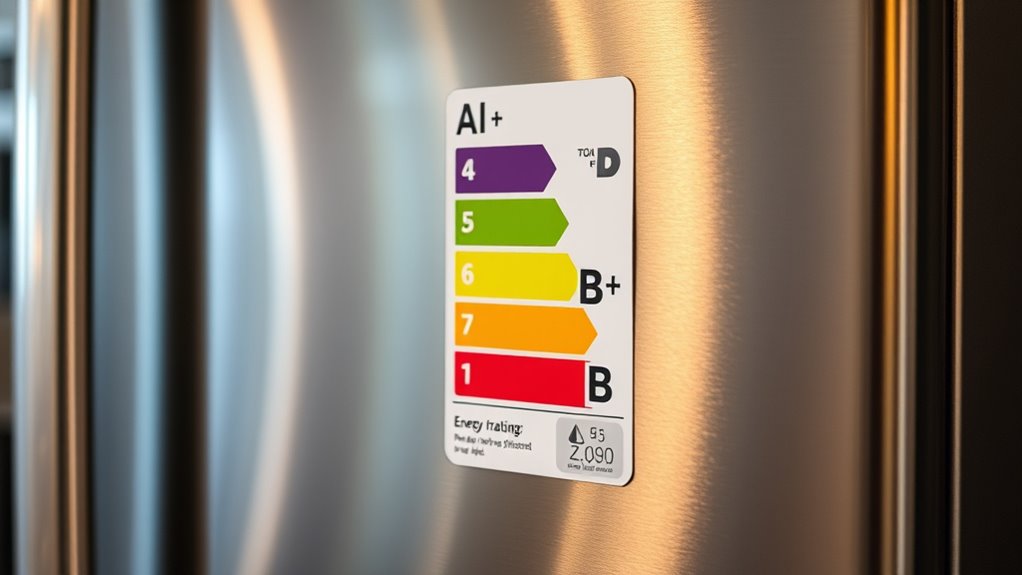

Understanding energy ratings and appliance labels helps you choose smarter, eco-friendly options. Ratings like A+++ to D quickly show how efficient an appliance is, saving you money and reducing your carbon footprint. Certifications confirm brands follow sustainable practices, while visual cues highlight eco features. By paying attention to these labels, you can make environmentally responsible choices. Keep exploring to learn how decoding these labels can make a bigger difference in your energy savings.

Get decor and gifts delivered free — and shop member deals
- Fast, free delivery on millions of items
- Access to Prime Big Deal Days deals on October 6–7
- Prime Video, Amazon Music and more included
Key Takeaways
- Energy labels display efficiency ratings from A+++ to D, indicating resource consumption and long-term savings potential.
- Renewable certifications on labels verify compliance with sustainability standards and eco-friendly manufacturing practices.
- Visual symbols on appliances help consumers quickly identify environmentally considerate features and eco-conscious design.
- Higher energy efficiency ratings lead to lower energy bills and reduced carbon footprint over the appliance’s lifespan.
- Advanced technologies like AI can optimize appliance performance, enhancing sustainability and supporting eco-friendly choices.
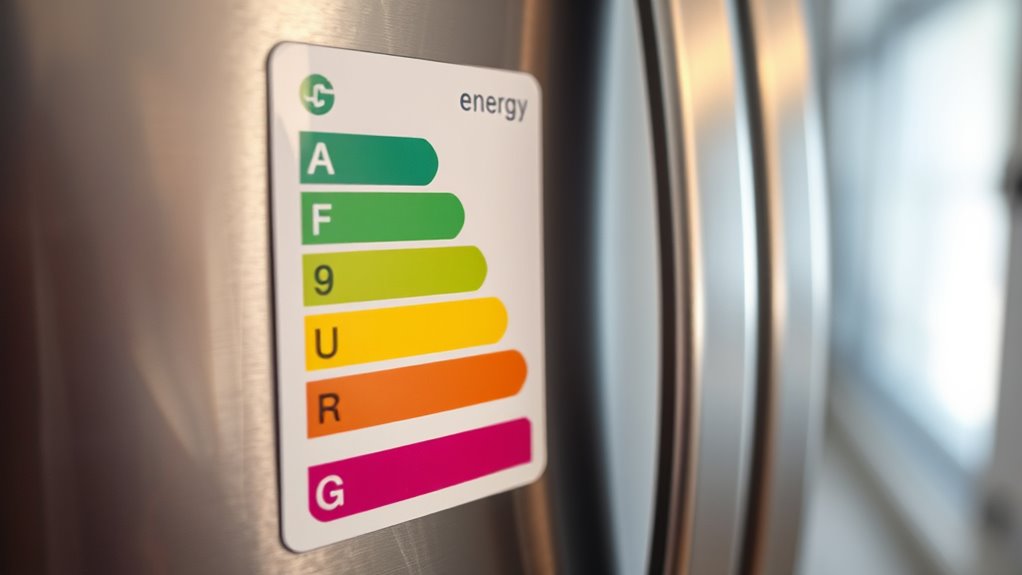
Have you ever wondered what those energy labels on appliances really mean? It’s not just about looking for the biggest, boldest letters or colorful graphics. Those labels are packed with important information that can help you make smarter, more sustainable choices. When you see an appliance with renewable certifications, it indicates that the product meets specific standards for environmentally friendly manufacturing and energy use. These certifications, often marked with eco friendly symbols, show that the appliance has been evaluated for its sustainability, from production to disposal. Recognizing these symbols helps you identify products that align with your desire to reduce your carbon footprint.
Understanding the importance of these labels goes beyond just recognizing eco friendly symbols. They often include an energy efficiency rating, which ranges from A+++ (most efficient) to D (least efficient). This rating system is designed to give you a quick snapshot of how well an appliance uses electricity or other resources. Choosing appliances with higher efficiency ratings can save you money on energy bills over time while also reducing environmental impact. For example, a refrigerator with an A++ rating uses considerably less power than one rated D, translating into lower utility costs and less strain on the environment.
Energy efficiency ratings from A+++ to D help you choose appliances that save money and reduce environmental impact.
Renewable certifications also play a role in verifying that the appliance’s manufacturing process adheres to sustainability standards. These certifications can cover aspects like the use of recycled materials, reduced emissions during production, and responsible sourcing of components. When you look for appliances with such certifications, you’re supporting brands that prioritize eco-conscious practices. It’s a tangible way to ensure that your purchase isn’t just energy-efficient in use but also produced with environmental responsibility in mind.
The eco friendly symbols on labels serve as visual cues that help you quickly identify environmentally considerate options. These symbols might represent energy-saving features, recyclable components, or adherence to eco standards. They’re designed to communicate complex information simply, making it easier for you to compare products side by side. When shopping, pay attention to these symbols and certifications—they’re your shortcut to more sustainable choices. Incorporating AI-driven insights into the design and testing of appliances could further optimize their efficiency and environmental impact. By doing so, you’re not only improving your home’s efficiency but also contributing to broader efforts to protect the planet.
energy efficient refrigerator A+++
As an affiliate, we earn on qualifying purchases.
As an affiliate, we earn on qualifying purchases.
Frequently Asked Questions
How Often Are Appliance Labels Updated With New Ratings?
You should check appliance labels during each purchase because they’re typically renewed with new ratings every few years to guarantee rating accuracy. Manufacturers update labels through a process called label renewal, which reflects the latest energy efficiency standards. This way, you stay informed about how well your appliances perform, helping you make eco-friendly choices and potentially save on energy costs. Always look for the most recent label when buying new appliances.
Do Energy Ratings Differ Internationally?
Yes, energy ratings differ internationally because of regional variations and different standards. You’ll find that labels like the EU’s A-G scale, the US’s Energy Star, and Australia’s star ratings all have unique criteria and methods for measuring efficiency. These differences mean you should always check the specific rating system in your country to accurately compare appliance efficiency and make informed, eco-friendly choices.
Can a Higher Rating Truly Save More Energy Over Time?
Like the wise owl from Aesop’s fables, a higher energy rating truly can save you more energy over time. It reflects better efficiency, leading to energy savings and lower bills. However, rating accuracy matters; if labels are misleading, you might not get the expected savings. Always choose appliances with verified high ratings to maximize efficiency and guarantee your investment pays off in the long run.
Are There Hidden Costs Associated With High-Efficiency Appliances?
Yes, high-efficiency appliances can have hidden costs, such as higher maintenance expenses or specialized parts that may need more frequent repairs. These costs might offset savings from energy efficiency initially. You should consider these hidden costs before making a purchase, and factor in maintenance expenses along with the appliance’s price. Doing so guarantees you get a clear picture of the true long-term costs and benefits of choosing a high-efficiency model.
How Do Climate Conditions Affect Appliance Energy Efficiency?
Climate impact profoundly affects appliance energy efficiency, as colder or hotter environments can make appliances work harder, increasing energy use. Regional standards also play a role, ensuring appliances are suitable for local climate conditions. When you choose appliances, consider how your climate influences performance; for example, outdoor units in humid areas may need special features. Adapting to climate impact and regional standards helps optimize efficiency and reduces energy costs in your area.
Conclusion
By understanding energy ratings and appliance labels, you make smarter choices and save money, just like a savvy merchant from the days of yore. Don’t be left in the dust like a forgotten scribe—decode these labels and boost your efficiency. Remember, even in this age of modern gadgets, the wisdom of knowing your appliance’s true worth still reigns supreme. So, arm yourself with knowledge and make your home as wise as a seasoned sage.
Fall Picks
fall essentials
As an affiliate, we earn on qualifying purchases.