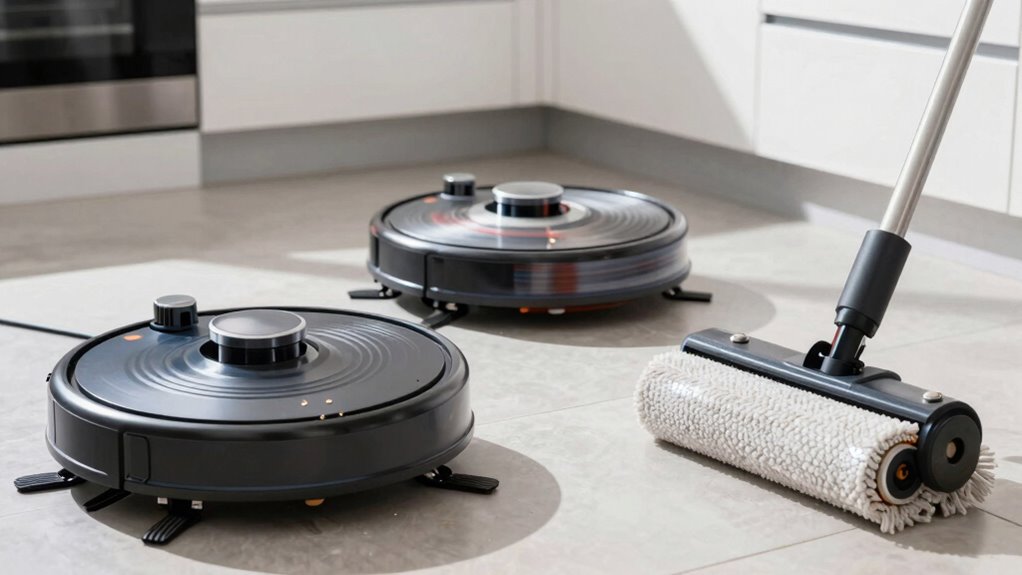
When comparing mopping robots with vibrating pads, spinning mops, and roller mops, each offers unique benefits. Vibrating pads loosen dirt with ultrasonic or sonic vibrations, ideal for quick touch-ups and delicate surfaces. Spinning mops provide powerful scrubbing through motorized rotation, perfect for stubborn stains on large floors. Roller mops are simple, distributing cleaning solution evenly and working smoothly on tile or laminate. Want to know which type best suits your cleaning needs? Keep exploring to find out more.
Key Takeaways
- Vibrating pads loosen dirt using ultrasonic or sonic vibrations, ideal for quick touch-ups and delicate surfaces.
- Spinning mops rely on motorized rotation for scrubbing, providing thorough cleaning on large, open floors.
- Roller mops use a rolling mechanism for smooth movement and even solution distribution, suitable for tile or laminate.
- Vibrating pads excel in targeting stubborn stains with minimal water, while spinning and roller mops are better for extensive cleaning.
- Smart navigation enhances all types, ensuring comprehensive coverage and efficiency regardless of the mop mechanism.
Have you ever wondered how technology can make household chores easier? When it comes to mopping robots, advancements in robot navigation have considerably improved cleaning efficiency. These devices aren’t just about moving randomly around your floors; they use sophisticated sensors and algorithms to map your space, avoid obstacles, and ensure every inch gets attention. This means fewer missed spots and a quicker, more thorough clean. With smart navigation, your mopping robot can adapt to different floor types and clutter, allowing you to relax while it handles the mess. The result is a more effective cleaning process that saves you time and effort. Modern mopping robots are equipped with advanced sensors, which further enhances their cleaning capabilities.
Smart navigation in mopping robots ensures thorough cleaning with less effort.
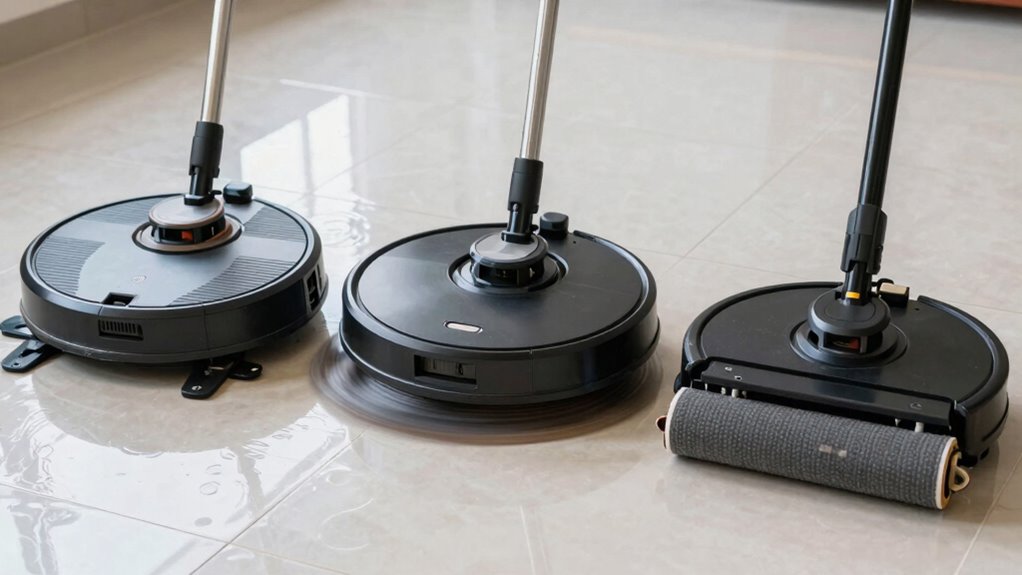
Now, when comparing mopping methods—vibrating pads, spinning mops, and roller mops—each has its strengths and weaknesses. Vibrating pads use ultrasonic or sonic vibrations to loosen dirt and grime from the floor surface. These pads often operate with minimal water, making them ideal for quick touch-ups or delicate surfaces. They tend to be gentle yet effective at lifting stubborn stains, especially in tight corners or along edges. Because they vibrate rapidly, they can cover more ground in less time, boosting cleaning efficiency. However, they might struggle with heavily soiled areas or thick grime that requires more scrubbing power.
Spinning mops, on the other hand, rely on a motorized mechanism to rotate a mop head rapidly. This spinning action helps wring out excess water and deliver a consistent, damp mop for cleaning. The spinning motion generates a lot of scrubbing power, making it excellent for tackling sticky spills and stubborn dirt. Plus, spinning mops often come with adjustable settings, letting you control the water level and pressure for different surfaces. Their high-speed rotation ensures a thorough clean, especially on large, open floors. That said, spinning mops can sometimes be heavier and less maneuverable, especially if the mop head is bulky or if the device is not well-balanced.
Roller mops use a rolling mechanism—usually a cylindrical or drum-shaped head—that glides smoothly across floors. These mops are simple but highly effective on smooth surfaces like tile or laminate. They distribute cleaning solution evenly and typically require less maintenance. Because they roll rather than spin or vibrate, they tend to be quieter and easier to handle, making them suitable for routine cleaning. While they might not have the same high-tech features as vibrating or spinning models, roller mops are dependable and straightforward, offering a good balance between effectiveness and ease of use.
In the end, choosing between vibrating pads, spinning mops, and roller mops depends on your specific needs. If you want quick, gentle touch-ups, vibrating pads are great. For heavy-duty scrubbing, spinning mops shine. And if you prefer simplicity and reliability, roller mops deliver consistent results. Whichever you pick, modern mopping robots equipped with advanced navigation and smart features can help you enjoy cleaner floors with less effort.
Frequently Asked Questions
How Long Do Mopping Robots Typically Last Before Needing Replacement?
You can expect your mopping robot to last around 2 to 4 years, depending on robot durability and how often you perform maintenance. Regularly cleaning brushes and replacing worn parts helps extend its lifespan. If you notice decreased performance or frequent breakdowns, it might be time for a replacement. Proper maintenance reduces the need for early replacement, ensuring your robot keeps cleaning effectively for years to come.
Are Vibrating Pad Robots Suitable for All Types of Flooring?
Vibrating pad robots aren’t suitable for all types of flooring because of surface sensitivity. You should check the flooring compatibility before using them, especially on delicate surfaces like hardwood or laminate. The vibrations can cause damage or scratches if the surface isn’t durable enough. For tiled or vinyl floors, they usually work well, but always verify the manufacturer’s recommendations to safeguard your floors and ensure effective cleaning.
Can Mopping Robots Be Used to Clean Outdoor Surfaces?
You can use mopping robots for outdoor cleaning if they’re designed for surface compatibility with outdoor surfaces like concrete, stone, or tiled patios. However, most indoor models aren’t built for rougher outdoor conditions or uneven terrain. Check your robot’s specifications to verify it’s suitable for outdoor use. For the best results, choose a robot explicitly made for outdoor cleaning to handle dirt, debris, and weather effects effectively.
Do Mopping Robots Require Wi-Fi or App Connectivity?
You need Wi-Fi or app control to operate many mopping robots efficiently. These devices often depend on Wi-Fi for real-time updates, remote navigation, and customizing cleaning schedules. Without Wi-Fi dependence, your robot’s functionality can be limited—no app control, no remote start, or adjustments. To maximize convenience and control, guarantee your mopping robot connects seamlessly via Wi-Fi, enabling you to manage cleaning tasks easily through an app.
How Noisy Are Vibrating Pad Versus Spinning or Roller Mop Robots?
You’ll find that vibrating pad robots tend to be noisier than spinning or roller mop robots due to higher vibration levels. The noise comparison shows that vibrating pads generate more background sound, especially during intense cleaning cycles. Spinning and roller mop robots operate more quietly, making them better options if noise is a concern. Overall, if you want a quieter cleaning experience, choose a spinning or roller mop robot.
Conclusion
So, which mopping robot will win your trust? Will the vibrating pads outshine spinning mops with their relentless power, or will roller mops surprise you with their versatility? The choice isn’t clear yet, and that’s what keeps you guessing. As technology advances, one thing’s certain—you’ll want to stay tuned, because the next big breakthrough could change everything. The only question now is: are you ready to see what’s coming next?