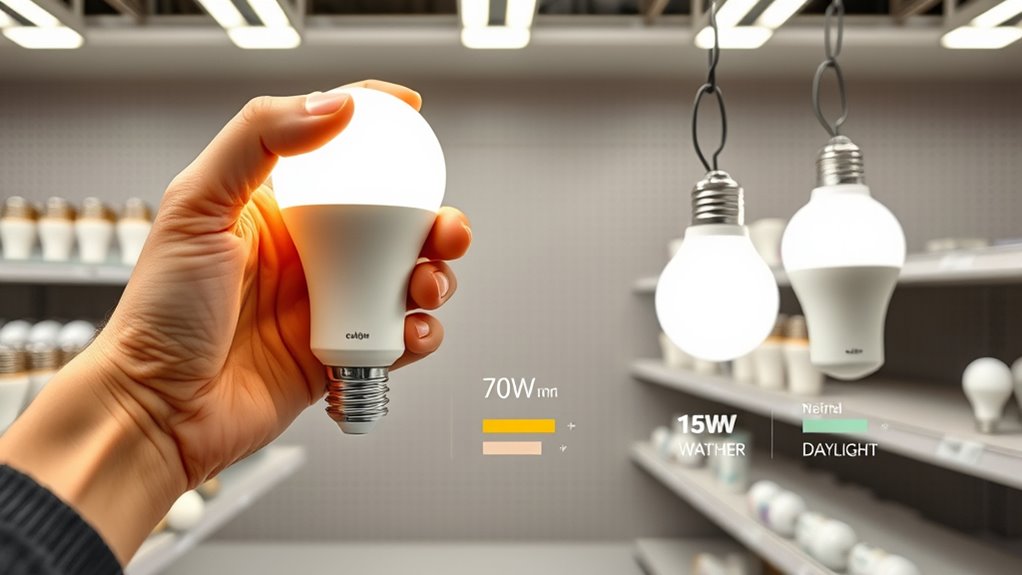

When buying LED light bulbs, focus on lumens for brightness, wattage for energy efficiency, and color temperature to set the mood. Choose lower wattage LEDs that provide the same brightness as higher-wattage incandescent bulbs. Pay attention to lumens to guarantee adequate light, and pick a color temperature that suits your space—warmer tones for cozy areas and cooler for task lighting. Keep these factors in mind, and you’ll find the perfect bulbs for your needs. There’s more to discover to make your lighting just right.
Key Takeaways
- Match lumens to the brightness of your current bulbs, not wattage, for optimal light levels.
- Choose lower wattage LEDs to save energy while maintaining desired brightness.
- Select color temperature based on room function: warm for cozy spaces, daylight for work areas.
- Ensure LED bulbs are compatible with existing dimmer switches to prevent flickering or buzzing.
- Consider both lumens and wattage to find energy-efficient bulbs that meet your brightness and ambiance needs.
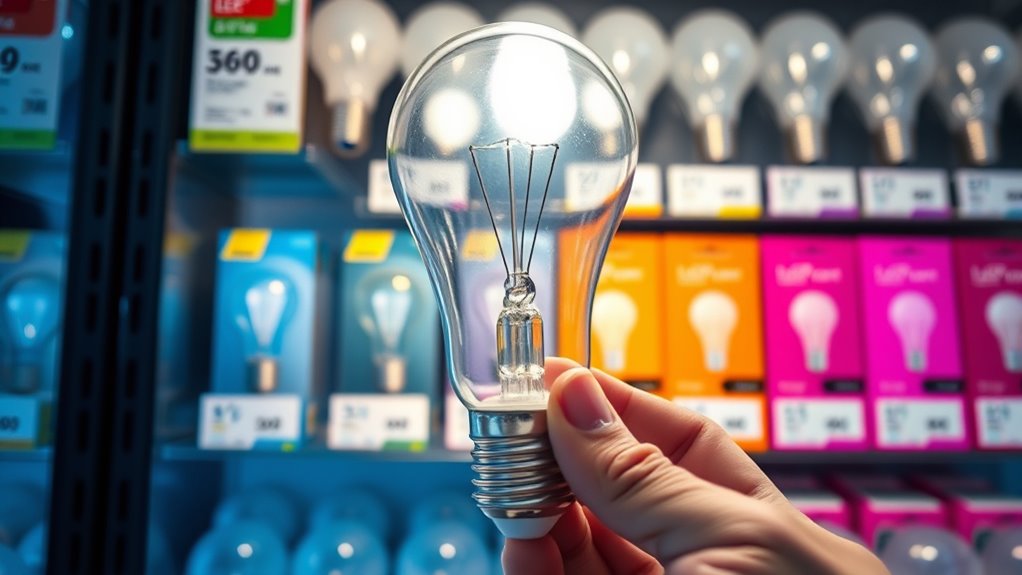
Are you considering switching to LED light bulbs but unsure where to start? Making the right choice involves understanding a few key factors, especially wattage, lumens, and color temperature. These elements determine how bright your space will be, how much energy you’ll save, and the overall mood you create. When shopping for LEDs, it’s important to pay attention to dimming compatibility as well, since not all LED bulbs work with existing dimmer switches. If you want to adjust brightness easily, look for bulbs explicitly labeled as dimmable and compatible with your dimmer system. This ensures smooth operation without flickering or buzzing, which can be common with incompatible LEDs.
Energy efficiency is one of the main reasons to switch to LED bulbs, and understanding wattage helps you compare their power consumption to traditional incandescent bulbs. Unlike incandescent bulbs, which produce the same amount of light regardless of wattage, LEDs use much less energy to deliver equivalent brightness. For example, a 10-watt LED can produce as much light as a 60-watt incandescent. So, when choosing LEDs, aim for lower wattage numbers for energy savings, but always check the lumens to gauge brightness. Lumens measure how much light a bulb emits, and higher lumens mean a brighter light. If you’re replacing a 60-watt incandescent, look for an LED producing around 800 lumens. This way, you get similar brightness with a fraction of the energy use, saving money on your electricity bill over time.
Color temperature influences the ambiance of your space, so consider what mood you want to create. Measured in Kelvins (K), it ranges from warm to cool light. Bulbs around 2700K to 3000K emit a warm, cozy glow ideal for living rooms and bedrooms. Cooler temperatures, like 4000K to 5000K, give off a bright, daylight-like light suitable for kitchens, workspaces, or garages. When selecting LEDs, choose a color temperature that enhances the area’s purpose and complements your existing decor. It’s also worth noting that some LED bulbs now feature adjustable color temperature, allowing you to customize the lighting to suit your mood or activity.
Frequently Asked Questions
How Do LED Bulbs Affect Energy Bills Long-Term?
Switching to LED bulbs can markedly impact your energy bills long-term by providing energy savings and bill reduction. LED bulbs use less power to produce the same brightness as traditional bulbs, meaning you’ll consume less electricity. Over time, the lower energy usage adds up, helping you save money monthly. Plus, their longer lifespan means fewer replacements, further boosting your savings and making LEDs a cost-effective choice for your home.
Are Dimmable LED Bulbs Compatible With All Fixtures?
Think of dimmable LED bulbs as versatile actors ready for different stage lights. Not all are compatible with every fixture; you need to check dimmable compatibility and fixture requirements first. Some fixtures may need compatible dimmer switches or specific sockets. Before you switch on your new bulbs, verify they’re designed for dimming and match your fixture’s specs, so your lighting performance stays smooth and flicker-free.
What Is the Best LED Bulb for Outdoor Use?
For outdoor use, you should choose LED bulbs with weather resistance features like waterproof and dustproof ratings, ensuring durability in various conditions. Make sure they’re compatible with your outdoor fixture, especially if it’s enclosed or exposed to the elements. Look for bulbs labeled “outdoor” or “weatherproof,” which are designed to withstand rain, snow, and UV rays. This guarantees safety, longevity, and reliable illumination for your outdoor spaces.
How Do I Recycle or Dispose of Used LED Bulbs?
Imagine the impact of your used LED bulbs on the environment. You should follow proper disposal guidelines and participate in local recycling programs to prevent hazardous materials from harming nature. Check with your community’s recycling center or electronic waste facility for specific instructions. Don’t toss them in regular trash; instead, handle them responsibly. Recycling your LEDs safeguards the planet and ensures safe disposal of any tiny, potentially harmful components inside.
Can LED Bulbs Cause Eye Strain or Health Issues?
LED bulbs can cause eye strain and health issues if you’re exposed to excessive blue light, especially during late hours. You might experience eye fatigue, headaches, or disrupted sleep. To reduce risks, limit screen time, use bulbs with warmer color temperatures, or wear blue light glasses. Adjusting your lighting setup helps protect your eyes and promotes better overall health when using LED lighting.
Conclusion
Now that you understand wattage, lumens, and color temperature, choosing the right LED bulb becomes easier. Remember, it’s all about matching your needs with the right specifications for brightness and mood. So, next time you’re shopping, ask yourself: aren’t you worth the bright, energy-efficient light that perfectly fits your space? With these tips, you’ll be lighting up your home wisely and confidently. Happy bulb shopping!