

To pick the perfect paint color with no regrets, start by evaluating your space and the lighting conditions, including natural and artificial light, since they influence how colors appear. Reflect on your personal style and the mood you want each room to evoke, considering color psychology to support these feelings. Test samples in different areas and at different times of day to see how they change. Pay attention to existing decor for harmony. If you’re curious about more tips, you’ll find helpful insights ahead.
Key Takeaways
- Test paint samples in multiple areas and lighting conditions to see how colors change throughout the day.
- Consider your personal style and emotional response to colors to choose shades that feel authentic.
- Use color psychology to select hues that evoke your desired mood and complement each room’s function.
- Evaluate existing elements like furniture and flooring to ensure new colors harmonize with your overall palette.
- Trust your instincts and select shades that you truly love, ensuring long-term satisfaction without regrets.
Assess Your Space and Lighting Conditions
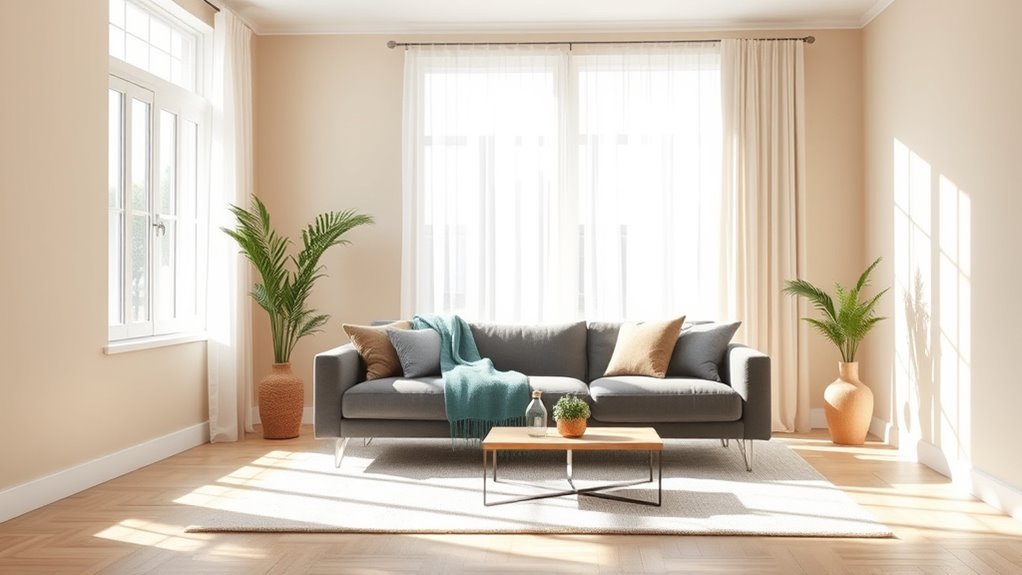
Before choosing a paint color, it’s essential to assess your space and lighting conditions. Natural light varies throughout the day and can make colors appear different than they do in the store. Bright sunlight can intensify warm tones, while shadows can dull cooler shades. Artificial lighting also impacts color perception—warm bulbs give a yellowish tint, while cool bulbs highlight blue undertones. Pay attention to how light interacts with your space at different times, and test paint samples in various areas. Consider the direction your windows face—north, south, east, or west—as it influences the amount and quality of light. Understanding these factors helps you select a color that truly complements your room’s lighting, ensuring your chosen shade looks just right once applied. Additionally, be aware that discoloration or fading can occur over time if the lighting conditions are not taken into account, potentially affecting the longevity and appearance of your paint choice.
Determine Your Personal Style and Color Preferences
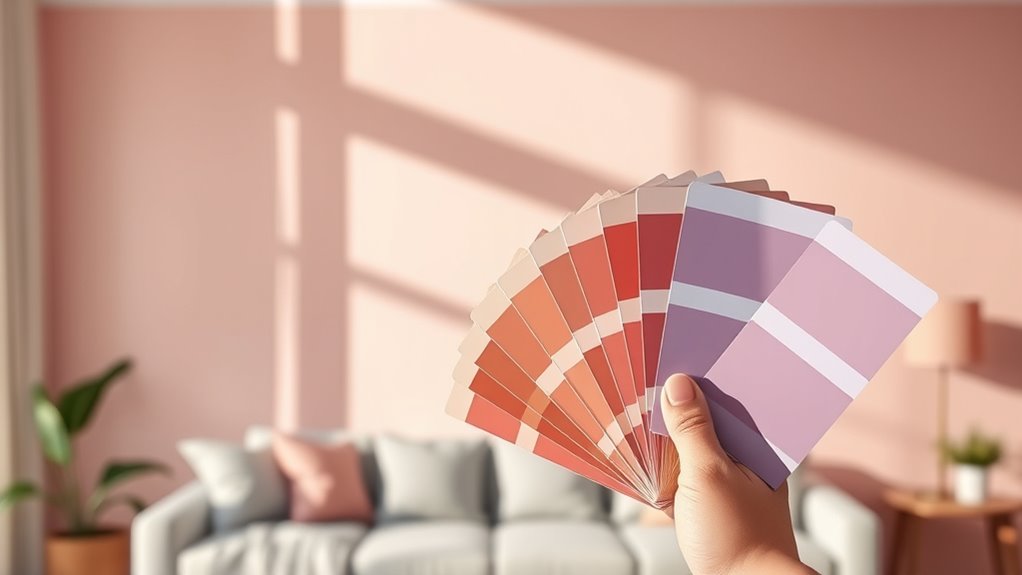
Understanding your personal style and color preferences is key to choosing a paint color that truly reflects your personality and enhances your space. Take time to identify what colors make you feel comfortable and inspired, whether it’s bold hues or subtle tones. Consider how your personal preferences influence your style expression—do you prefer modern minimalism, cozy traditional, or eclectic vibrancy? Reflect on past design choices and how they made you feel, helping you pinpoint your true style. By aligning your color choices with your preferences, you ensure your space feels authentic and welcoming. Remember, your personal style is unique, so trust your instincts and select colors that resonate with you, creating a space you’ll love for years to come.
Explore Color Psychology and Mood Effects
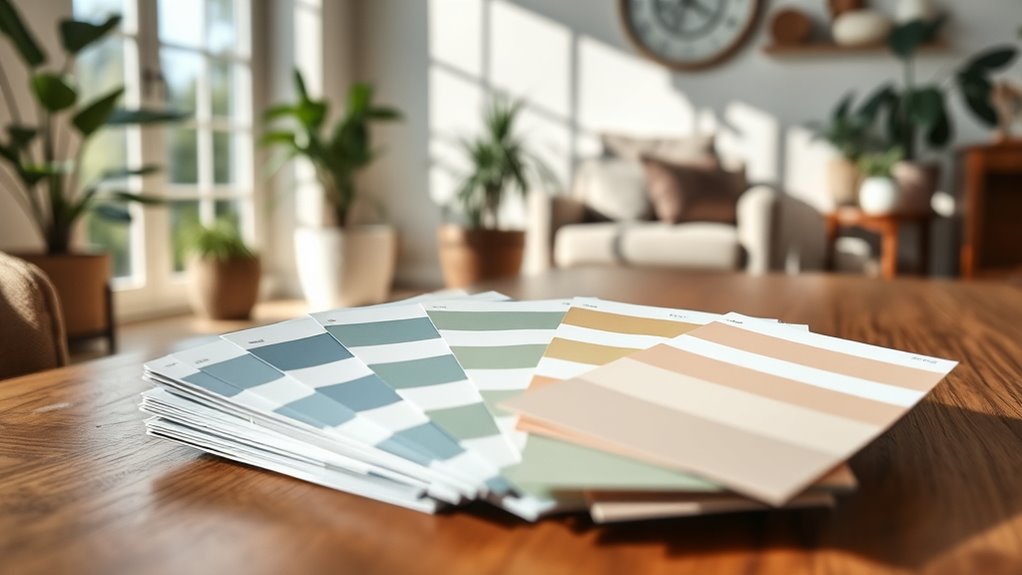
Colors don’t just decorate your space; they also influence your mood and behavior. Understanding color psychology helps you choose hues that evoke desired emotional impacts. For example, blues promote calmness, making them ideal for bedrooms, while yellows energize and inspire creativity, perfect for kitchens or workspaces. Keep in mind cultural associations too, as they shape how colors are perceived—white symbolizes purity in some cultures but mourning in others. Additionally, incorporating ambient sounds can enhance the emotional atmosphere of a space, aligning auditory cues with your color choices for a more cohesive environment.
Test Samples in Different Areas and Times of Day
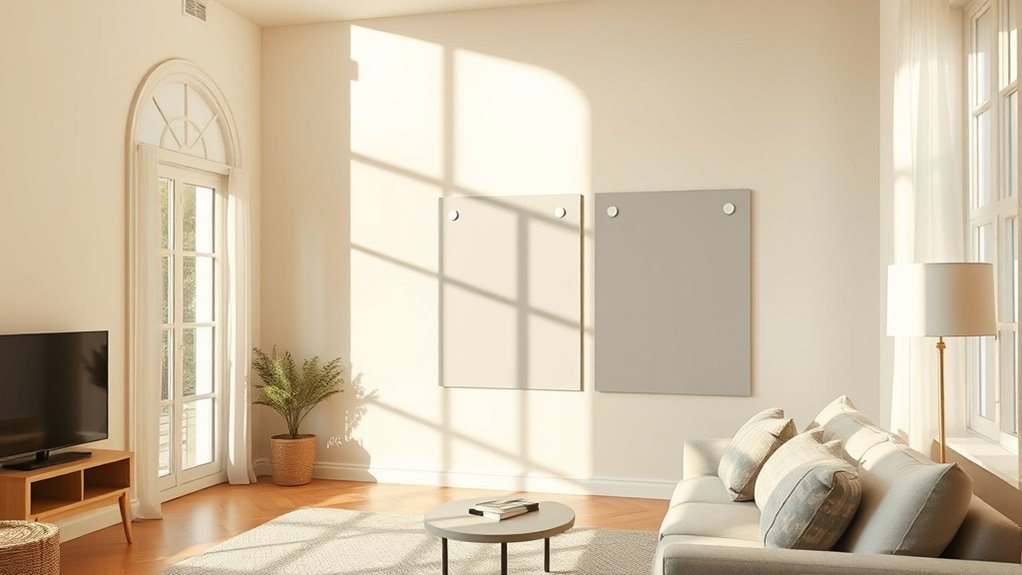
Testing paint samples in different areas and at various times of day is essential to see how they look in real-life conditions. By testing paint swatches on your walls, you can observe how each color reacts to natural and artificial lighting throughout the day. This helps you evaluate daylight effects and ensures the color remains appealing under different lighting conditions. Don’t rely solely on sample cards; apply small patches directly on your walls and view them during morning, afternoon, and evening. This process reveals how shadows, sunlight, and room orientation influence the paint’s appearance. Taking these steps prevents surprises and guarantees you select a color that truly complements your space at all times.
Consider the Existing Elements and Overall Palette
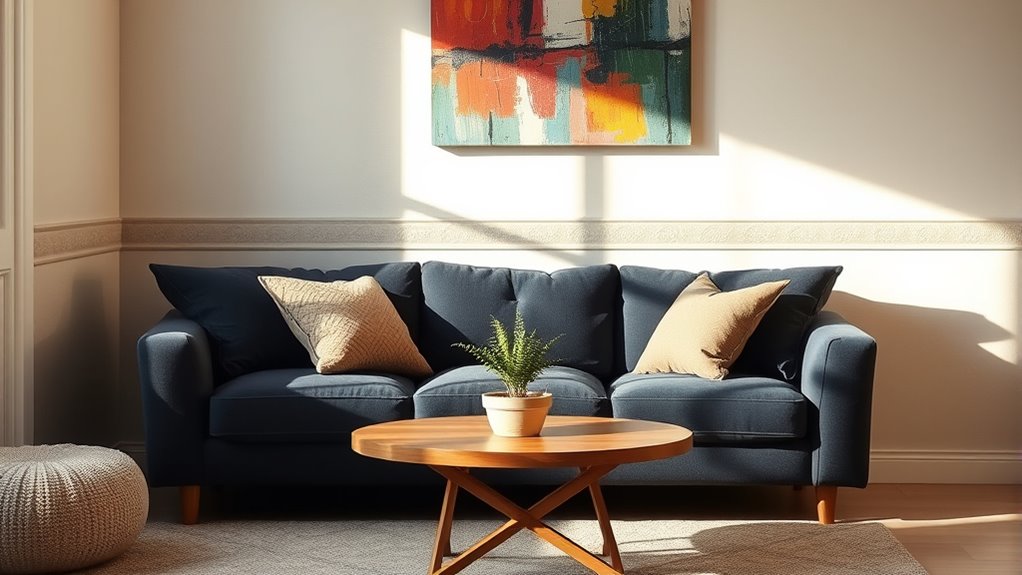
Before choosing a new paint color, it’s important to evaluate the existing elements in your space, such as furniture, flooring, and architectural details. These components form your overall palette and influence your color choices. Consider how your matching furniture and existing decor interact with potential paint colors. Paying attention to color harmony can help you select shades that complement your farmhouse bedroom’s rustic charm and create a cohesive look.
Use Color Tools and Resources for Inspiration
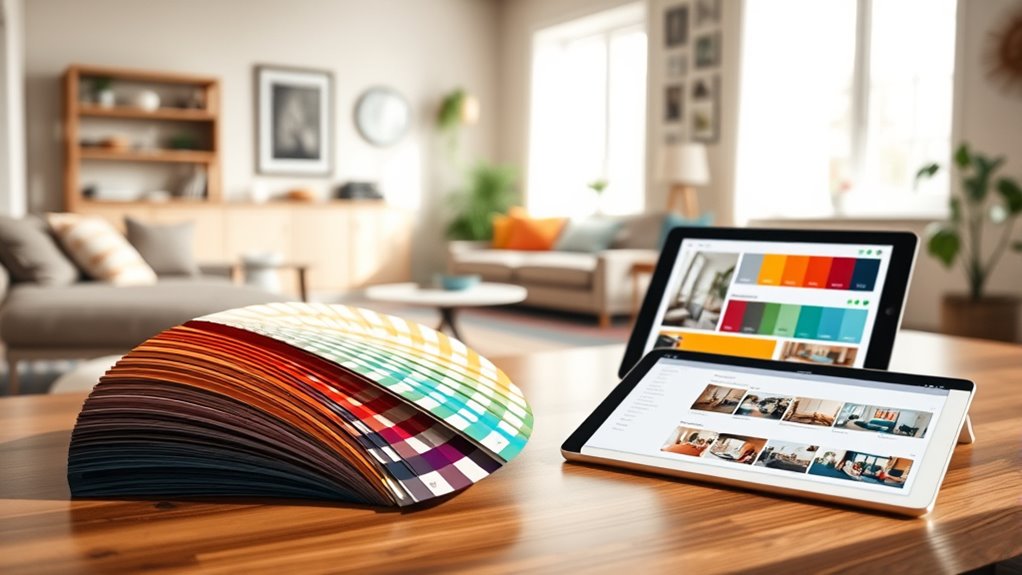
Are you feeling stuck on which paint color to choose? Using color tools and resources can spark your creativity and narrow down options. Digital color matching allows you to upload photos of your space and find complementary shades effortlessly. Online visualization tools let you see how different colors will look on your walls before committing, helping you avoid costly mistakes. Many apps also offer inspiration galleries, showcasing trending palettes and ideas from designers. These resources make it easier to experiment with various hues, textures, and combinations, giving you a clearer sense of what suits your style. Incorporating these tools into your decision-making process ensures you’ll find a color that feels right, saving you time and regrets in the long run. Additionally, understanding how AI technologies influence color analysis can help you select shades that evoke the desired mood and ambiance in your space.
Plan for Future Changes and Long-Term Satisfaction
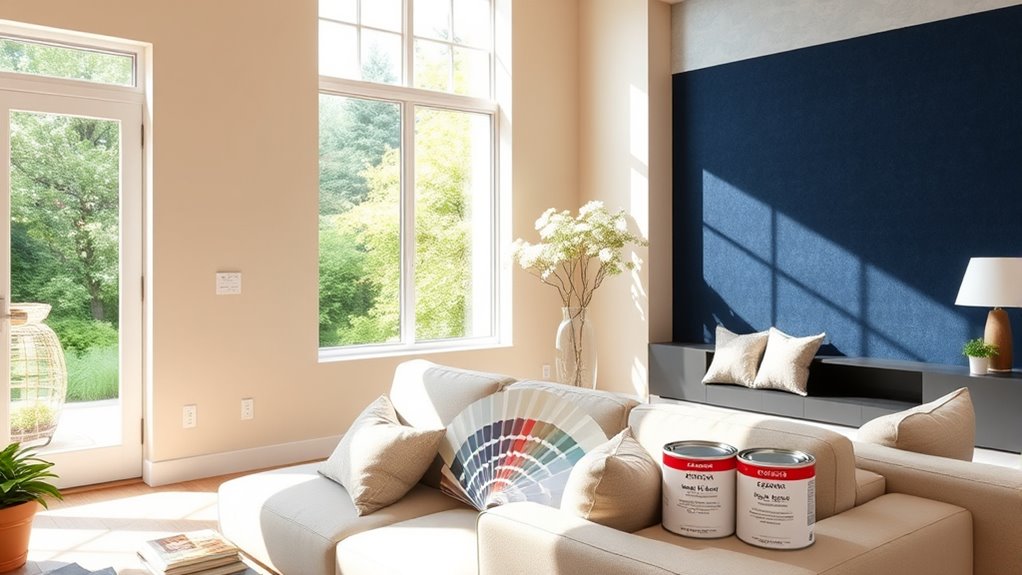
Think about how your needs might change over time and choose a color that will still feel right in the future. Neutral tones are a smart option because they easily accommodate different styles and moods. Planning ahead ensures you’ll stay satisfied with your choice for years to come. Considering long-term satisfaction can help prevent the need for frequent repainting or decorating adjustments.
Anticipate Lifestyle Shifts
Planning your paint colors with future lifestyle changes in mind guarantees your space remains functional and appealing over time. Consider how your needs might evolve, such as a growing family or changing work-from-home routines. Stay aware of future trends and seasonal preferences that could influence your color choices, ensuring your space stays current and inviting. By anticipating these shifts, you can select versatile shades that adapt well to new purposes or decor updates. Keep in mind that your preferences may change, so choosing timeless tones with subtle accents can provide flexibility. Thinking ahead helps you avoid costly repainting and dissatisfaction down the line. Be proactive—think about how your lifestyle might shift and select colors that will grow with you comfortably. Recognizing relationship patterns and understanding your emotional needs can also help you choose colors that promote a calming or energizing environment suited to your personal growth.
Opt for Neutral Tones
Opting for neutral tones creates a versatile foundation that can easily adapt to future changes in your space. Neutral colors like beige, gray, or taupe work well with monochrome schemes, making it simple to update your decor over time. They also provide flexibility for adding accent wall options without clashing, allowing you to experiment with bold colors or patterns on one wall while maintaining an overall harmonious look. Choosing neutral shades ensures your space remains timeless and appealing, even as your style evolves. This approach minimizes the risk of regret, since you won’t be locked into a bold or trendy color that might fade in appeal. Instead, neutral tones give you the freedom to refresh your decor easily and confidently. Incorporating diverse design options can further enhance your interior aesthetic and keep your space looking fresh.
Frequently Asked Questions
How Do I Choose a Paint Finish Suitable for Each Room?
When selecting a paint finish, you should consider the different paint finish options available for each room. For example, use matte or eggshell finishes in bedrooms for a soft look, while semi-gloss works well in kitchens and bathrooms for durability. Always think about room lighting considerations, as natural or artificial light can affect how finishes appear. This way, you’ll pick the right finish that balances style and practicality.
What Are the Best Methods to Visualize Color in My Space?
Like a modern-day Michelangelo, you can visualize your space’s colors with digital visualization tools or color sampling. These methods let you see how different shades look in your actual lighting and decor before committing. Use color sampling for quick swatches, or employ digital visualization apps to preview your room with various hues. This way, you avoid regrets and choose colors that truly complement your space, confidently.
How Can I Coordinate New Paint With Existing Furniture and Decor?
To coordinate new paint with your existing furniture and decor, focus on creating color harmony. Start by identifying dominant hues in your furniture and accessories, then choose paint colors that complement or contrast thoughtfully. Use furniture matching to guide your palette, selecting shades that enhance pieces without overpowering them. This approach guarantees your space feels cohesive and balanced, making your new paint a seamless part of your overall decor.
What Are Some Budget-Friendly Options for High-Quality Paints?
Oh, because splurging on high-end paint is obviously the path to eternal perfection, right? Actually, budget brands like Behr, Valspar, and Sherwin-Williams offer high-quality paints that won’t break the bank. To pick the right shade, grab paint swatches and test them in your space. You’ll get beautiful results without overspending, proving you don’t need to spend a fortune to achieve a stunning look.
How Often Should I Repaint to Maintain My Chosen Color?
You should repaint every 5-7 years to keep your color looking fresh, but it depends on factors like sunlight and wear. Regular paint touch-ups can help maintain your chosen color between full repaints, especially for minor chips or fading. For color touch-ups, address small areas promptly to prevent further damage. This proactive approach guarantees your space stays vibrant and your color choices remain beautiful over time.
Conclusion
Choosing the perfect paint color isn’t just about aesthetics—it’s about creating a space that feels truly yours. Remember, your walls are the canvas of your daily life; they should inspire and comfort you. Trust your instincts, test thoroughly, and consider how each shade aligns with your personality and environment. After all, isn’t it better to live in a space that sings your song than one that simply looks good? Make your choice with confidence and enjoy your beautifully painted haven.