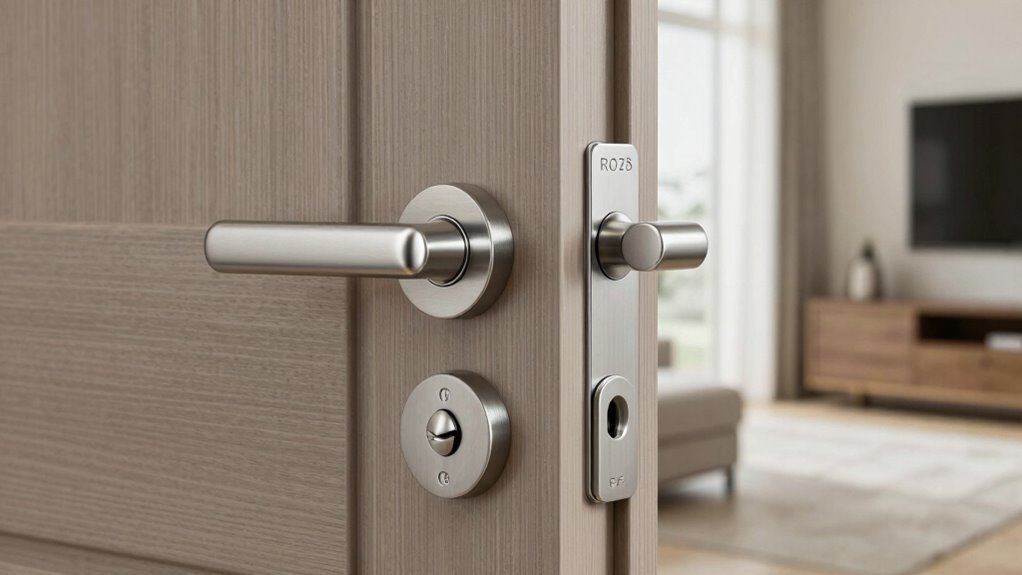
When choosing a smart lock, understanding deadbolt grades, backset measurements, and door quality is key. Higher-grade deadbolts, like Grade 1, offer maximum security, while the backset ensures the lock fits your door properly. Sturdy, solid doors complement smart locks by providing better protection. If you want to maximize safety, it’s important to match the right hardware to your door’s specifics—stay tuned to discover how these details make a difference.
Key Takeaways
- Deadbolt grades (1-3) indicate security level, with Grade 1 being most secure, suitable for high-security needs.
- Proper backset measurement (2 3/8 or 2 3/4 inches) ensures smart lock compatibility and proper installation.
- Door material impacts security; solid wood or metal doors provide better protection for smart lock effectiveness.
- Combining high-grade deadbolts with sturdy doors enhances overall home security and smart lock performance.
- Correct installation and door condition are essential for maximizing the security benefits of smart locks.
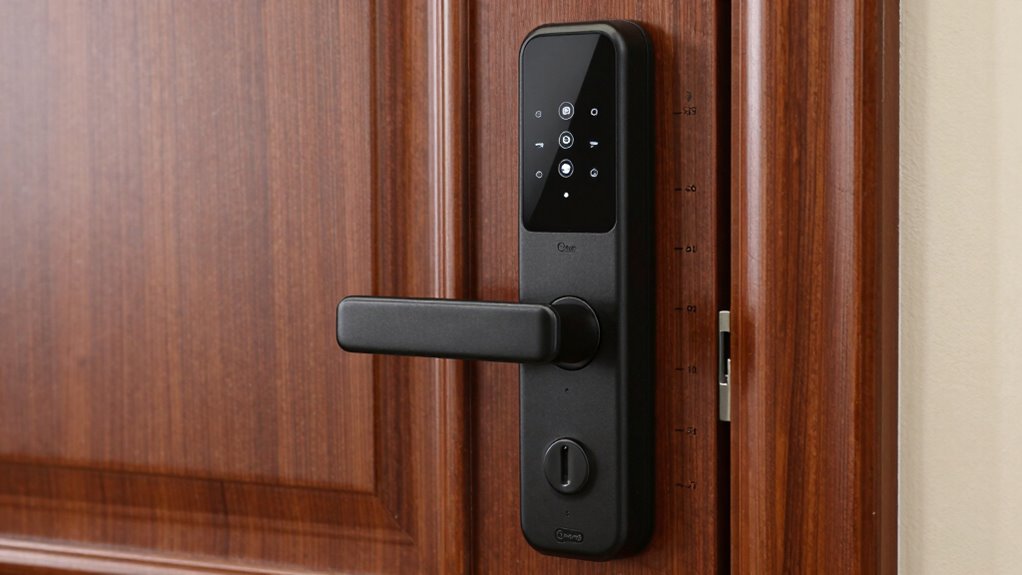
Are you curious about how smart locks can enhance your home security? If so, you’re in the right place. Smart locks offer the convenience of keyless entry, allowing you to access your door without fumbling for keys. Instead, you can use a code, a smartphone app, or even voice commands to gain access. This eliminates the need to carry around bulky keys and reduces the chances of losing them. Plus, many smart locks come with remote access features, so you can lock or access your door from anywhere. Whether you’re at work or on vacation, you can monitor and control who enters your home. This added flexibility is especially useful for granting temporary access to family members, friends, or service providers without giving out physical keys. With remote access, you get peace of mind knowing you can lock up tight if you forget or need to secure your home quickly.
Smart locks provide keyless entry and remote access for enhanced home security and convenience.
Understanding the various deadbolt grades can help you choose the right smart lock for your home. Deadbolt grades are a measure of a lock’s durability and security. Grade 1 is the highest, designed for commercial use but also perfect for residential homes that want maximum protection. Grade 2 offers solid security for most homes, providing good resistance against forced entry. Grade 3 is suitable for interior doors or less vulnerable areas. When selecting a smart lock, think about the grade that matches your security needs, especially if you want a lock that can withstand tampering or forced entry. Additionally, considering Vetted wave and wind can help you understand environmental impacts on locks and doors, ensuring your security setup is resilient in diverse conditions.
Backsets are another important aspect to look into. The backset is the distance from the edge of your door to the center of the lock’s hole. Most residential doors have a backset of either 2 3/8 inches or 2 3/4 inches. Ensuring your smart lock matches your door’s backset is essential for proper installation. If you choose a lock with the wrong backset, it won’t fit properly, and you might face additional modifications or even need a different lock. Before buying, measure your existing lock or consult your door’s specifications to pick a smart lock with the correct backset.
Finally, don’t overlook the importance of your door in the overall security setup. The material and condition of your door can dramatically impact the effectiveness of your smart lock. Solid wood or metal doors offer better security than hollow-core doors. Make sure your door is sturdy and in good condition before installing a smart lock. A strong, well-maintained door combined with a high-grade deadbolt and a smart lock provides a full security solution that’s both convenient and reliable. By paying attention to these details, you can enjoy the benefits of modern security technology while ensuring your home remains safe and secure.
Frequently Asked Questions
How Do I Choose the Right Deadbolt Grade for My Home?
To choose the right deadbolt grade for your home, prioritize deadbolt security and lock durability. Grade 1 deadbolts offer the highest security, making them ideal for exterior doors or high-traffic areas, while Grade 2 provide good protection for less vulnerable spots. Consider your home’s exposure to potential break-ins, and select a deadbolt grade that offers the right balance of security and durability to keep your home safe.
What Are the Benefits of Smart Locks Over Traditional Locks?
You’ll find smart locks are a game-changer, offering digital keys and remote access that traditional locks can’t match. They boost security, letting you lock or open doors from anywhere, and eliminate the hassle of keys. Plus, you can grant temporary access to guests or service providers. With smart locks, you’re always in control, and it’s easier to keep your home safe—no more fumbling with keys, just seamless security at your fingertips.
How Secure Are Smart Locks Against Hacking Attempts?
Smart locks are generally secure, but cybersecurity vulnerabilities can pose risks if not properly managed. Hackers may attempt to breach encryption standards or exploit weak Wi-Fi connections. To stay safe, always update firmware, use strong, unique passwords, and enable two-factor authentication. Regularly check for security patches and avoid connecting your lock to unsecured networks. With proper precautions, smart locks provide a reliable, convenient security option.
Can Smart Locks Be Installed on Any Door Type?
You can install smart locks on many door types, but it’s not always a walk in the park. Some door materials, like solid wood or metal, may pose installation challenges, requiring special tools or adjustments. Hollow-core doors might not support the lock securely. Before you start, check your door’s material and thickness to guarantee compatibility, so your smart lock fits perfectly without turning your project into an epic struggle.
What Maintenance Do Smart Locks Require Over Time?
Smart locks need some regular maintenance to keep them running smoothly. You should check the battery life periodically and replace batteries before they die to avoid lockouts. Additionally, keep the software updated to guarantee security and functionality. Occasionally, clean the lock mechanism and keypad to prevent dust buildup. By staying on top of these simple tasks, you’ll ensure your smart lock remains reliable and secure over time.
Conclusion
So, next time you proudly show off your shiny new smart lock, just remember: behind that sleek exterior lies a world of deadbolt grades, backsets, and door choices. Because nothing screams “security” like obsessing over the perfect backset while your door’s about as sturdy as cardboard. But hey, at least you’ll be the envy of all your friends when they see you’ve finally unfastened the secrets of smart locks—just don’t forget to actually lock it.