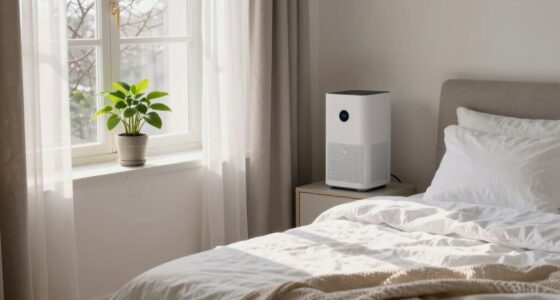
Air purifiers are great for small spaces and target airborne particles like dust, pollen, pet dander, and some bacteria or viruses, often using HEPA filters and odor-absorbing activated carbon. Air scrubbers are more powerful and suited for larger areas, removing not only particles but also chemical fumes, VOCs, and mold spores. They’re ideal for more severe or persistent issues. Keep exploring to understand which option fits your home’s needs best.

Get decor and gifts delivered free with Prime
- Fast, free delivery on millions of items
- Prime Video, Amazon Music and more included
- Member-only deals all year
Key Takeaways
- Purifiers are ideal for small spaces and target airborne particles like dust, pollen, and allergens, while scrubbers are suited for large areas or severe pollution.
- Purifiers typically use HEPA and activated carbon filters to trap particles and odors; scrubbers actively remove chemicals and VOCs through advanced filtration and oxidation.
- Purifiers are simpler, portable, and require less maintenance, making them suitable for everyday use; scrubbers are more complex and designed for heavy-duty applications.
- For odors and allergens in a single room, purifiers are effective; for chemical vapors, mold, or large-scale air cleaning, scrubbers perform better.
- Proper selection depends on the environment size, contaminant type, and severity of air quality issues, balancing effectiveness, cost, and maintenance.

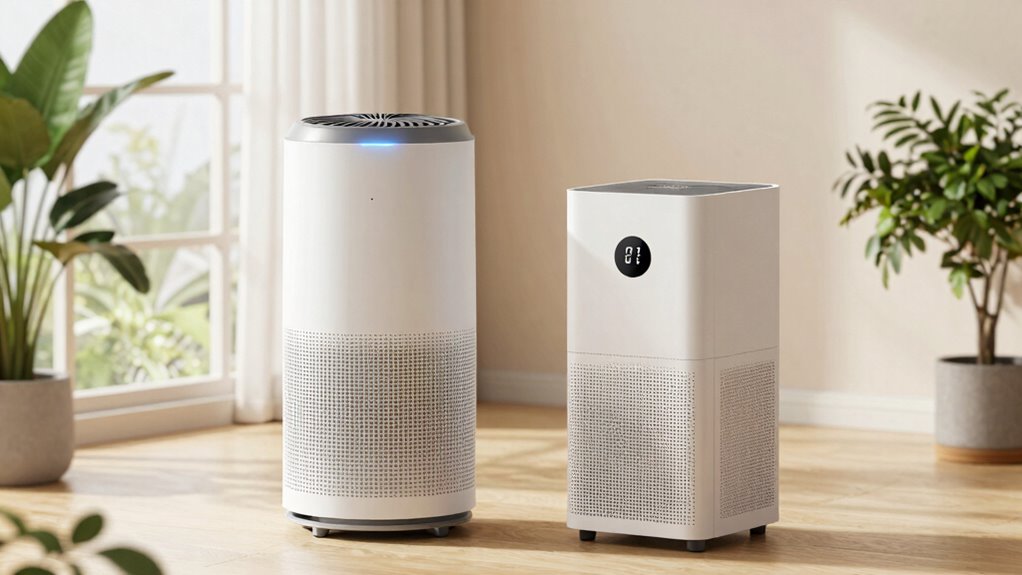
When it comes to improving indoor air quality, understanding the differences between air scrubbers and purifiers is essential. Both devices aim to enhance air filtration, but they do so in different ways, and knowing which one suits your needs can make a big difference in your home environment. Air purifiers typically use filters, such as HEPA filters, to trap airborne particles, including dust, pollen, pet dander, and even some bacteria or viruses. They work by drawing air through the filter system, capturing contaminants, and then releasing cleaner air back into your space. If indoor odors are a concern, many purifiers are equipped with activated carbon filters that absorb smells from cooking, pets, or smoke, providing a fresher atmosphere. These devices are usually compact, easy to operate, and ideal for individual rooms or small spaces.
On the other hand, air scrubbers are more advanced and are often used in larger areas or professional settings. They operate by actively removing pollutants from the air using advanced filtration systems, often incorporating multiple stages like HEPA filters, activated carbon, and sometimes UV light. Unlike purifiers, air scrubbers don’t just trap particles—they actually remove contaminants from the air through a process called air oxidation or absorption. This makes them particularly effective at reducing indoor odors, volatile organic compounds (VOCs), and airborne chemicals. Because of their design, air scrubbers are typically more powerful and are often used during renovation projects, mold remediation, or in homes with severe air quality issues. They help improve overall air quality by cycling and filtering large volumes of air more efficiently than standard purifiers. Additionally, air scrubbers can help address specific concerns like mold spores or chemical vapors that may not be as effectively handled by typical purifiers. It’s also important to consider the maintenance requirements of each device to ensure consistent performance over time.
While both devices improve indoor air quality, your choice depends on the level of filtration needed and the size of the space. If you’re mainly concerned with occasional odors or allergens in a single room, a high-quality air purifier may be sufficient. However, if you’re dealing with persistent odors, airborne chemicals, or larger areas, an air scrubber can offer a more all-encompassing solution. It’s also worth considering the noise levels, maintenance requirements, and initial costs of each device. In sum, purifiers are excellent for everyday use and targeted air filtration, while scrubbers are better suited for heavy-duty applications and improving overall air quality in bigger or more problem-prone environments. Understanding these differences helps you make an informed decision to create a healthier, odor-free home. For example, choosing the right air filtration technology can significantly impact your indoor environment’s health and safety. Proper understanding of these systems can also help in preventing indoor air pollution, which is crucial for maintaining wellness and vitality in your home environment. Moreover, selecting the appropriate device can contribute to sustainable living practices by reducing the need for chemical air fresheners and other pollutants.
HEPA air purifier for small rooms
As an affiliate, we earn on qualifying purchases.
As an affiliate, we earn on qualifying purchases.
Frequently Asked Questions
Can Air Purifiers Remove All Types of Airborne Viruses?
Air purifiers can’t remove all airborne viruses, but they do help reduce airborne pathogens through virus filtration. High-quality purifiers with HEPA filters can trap many viruses and bacteria, improving your indoor air quality. However, no device guarantees complete removal of every airborne virus, especially if they’re very small or in high concentrations. For better protection, combine air purification with good ventilation and hygiene practices.
How Often Should Air Scrubbers Be Maintained or Replaced?
You should perform maintenance on your air scrubber every 3 to 6 months, depending on usage and manufacturer guidelines. Regularly check filters and clean or replace them as needed to keep it running efficiently. Follow the replacement guidelines provided by the manufacturer, typically every 2 to 5 years, to guarantee the best air quality. Proper maintenance ensures your air scrubber effectively removes contaminants and maintains a healthy indoor environment.
Are Portable Air Purifiers Effective in Large Open Spaces?
Portable air purifiers can be effective in large open spaces if you choose models with sufficient coverage and strong filtration, like HEPA filters. They improve air quality considerably, but you need to take into account noise levels, which can vary. For ideal results, place the purifier centrally and run it continuously. Keep in mind, larger spaces may require multiple units or more powerful air purifiers to guarantee consistent air quality throughout.
Do Air Scrubbers Produce Any Harmful Byproducts?
Imagine a gentle breeze washing over your home, but some air scrubbers can produce harmful byproducts like chemical emissions or ozone. You might notice a faint, sharp smell or irritation in your eyes and throat. While many scrubbers are safe, it is crucial to choose models that don’t generate ozone or emit chemicals, ensuring your air stays fresh and healthy without risking harmful byproducts.
Which Device Is More Energy-Efficient for Continuous Use?
Air purifiers generally use less energy than air scrubbers, making them more power-efficient for continuous use. Purifiers are designed for low energy consumption, which helps you save on electricity bills while maintaining clean indoor air. Air scrubbers might consume more due to their larger motors and additional filtration stages. If energy efficiency is your priority, choosing a high-quality purifier guarantees better power efficiency and less energy use over time.
Conclusion
So, while air scrubbers and purifiers each have their strengths, choosing the right one depends on your needs. Some might worry that purifiers aren’t enough for serious contaminants, but remember, a high-quality purifier can effectively improve your air quality. Don’t overlook the importance of proper filtration and maintenance. Investing in the right device means breathing easier and creating a healthier home environment—so don’t wait until allergies or fumes become a problem.
Columbus Day / Indigenous Peoples' Day Picks
long weekend sales
As an affiliate, we earn on qualifying purchases.