
Choosing between an ERV and an HRV depends on your climate and indoor air needs. An HRV is great for colder regions because it transfers heat to keep your home warm and reduce heating costs. An ERV bends more towards humid areas, as it also controls moisture and prevents mold. Understanding these differences can help you select the best system for your home, and if you keep exploring, you’ll discover more useful details.
Key Takeaways
- HRVs excel in cold climates by transferring heat but do not manage humidity, making them ideal for energy efficiency in winter.
- ERVs are better suited for humid or mixed climates as they transfer both heat and moisture, helping control indoor humidity.
- Both systems improve indoor air quality through continuous ventilation, but ERVs also help prevent mold and dryness issues.
- The choice depends on your climate: HRVs for warmth retention in cold areas, ERVs for humidity control in humid regions.
- Proper maintenance maximizes efficiency and air quality benefits for either system, aligning with your specific home needs.

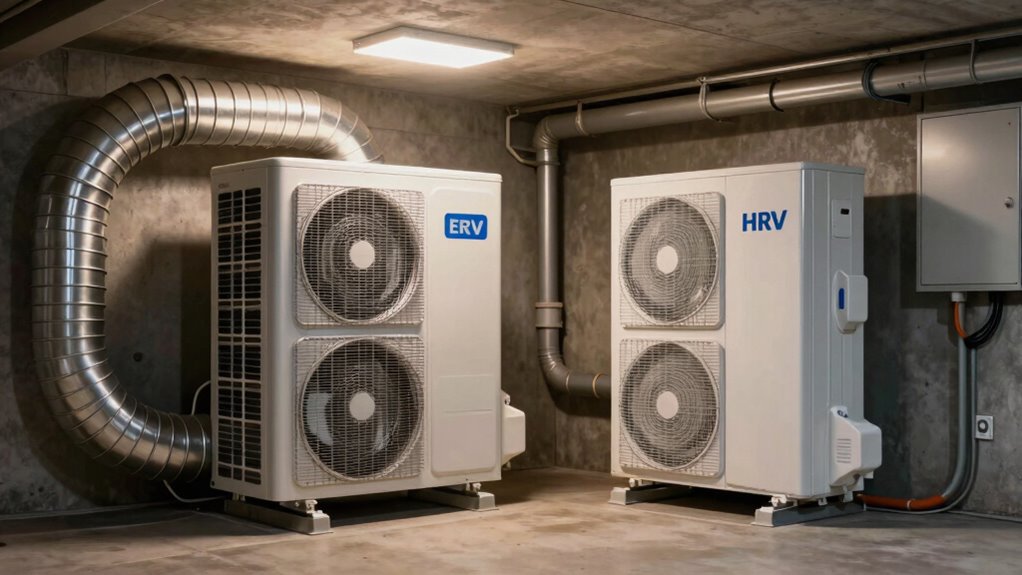
Choosing between an Energy Recovery Ventilator (ERV) and a Heat Recovery Ventilator (HRV) can feel overwhelming because both systems improve indoor air quality but serve slightly different purposes. You want to guarantee your home stays fresh and healthy, but understanding which system best suits your needs can be confusing. You also need to consider the energy efficiency benefits of each system to make an informed decision. Both units work by exchanging stale indoor air with fresh outdoor air while conserving energy, but their differences influence overall energy efficiency and indoor air quality in unique ways.
An HRV primarily focuses on transferring heat between incoming and outgoing air streams. If you live in a colder climate, an HRV helps maintain warmth inside your home by capturing heat from exhaust air and transferring it to fresh incoming air. This process reduces heating costs and improves energy efficiency, especially during winter months. However, HRVs don’t transfer moisture, so they’re less effective in humid environments or in homes where controlling indoor humidity is important. If your main goal is to preserve heat and improve energy efficiency during cold seasons, an HRV could be the right choice for you.
HRVs focus on transferring heat to improve energy efficiency in cold climates, but don’t control indoor humidity.
On the other hand, an ERV is designed to transfer both heat and moisture between incoming and outgoing air streams. This dual transfer helps regulate indoor humidity levels, making ERVs beneficial if you’re dealing with high humidity or want to prevent excessive dryness. By managing moisture, ERVs contribute to better indoor air quality overall, reducing issues like mold growth and dry skin. They’re especially useful in climates with significant seasonal variations or in homes where maintaining a specific humidity level is critical. Additionally, ERVs can help prevent moisture buildup, and incorporating proper ventilation practices can further optimize indoor air quality and system efficiency. Proper maintenance of these systems also ensures their long-term performance and energy savings. Selecting the right system can also enhance overall comfort by balancing heat and humidity levels effectively, especially when combined with other ventilation strategies. If you’re looking for a system that balances energy efficiency with improved indoor air quality through humidity control, an ERV is likely the better fit.
Your choice also depends on your local climate and personal comfort preferences. In colder, drier regions, an HRV might be more suitable because it prioritizes heat retention. Conversely, in humid or mixed climates, an ERV can help prevent indoor moisture problems while still conserving energy. Consider your home’s specific needs, such as whether you want to focus on reducing heating costs or controlling humidity levels, and how each system aligns with your comfort and health goals. Both systems enhance indoor air quality by providing continuous ventilation, but selecting the right one hinges on understanding how their energy efficiency benefits align with your climate and lifestyle.

Panasonic Intelli-Balance® Elite Plus+ Energy Recovery Ventilator (ERV), 120 CFM, SmartFlow™ ECM Motor, MERV 13 Filtration, FV-12ESC1
- SmartFlow ECM Motors: Adjusts speed for quiet, efficient airflow
- Customizable Airflow: Adjusts from 30 to 120 CFM
- Energy Recovery: Balances heat and moisture with transfer core
As an affiliate, we earn on qualifying purchases.
As an affiliate, we earn on qualifying purchases.
Frequently Asked Questions
How Do ERV and HRV Systems Impact Energy Bills?
ERV and HRV systems boost your home’s energy efficiency by managing airflow and humidity, which helps reduce energy bills. They recover heat from outgoing air, saving you money on heating and cooling costs. By maintaining a balanced indoor environment, these systems promote cost savings and energy efficiency. Properly installed, they make your home more comfortable while lowering your monthly expenses, ensuring you get the most value from your investment.
Are ERV and HRV Suitable for All Climate Types?
ERV and HRV systems aren’t suitable for all climate types. In colder climates, HRVs work well because they retain heat while exchanging air, ensuring system compatibility with winter temperatures. In warmer, humid regions, ERVs are more climate adaptable since they help control humidity levels and improve ventilation. Always consider your local climate and home system compatibility before choosing between an ERV or HRV to maximize efficiency and comfort.
What Maintenance Is Required for ERV and HRV Units?
You need to regularly check and replace filters in your ERV or HRV to guarantee peak performance. Clean or replace filters every 3 to 6 months, depending on usage and air quality. Also, schedule professional inspections annually to keep the system operating efficiently and extend its lifespan. Proper maintenance prevents dust buildup, improves air quality, and ensures your ventilation system continues to work effectively for years.
Can ERV and HRV Improve Indoor Air Quality Significantly?
You’ll notice a massive boost in your indoor air quality with ERV and HRV systems—they’re like supercharged air filters! They actively improve air filtration, removing pollutants, allergens, and odors, while also controlling humidity to keep your home comfortable. This means fresher, healthier air that can substantially reduce allergy symptoms and mold growth. It’s an upgrade that makes your living space feel cleaner, more breathable, and ready for whatever life throws at it.
How Do Installation Costs Compare Between ERV and HRV?
The cost comparison between ERV and HRV systems varies due to installation complexity. ERVs tend to be slightly more expensive initially because they handle both humidity and air exchange, requiring more complex installation. HRVs are generally cheaper and easier to install, focusing solely on heat recovery. Your choice depends on your home’s needs, but expect installation costs to reflect the system’s complexity, with ERVs typically costing more upfront.
Conclusion
Just like the Greek myth of Icarus, soaring too close to the sun with one choice can lead to a fall, so too can choosing between ERV and HRV leave you feeling lost in the clouds. Remember, your home’s air quality isn’t a one-size-fits-all tale. Weigh your options carefully, and trust your instincts—after all, even Daedalus knew the importance of balancing flight with safety. Make the right call, and breathe easy.