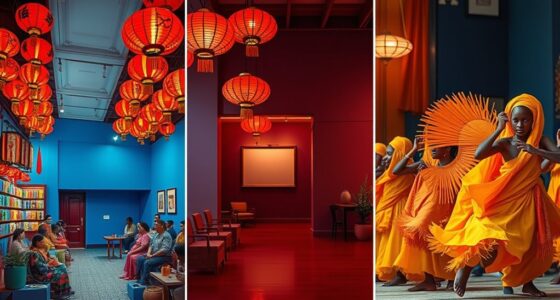

Your personal experiences and cultural background shape how you see and react to colors, making color effects deeply subjective. What feels calming or exciting to you might differ from someone else’s view because of your memories, environment, and cultural influences. These factors create unique perceptions and preferences that evolve over time. Recognizing this variability helps you understand why everyone responds differently. If you’re curious about how these influences shape your own color preferences, there’s more to uncover beneath the surface.
Key Takeaways
- Personal experiences with colors shape individual preferences and emotional associations over time.
- Positive encounters with a color foster liking, while negative ones can lead to avoidance.
- Memories linked to specific colors influence ongoing perceptions and reactions.
- Personal backgrounds and cultural contexts significantly affect how colors are perceived and valued.
- Immediate environment and mood at the moment can alter one’s subjective perception of color effects.
Color effects are inherently subjective, shaped by individual perceptions, cultural backgrounds, and personal experiences. What might evoke calm and serenity in one person could trigger anxiety or indifference in another. Your personal experiences influence how you interpret colors, creating a unique lens through which you view the world. For example, you might associate blue with tranquility because of peaceful memories from childhood, while someone else might see blue as cold or distant. These differences highlight how deeply personal perception influences your reactions to color effects. Additionally, the beneficial ingredients in products like eye patches can also affect your perception of their effectiveness, further illustrating how subjective responses can be.
Color perceptions vary greatly, influenced by personal memories and cultural backgrounds shaping individual emotional responses.
Cultural interpretations play a significant role in how you perceive colors. In some cultures, red symbolizes luck and celebration, making it feel lively and positive. In others, red might be associated with warning or danger. If you grew up in a culture where yellow signifies happiness, you’ll likely respond to it with warmth and cheerfulness. Conversely, someone from a different background might see yellow as cautionary or even irritating. Your cultural context shapes your emotional response to color, guiding your preferences and aversions. This means that what feels vibrant and inviting to you could seem overwhelming or inappropriate to someone else from a different cultural setting.
Your individual perception is also shaped by personal experiences that develop over time. If you’ve had positive encounters with a particular color, you tend to favor it, associating it with those good feelings. Conversely, negative experiences can lead to avoidance or dislike. For instance, if you associate green with a childhood illness, you might find it less appealing, even if others see it as revitalizing or natural. Personal memories and experiences create a complex web of associations that influence your color preferences and perceptions. These associations can change over time as you gather new experiences, altering how you respond to certain colors.
Your environment also influences your subjective view of color effects. The lighting conditions, surroundings, and even the mood you’re in at any given moment can shift your perception. Bright sunlight might make colors appear more vivid, while dim lighting can dull their impact. Your mood can heighten or diminish your emotional response to a color, reinforcing how fluid and personal the experience really is. This variability underscores the importance of understanding that color effects are not universal; they are deeply personal and context-dependent.
Ultimately, recognizing the role of individual perception and cultural interpretations helps you appreciate why people respond differently to the same colors. It reminds you that your emotional reactions are shaped by a complex interplay of personal history, cultural background, and immediate environment. This subjectivity makes color effects both fascinating and deeply personal, emphasizing that there’s no single “correct” way to interpret or feel about a particular hue.
Frequently Asked Questions
How Do Cultural Backgrounds Influence Color Preferences?
Your cultural background shapes your color preferences through cultural symbolism and regional palettes. For example, you might favor red for luck or passion due to cultural meanings, while others prefer colors reflecting their regional palettes. These associations influence your emotional responses to colors, making your preferences subjective and deeply personal. Understanding this helps you appreciate how cultural symbolism and regional palettes guide your choices, shaping your unique color preferences.
Can Personal Memories Alter Perception of Specific Colors?
Yes, personal memories can profoundly influence your perception of specific colors. Your color memory triggers emotional associations, making certain hues feel happy, sad, or nostalgic. For example, a childhood color might evoke warmth or wistfulness. These emotional attachments shape how you see and respond to colors, adding layers of personal meaning that turn simple shades into symbols of your unique experiences.
What Role Does Age Play in Color Preference Changes?
As you age, your perception of colors and developmental color preferences change. Younger individuals tend to favor brighter, more vibrant colors, while older adults often prefer softer, muted tones. Age-related perception shifts affect how you interpret color intensity and hue, influencing your preferences over time. These changes are driven by physiological and psychological factors, shaping your evolving taste and emotional responses to different colors as you grow older.
Are There Universal Color Preferences Across Different Demographics?
You might think everyone shares universal color preferences, but that’s like believing all stars shine the same—it’s not true. While some colors evoke strong emotional responses—red for passion, blue for calm—cultural differences influence color symbolism, making preferences vary across demographics. Still, certain hues like black or white often hold universal significance, transcending individual differences, but overall, personal and cultural factors shape these preferences more than demographics alone.
How Do Individual Personality Traits Affect Color Choices?
Your personality traits influence your color choices by shaping your personal taste and emotional responses. For example, if you’re extroverted, you might prefer vibrant, bold colors that energize you, while introverted individuals may choose softer, calming shades. Your mood, confidence, and openness to new experiences all play roles in these preferences. Ultimately, your unique personality directs how you interpret colors, making your choices deeply personal and emotionally driven.
Conclusion
Ultimately, your personal experiences shape your color preferences just as much as colors influence your mood. While science seeks universal truths, your individual journey creates a unique palette of reactions. You might find serenity in blue, yet feel restless in it, highlighting the contrast between objective effects and subjective perception. Recognizing this juxtaposition helps you appreciate the complexity of color’s impact—it’s not just about hues, but about how those hues resonate within your personal world.