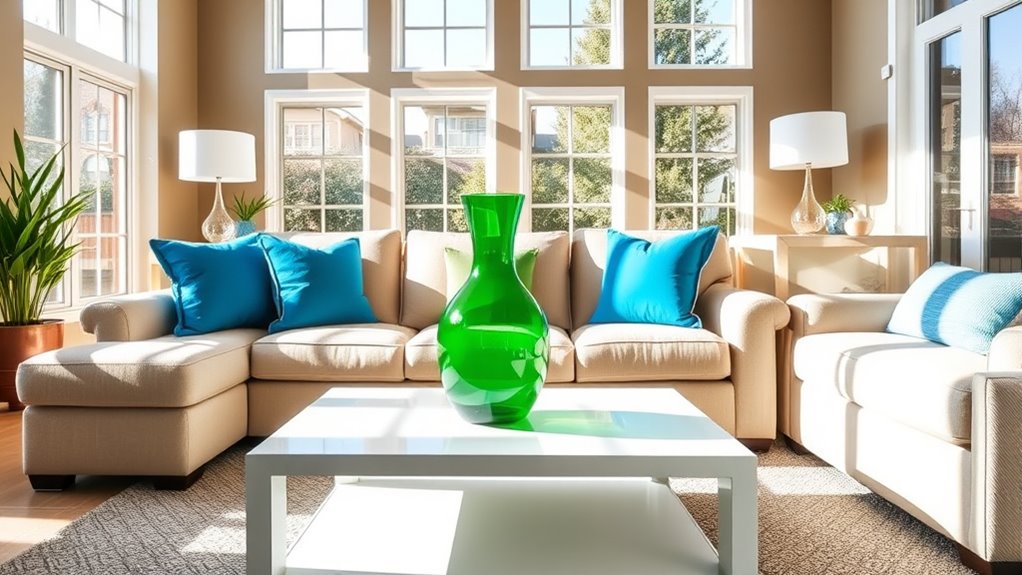
Using accent colors is a simple way to add energy and focus to your rooms. Bright, bold hues like red or electric blue can energize spaces, while softer shades like calming blue promote relaxation. By highlighting features with these colors—whether through cushions, vases, or accent walls—you create visual interest and guide the eye. Incorporating trending earthy tones or vibrant shades allows you to keep your decor fresh and personalized. Keep exploring how you can strategically use accent colors to transform your environment.
Key Takeaways
- Use bold, vibrant accent colors like red or electric blue to energize focal points in a room.
- Incorporate accent colors through accessories such as cushions, vases, or lamps for subtle pops of energy.
- Create a feature wall with a strong color to serve as a visual anchor and draw focus.
- Pair bright accent colors with neutral backgrounds to enhance contrast and make colors stand out.
- Choose accent hues that evoke energy and focus, such as reds and oranges, for areas requiring stimulation.
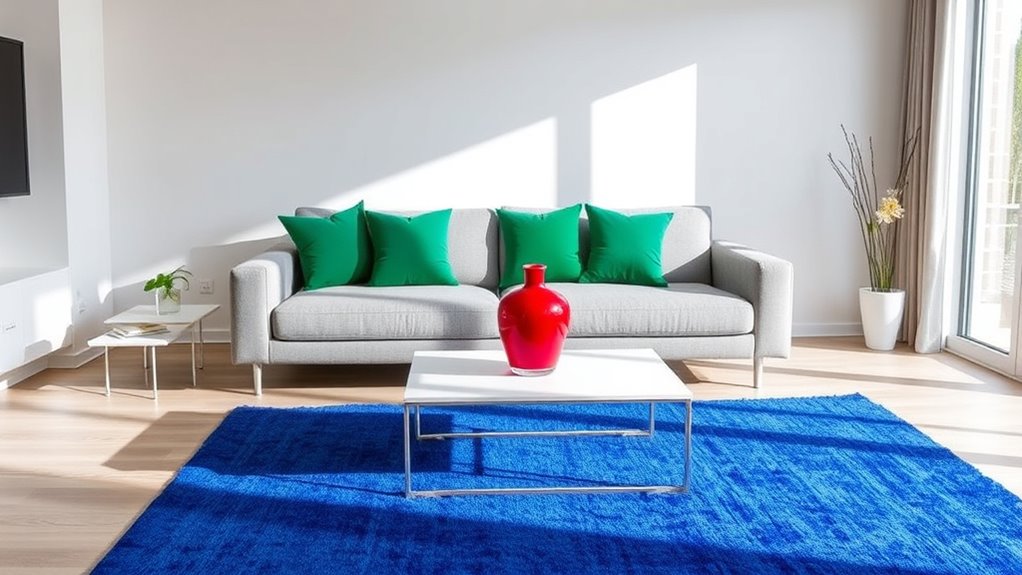
Have you ever wondered how a simple pop of color can transform a plain design? It’s fascinating how just one well-chosen accent color can completely change the mood and energy of a room. When you’re considering adding accent colors, understanding color psychology is key. Colors evoke emotions and influence how you feel in a space. For example, a splash of bold red can energize a room, making it feel lively and passionate, while soft blues promote calm and relaxation. By tapping into color psychology, you can select accent hues that align with the vibe you want to create, whether it’s vibrancy or tranquility.
A splash of bold color can instantly energize or soothe a space through color psychology.
Keeping up with accent color trends is also vital. Trends shift, and staying current ensures your space feels fresh and stylish. For instance, recent trends favor earthy tones like terracotta and olive green, which bring warmth and a sense of grounding. Bright, saturated colors like electric blue or vibrant yellow are also popular for adding energy and focus. These trends often reflect a desire for boldness and individuality, so don’t hesitate to experiment with colors that resonate with your personal style. Incorporating trending accent colors can make your space feel contemporary and thoughtfully curated.
When you choose an accent color, think about how it will interact with your existing palette. A single accent can serve as a focal point, drawing attention to specific features such as a piece of artwork, a feature wall, or even decorative accessories. You can use accent colors more subtly in smaller items like cushions, vases, or lamps, or go bold with a painted wall or furniture piece. The key is to create a visual anchor that guides the eye and adds depth to the room. Remember that contrast is essential; pairing a bright accent with neutral backgrounds enhances its impact, making the color pop and energize the space.
In addition to aesthetics, consider how your chosen accent hues influence functionality. Bright, lively colors can boost energy in areas like kitchens or home offices, helping you stay alert and motivated. Softer, muted tones work well in bedrooms or relaxation zones, promoting rest and comfort. For wireless headphones, understanding headphone jacks and compatibility options can enhance your listening experience. By thoughtfully applying accent colors based on their psychological effects, you’re not just decorating—you’re shaping the ambiance and experience of each space. Whether you want to create a vibrant, energetic environment or a calm, soothing retreat, choosing the right accent color makes all the difference.
Frequently Asked Questions
How Do Accent Colors Affect Room Mood and Atmosphere?
Accent colors influence your room’s mood and atmosphere by triggering psychological effects and evoking cultural associations. Bright colors like red or yellow energize and create a lively feel, while cooler tones like blue or green promote calmness and relaxation. You can intentionally choose accent colors that align with the mood you want to establish, making your space feel more dynamic, welcoming, or serene based on their psychological impact and cultural meanings.
What Are Common Mistakes to Avoid With Accent Colors?
Don’t let your accent colors clash or overpower; avoid poor color coordination and haphazard accent color placement. You might think more is better, but too many bold hues can create chaos instead of focus. Instead, choose a few complementary shades and place them thoughtfully—on a feature wall or in accessories—to highlight key areas. Keep it balanced and intentional to make sure your accent colors enhance rather than detract from your room’s atmosphere.
How Can I Balance Multiple Accent Colors in One Room?
To balance multiple accent colors, focus on thoughtful color pairing and pattern mixing. Choose two or three complementary shades to prevent overwhelm, and use patterns to add visual interest without clashing. Incorporate neutral tones to anchor your palette, and distribute accent colors evenly throughout the room. This approach keeps the space lively yet cohesive, ensuring each color enhances the overall design without competing for attention.
Which Accent Colors Work Best in Small Spaces?
Ever wondered which accent colors make small spaces feel larger? Light shades like soft blues, greens, or warm neutrals work best because they reflect more light and create a sense of openness. Use color psychology to choose hues that evoke calm or energy, and apply color pairing techniques to balance bold and subtle tones. This way, your small room feels vibrant yet spacious, without overwhelming the senses.
How Do Lighting Choices Influence Accent Color Impact?
Lighting choices greatly influence how your accent color stands out. Bright, focused lighting creates sharp lighting effects, enhancing color contrast and making the accent pop. Soft, ambient lighting can tone down the intensity, providing a more subtle impact. You should experiment with different lighting angles and intensities to find the perfect balance, ensuring your accent color adds energy and focus without overwhelming the space.
Conclusion
By thoughtfully choosing accent colors, you turn a plain room into a vibrant canvas, much like adding bold brushstrokes to a blank canvas. These pops of color inject energy and focus, guiding your eye and elevating your space. Remember, just as a dash of spice transforms a dish, a well-placed accent color transforms your room’s mood and personality. Embrace these small yet powerful details to create a space that energizes and inspires you every day.