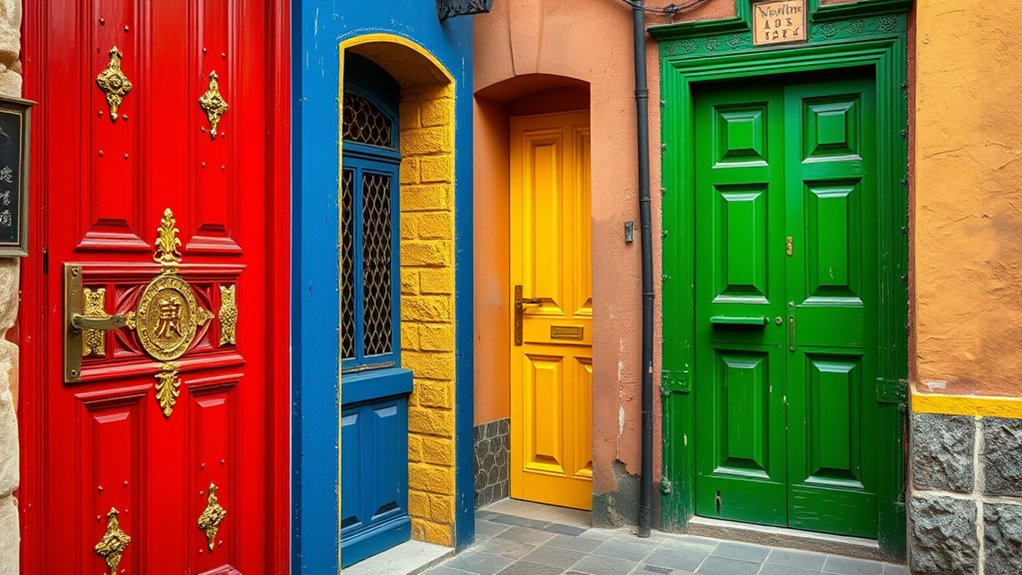

Door colors have diverse meanings around the world, so what you see can tell you a lot about local customs. A red door might symbolize luck and prosperity in China or welcome and hospitality in Western countries, while in Morocco, it can signify status. In Japan, red marks sacred spaces. Keep exploring, and you’ll uncover how these vivid hues communicate values and traditions across cultures.
Key Takeaways
- Door colors like red, blue, and green carry different meanings across cultures, symbolizing luck, safety, or prosperity.
- Red doors often signify hospitality and good fortune in Western and Asian traditions but can indicate warning elsewhere.
- Cultural context is crucial; the same door color may represent protection, prosperity, or danger depending on regional customs.
- In Asian cultures, red doors are associated with celebration and positive energy, while in some Western regions, they symbolize welcoming.
- Local history and traditions influence door color symbolism, making it essential to understand regional differences to interpret meanings accurately.
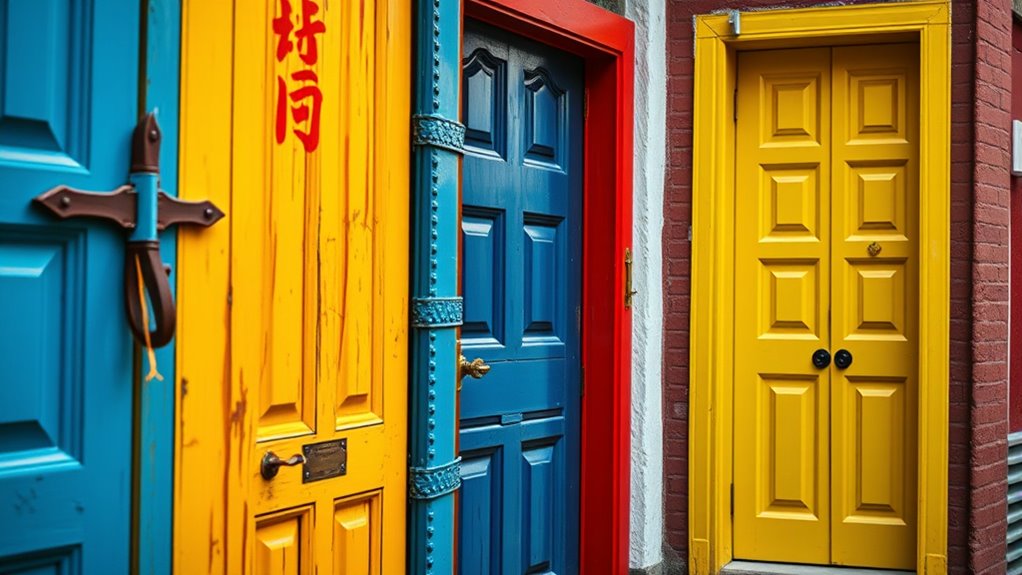
Have you ever wondered why a color that seems harmless in one culture can carry a completely different meaning in another? It’s fascinating how something as simple as a door color can communicate so much across different societies. When you see a red door, you might think of warmth or excitement, but in some places, it holds a much deeper symbolic meaning. These symbolic meanings vary widely depending on regional variations, shaping perceptions and reactions. In certain cultures, a red door signifies good luck and prosperity, while in others, it might be associated with danger or warning. Understanding these regional variations helps you navigate social cues more effectively, especially if you’re traveling or working internationally.
A red door symbolizes luck and prosperity in some cultures, danger or warning in others—meaning varies widely across regions.
In Western countries like the United States, a red door often symbolizes welcoming and warmth. It’s a sign that the home is inviting, and historically, it’s been linked to hospitality. Some even believe that a red door signifies a home protected by good spirits or that it’s a sign of a welcoming family. But move to the UK or Ireland, and the symbolism shifts slightly—red doors can denote a safe haven or a house that’s been a stop on the Underground Railroad, representing refuge. Meanwhile, in China, red is a powerful color of luck, happiness, and celebration. A red door here isn’t just decorative; it’s a sign of good fortune and a way to invite positive energy into the home.
Regional variations extend beyond just Western and Eastern cultures. In Morocco, a red door can symbolize prosperity and social status, acting as an indicator of wealth. Conversely, in some parts of Italy, a red door might have historical roots linked to family heritage or protection against evil spirits. The symbolic meanings of door colors can even change within the same country, depending on local traditions and historical context. For example, in Japan, a red-painted gate (torii) marks sacred space, emphasizing spiritual protection, while a red door in an urban setting might carry entirely different associations. Additionally, the cultural significance of color can influence how people interpret these symbols beyond their immediate context.
These regional variations highlight the importance of context when interpreting color symbolism. What’s seen as friendly or positive in one place can be perceived differently elsewhere. So, when you encounter a uniquely colored door, remember that its meaning isn’t universal. Cultural background, history, and local customs all influence what a color signifies. Paying attention to these details can deepen your understanding of different cultures and prevent misunderstandings. In essence, door colors are more than just aesthetic choices—they’re powerful communicators shaped by regional variations and cultural symbolism, revealing stories and values that go far beyond what meets the eye.
Frequently Asked Questions
How Do Color Codes Vary Within Different Regions of the Same Country?
You might notice that regional color variations often emerge within the same country, shaped by local cultural influences. These variations reflect distinct traditions, beliefs, and histories, influencing how communities interpret and use colors. For example, a door color that signifies prosperity in one region might symbolize protection or spirituality in another. By understanding these local cultural influences, you can better appreciate the nuanced meanings behind regional color choices.
Are There Universal Colors That Hold the Same Meaning Worldwide?
Did you know that only about 20% of color meanings are consistent across cultures? When it comes to universal color symbolism, certain colors like white often represent purity or peace, while black can symbolize mourning. However, cross-cultural color meanings vary greatly, so you can’t assume a color has the same significance everywhere. Recognizing these differences helps you avoid misunderstandings and appreciate how diverse cultural interpretations of colors truly are.
How Do Cultural Color Meanings Influence International Business Branding?
When you consider how cultural color meanings influence international business branding, you tap into the power of cultural branding and color psychology. You need to recognize that colors evoke different emotions and perceptions across cultures, affecting how your brand is received globally. By understanding these nuances, you can tailor your branding strategies to resonate positively, avoiding missteps and creating a strong, culturally sensitive brand identity worldwide.
What Historical Factors Have Shaped Color Symbolism in Different Cultures?
You might think color symbolism is simple, but it’s shaped by historical origins and cultural evolution. Ironically, ancient events like wars, religious shifts, and trade routes carved these meanings into societies. Over centuries, colors like red or white gained specific significance through storytelling, symbolism, and social change. These historical factors create the rich tapestry of cultural color symbolism you see today, influencing everything from traditions to branding worldwide.
Can Knowing Door Color Meanings Prevent Cultural Misunderstandings?
Understanding door symbolism and color perception helps you avoid cultural misunderstandings. When you recognize that certain colors on doors can signify safety, welcome, or caution in different cultures, you show respect and awareness. This knowledge prevents miscommunication and potential offense, especially in international interactions. By paying attention to these subtle cues, you demonstrate cultural sensitivity, fostering better relationships and avoiding unintended negative implications linked to door color meanings.
Conclusion
So next time you see a door painted a striking color, remember—there’s more than meets the eye. Each hue secretly tells a story, a tradition, a warning, or an invitation, depending on where you are. Will you notice the subtle cues next time you travel or meet someone new? Keep your eyes open. Because behind every door’s color, there’s a hidden message waiting to be uncovered—if you’re willing to look a little closer.