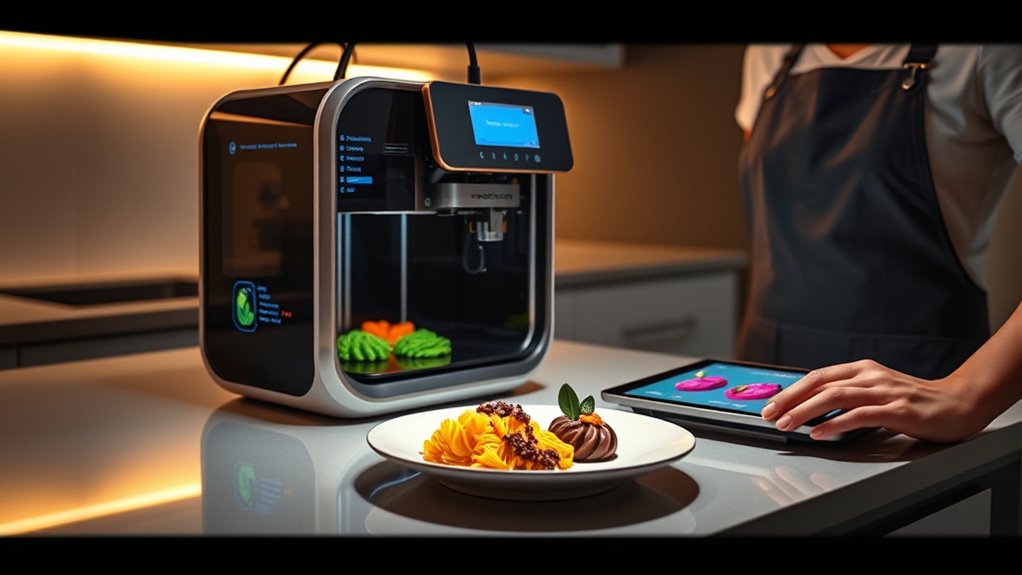

3D food printing is quickly moving beyond a novelty to become a practical tool for home cooks like you. It lets you personalize meals to your health goals, create visually stunning dishes, and reduce food waste with precise portioning. Whether customizing recipes or exploring new flavors, this technology enhances your culinary creativity and sustainability efforts. As it becomes easier to use, you’ll discover how it can transform everyday meals into fun and functional experiences—keep going to see how.
Key Takeaways
- Advances in user-friendly designs and recipe libraries are making 3D food printers accessible for home use.
- Customization options enable personalized, nutritious, and visually appealing meals tailored to individual needs.
- 3D printing reduces food waste by precise portioning and supports sustainable, eco-friendly cooking practices.
- Creative potential allows home cooks to experiment with textures, shapes, and cultural presentations beyond traditional methods.
- Growing awareness and technological improvements are transforming 3D food printing from novelty into a practical kitchen tool.
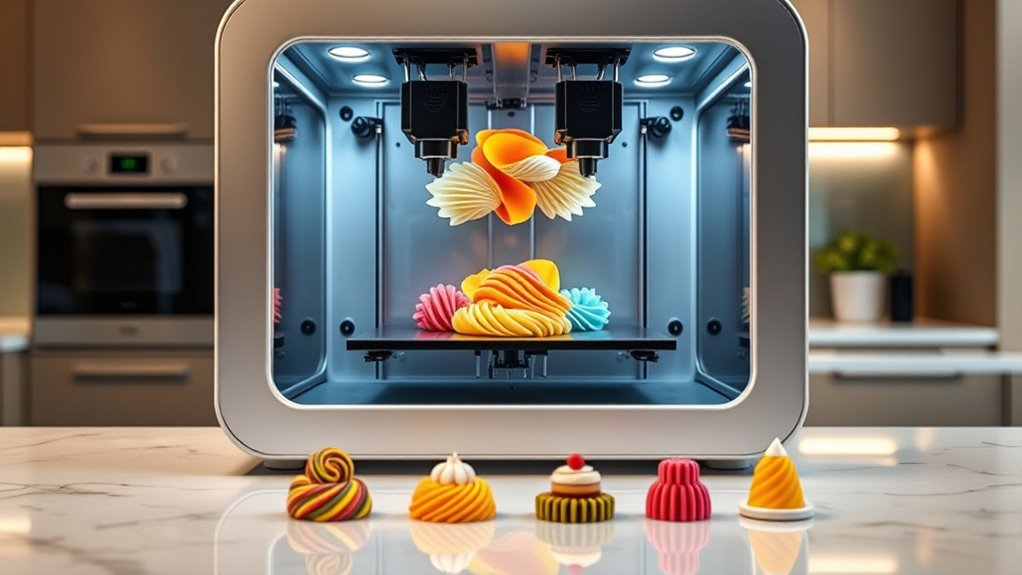
3D food printing is revolutionizing the way we prepare and enjoy meals by allowing you to create intricate, customized dishes with precision. This technology opens up exciting possibilities for nutritional customization, enabling you to tailor meals to your specific health needs or dietary preferences. Whether you’re managing allergies, aiming for balanced macros, or exploring specialized diets like keto or vegan, 3D printing lets you craft food with exact nutrient compositions. Instead of relying on generic recipes, you have the power to design meals that optimize your health and wellness. This level of customization enhances the dining experience, making it not only more personal but also more effective in supporting your nutritional goals.
Beyond health benefits, 3D food printing sparks culinary innovation. It pushes the boundaries of traditional cooking by allowing you to experiment with textures, shapes, and presentation in ways previously impossible. You can create layered desserts with complex designs or sculpt savory dishes into artistic forms, elevating home cooking to a new level of creativity. This technology encourages chefs and home cooks alike to think outside the box, blending art with science. As a result, your meals can become visually stunning and engaging, encouraging more mindful eating and appreciation for culinary craftsmanship. Plus, the ability to print precise portions reduces waste and ensures consistency, making your kitchen more efficient and sustainable. Additionally, the integration of cultural narratives through food customization can help preserve and showcase regional flavors and traditions in innovative ways.
Getting started with 3D food printing might seem intimidating at first, but the process is becoming more accessible and user-friendly. Many printers now come with intuitive interfaces and a growing library of printable recipes. You can load ingredients into the device, customize parameters, and watch as your creation takes shape layer by layer. This hands-on approach not only makes cooking more interactive but also allows you to learn about ingredient interactions and food science firsthand. As the technology advances, expect even more options for integrating fresh, local, or specialty ingredients, broadening your culinary horizons.
Ultimately, 3D food printing transforms home cooking from ordinary to extraordinary. It empowers you to create personalized, nutritious, and visually impressive dishes with ease. Whether you’re looking to improve health, explore new flavors, or simply enjoy the art of cooking, this innovative tool makes it possible. By incorporating nutritional customization and pushing culinary innovation, 3D food printing is changing the way we think about meals—making them more tailored, creative, and enjoyable than ever before.
Frequently Asked Questions
What Are the Health Implications of Consuming 3d-Printed Foods?
You should consider that consuming 3D-printed foods might raise food safety concerns, especially if the printers or ingredients aren’t properly sterilized. However, if managed well, it can preserve nutritional integrity by customizing nutrient content to your needs. Always guarantee the materials used are food-grade and safe. While promising, ongoing research is necessary to fully understand long-term health implications of eating 3D-printed foods.
How Affordable Are Home 3D Food Printers Currently?
Imagine a kitchen gadget that transforms your culinary dreams into reality—home 3D food printers are surprisingly affordable today. The cost analysis reveals prices range from $200 to $500, making them accessible for tech-savvy cooks. Market availability is steadily increasing, with more brands entering the scene. While still an investment, these printers are becoming a practical addition for those enthusiastic to experiment with personalized, innovative meals at home.
Can 3D Food Printing Accommodate Special Dietary Needs?
Yes, 3D food printing can accommodate special dietary needs through customization options and allergen management. You can choose specific ingredients to meet dietary restrictions, such as gluten-free, vegan, or low-sugar options. The printer allows precise control over ingredient proportions, reducing cross-contamination risks. This technology offers personalized meals tailored to your health requirements, making it a practical tool for managing allergies or special diets at home.
What Are the Best Types of Foods for 3D Printing at Home?
You should choose foods that are easy to customize and print quickly, like pureed fruits, vegetables, or soft cheeses. These options offer great customization potential and guarantee faster printing speeds, making home 3D food printing practical. While some worry about texture, blending ingredients smoothens the process. Focus on these adaptable, soft foods to enjoy creative, personalized meals without lengthy prep times, transforming your home cooking experience.
How Do 3D Printed Foods Compare Nutritionally to Traditional Foods?
You’ll find that 3D printed foods can match traditional foods in nutritional content if you choose ingredients carefully. While flavor profiles can be customized, the nutritional value depends on the base ingredients used. However, some nutrients might be reduced during processing. Overall, with proper planning, 3D printed foods can offer comparable nutrition, giving you control over flavor and health benefits in your home-cooked meals.
Conclusion
So, here you are, ready to print your own gourmet meal at home—who knew that someday, your kitchen would resemble a sci-fi lab? It’s funny how 3D food printing, once a gimmick, now promises to revolutionize daily cooking. Just think, soon you might be arguing with your printer over whether that “artisanal” dessert is worth the extra ink. Irony aside, it’s clear that home cooking will never be quite the same again.