To create stable sauces and dressings, you need to understand emulsification science. This involves combining immiscible liquids like oil and water by breaking them into tiny droplets and stabilizing them with surfactants, which reduce surface tension. Techniques like gradual addition of oil, vigorous whisking, and using ingredients such as egg yolks or mustard help achieve long-lasting emulsions. Mastering these principles guarantees your sauces stay smooth and homogeneous—unlocking new culinary possibilities as you explore further.
Key Takeaways
- Incorporate surfactants like egg yolk or mustard to reduce surface tension and stabilize oil-water mixtures.
- Gradually add oil while whisking or blending to create smaller, more stable droplets.
- Use high-energy techniques like blending or shaking to break down droplets and improve emulsion stability.
- Control ingredient ratios and use natural emulsifiers to prevent coalescence and separation over time.
- Proper technique and ingredient selection ensure long-lasting, smooth, and homogeneous sauces and dressings.

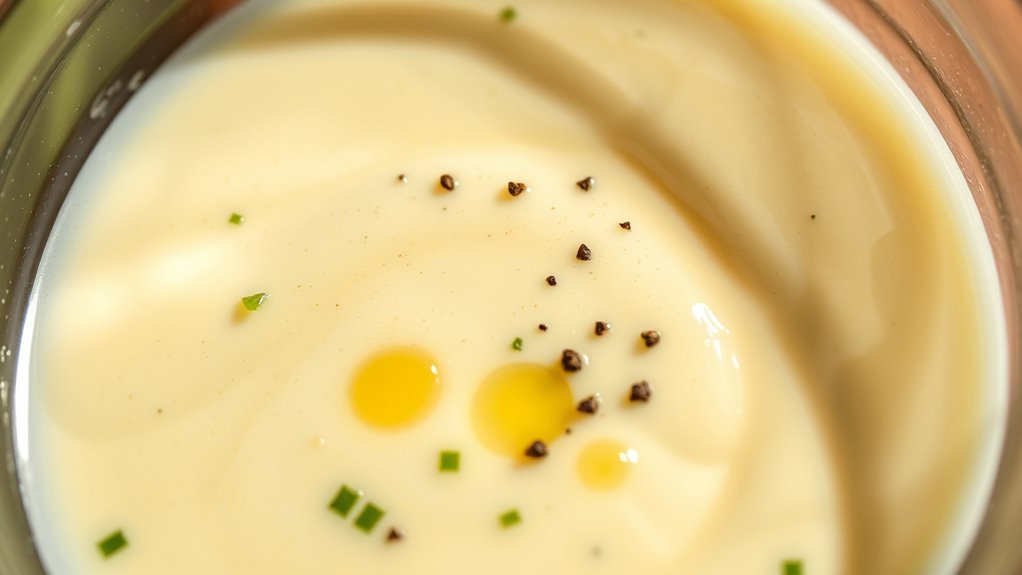
Emulsification science explores how two immiscible liquids, like oil and water, can be combined into stable mixtures called emulsions. When you’re making sauces or dressings, understanding these principles helps you create smooth, long-lasting products. The process relies on emulsification techniques that break down one liquid into tiny droplets dispersed throughout the other. These techniques often involve vigorous mixing, shaking, or blending to physically reduce droplet size and distribute the phases evenly. For example, whisking oil into vinegar vigorously can form an emulsion, but it’s usually unstable and separates over time. To improve stability, you need to understand the role of surfactants, which are special molecules that stabilize emulsions by reducing the surface tension between oil and water.
Surfactants are key players in emulsification because they have a unique structure with a hydrophilic (water-loving) head and a hydrophobic (oil-loving) tail. When you add a surfactant, like egg yolk in mayonnaise or mustard in a vinaigrette, these molecules position themselves at the oil-water interface. Their presence lowers the energy needed to keep the droplets from merging back together, effectively preventing separation. This action is critical because, without surfactants, tiny oil droplets tend to coalesce, causing the emulsion to break down. By properly incorporating surfactants, you give your mixture a fighting chance to stay stable for longer periods.
Surfactants stabilize emulsions by reducing surface tension at the oil-water interface.
You can enhance emulsification by choosing the right techniques and ingredients. For instance, slowly adding oil while continuously whisking or blending helps create smaller droplets, which are less likely to coalesce. Using a blender or an immersion blender amplifies the energy applied to the mixture, resulting in a finer, more stable emulsion. Combining this with an appropriate surfactant ensures that the droplets stay suspended, giving your sauce or dressing that perfect creamy texture. Additionally, understanding the importance of particle size can help you manipulate emulsification for better stability and texture.
It’s important to understand that not all emulsions are created equal, and stability depends on the right balance of ingredients and process. The role of surfactants isn’t limited to commercial products; natural ingredients like egg yolks, mustard, or honey serve as excellent emulsifiers in homemade recipes. Recognizing how emulsification techniques work alongside surfactants enables you to troubleshoot and improve your sauces. Whether you’re making a classic mayonnaise or a vinaigrette, mastering this science allows you to craft dressings that stay smooth, homogeneous, and delicious from start to finish, elevating your culinary creations with confidence.
Frequently Asked Questions
How Do Temperature Changes Affect Emulsification Stability?
Temperature changes can impact emulsification stability by affecting thermal stability and viscosity effects. When you heat or cool an emulsion, the thermal stability may decrease, causing the emulsion to break or separate. Higher temperatures reduce viscosity, making it harder for droplets to stay suspended, while cooler temperatures increase viscosity, helping maintain stability. Keeping temperatures consistent helps preserve the emulsion’s integrity, ensuring your sauce or dressing remains smooth and well-mixed.
Can Emulsions Be Reused or Re-Stabilized After Separation?
Yes, you can re-stabilize separated emulsions through emulsification re-stabilization techniques. To do this, gently remix the separated parts, add a small amount of fresh emulsifier or stabilizer, and blend thoroughly. Emulsion recycling involves carefully re-mixing and stabilizing the mixture to restore its original consistency. Keep in mind, some emulsions may not fully recover if they’ve been broken for too long or exposed to extreme conditions, so act quickly.
What Are Natural vs. Synthetic Emulsifiers?
Did you know that natural emulsifiers like egg yolks and mustard have been used for centuries, while synthetic additives are a more recent innovation? Natural emulsifiers come from plants and animals, offering cleaner labels and fewer additives. Synthetic emulsifiers, created chemically, often provide more stability and longer shelf life. You can choose natural alternatives for health benefits or synthetic options for consistency, depending on your needs and preferences in making sauces and dressings.
How Does Ph Influence Emulsion Formation?
You’ll find that pH influences emulsion formation by affecting the charge and stability of your emulsifiers. Adjusting the pH can enhance emulsifier selection, making it easier to create a stable mixture. When you optimize pH levels through pH adjustment, you improve the interaction between oil and water phases, resulting in a smoother, more stable emulsion. Keep in mind, the right pH is essential for achieving the desired consistency and longevity.
Are There Health Concerns With Certain Emulsifiers?
You might worry about health concerns with certain emulsifiers, but many are safe when used properly. Food additive safety varies, and some artificial emulsifiers have raised questions about potential side effects. Luckily, natural emulsifier sources like egg yolks, mustard, and honey offer healthier alternatives. Always check labels and opt for these natural options to enjoy delicious, stable sauces without risking your health.
Conclusion
So, next time you effortlessly drizzle that vinaigrette, remember it’s not just magic but the subtle art of emulsification. Mastering this science turns the mundane into culinary mastery—without the fuss of fancy ingredients or hard-earned skills. After all, who knew that stabilizing oil and water could be the secret to elevating your kitchen game? So go ahead, embrace the emulsification revolution—your sauces will thank you, even if your friends never suspect the science behind the elegance.