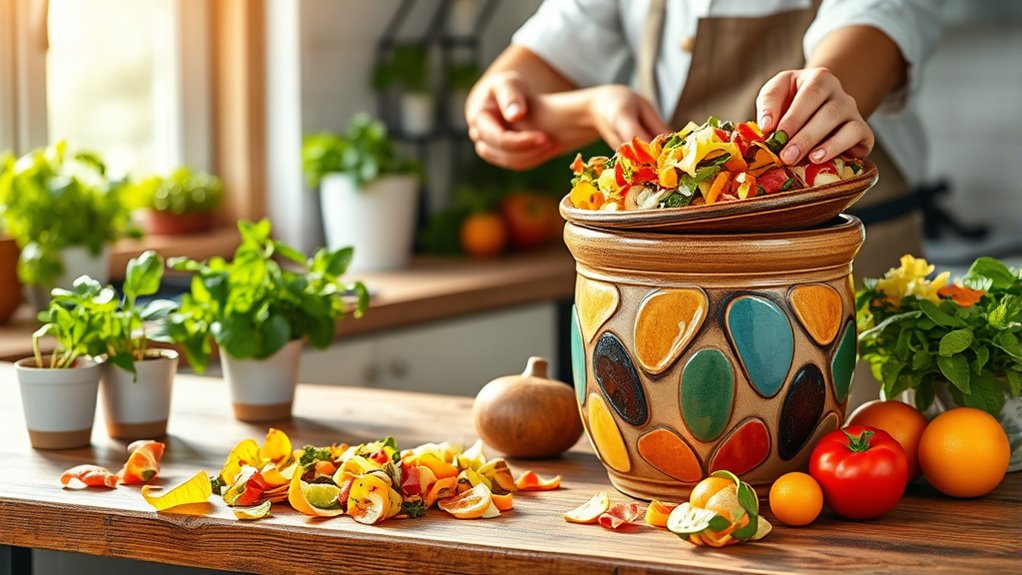

By incorporating composting systems into your kitchen, you actively reduce food waste and turn scraps into valuable soil nutrients. Composting helps you close the food system loop, decrease landfill waste, and cut methane emissions. It’s easy to set up backyard bins or indoor worm farms, making your sustainable cooking more eco-friendly. Continuing with these practices can markedly boost your environmental impact and inspire others to join the movement toward healthier, greener living.
Key Takeaways
- Implement composting systems to recycle kitchen scraps, reducing overall food waste and minimizing landfill contributions.
- Use composted soil to enhance garden productivity, supporting sustainable food growing practices.
- Incorporate composting into daily routines to promote eco-friendly cooking habits and resource conservation.
- Decrease methane emissions from landfills by diverting organic waste through composting methods.
- Foster community awareness and participation in composting to amplify the impact on food waste reduction.

Sustainable cooking isn’t just about choosing local or organic ingredients—it also involves reducing waste and recycling nutrients back into the environment. Composting plays a crucial role in this effort, offering numerous benefits that extend beyond simply managing kitchen scraps. When you embrace composting benefits, you’re actively closing the loop in your food system, turning waste into a valuable resource. Instead of tossing food scraps into the trash, you give them a second life by composting, which creates rich soil perfect for your garden. This process minimizes the amount of organic waste sent to landfills, reducing methane emissions—one of the main contributors to greenhouse gases. By composting, you’re practicing eco friendly practices that help protect the planet while nourishing your plants naturally.
Incorporating composting into your routine isn’t complicated, and the advantages are clear. It helps you cut down on waste, saving space in garbage bins and decreasing the frequency of trash pickups. As you compost, you’re also reducing the energy and resources needed to process waste in landfills, making your kitchen habits more sustainable. Additionally, compost adds essential nutrients back into the soil, enriching it without relying on chemical fertilizers. This naturally promotes healthier plant growth, which means you can grow more of your own food with less environmental impact. Over time, you’ll notice the soil becoming more fertile and resilient, leading to better harvests and a more sustainable way to cook and eat.
Furthermore, composting encourages eco friendly practices that benefit the wider community. It fosters a mindset of mindful consumption and waste reduction, inspiring others around you to adopt similar habits. You become part of a movement that values resourcefulness and sustainability, influencing positive change beyond your own kitchen. Setting up a compost system at home is straightforward—whether you choose a backyard compost bin or a worm bin for indoor use, it’s a manageable step towards a greener lifestyle. With regular attention, your scraps of vegetable peelings, coffee grounds, and eggshells will transform into dark, crumbly compost that boosts your garden’s health. Incorporating a variety of composting methods can further enhance your ability to recycle different types of organic waste effectively.
In short, embracing composting benefits is a practical, impactful way to support eco friendly practices in your everyday life. It’s a simple action that reduces food waste, cuts down on landfill contributions, and helps you grow healthier, more sustainable food. By integrating composting into your cooking routine, you’re making a meaningful contribution to environmental health while enjoying the rewards of a thriving garden. It’s a win-win that makes your kitchen more sustainable and your planet happier.
Frequently Asked Questions
Can Composting Systems Be Used Indoors Safely?
Yes, you can use indoor composting safely if you choose the right container. Look for indoor composting systems designed with proper ventilation and odor control. Make certain your container has secure lids to prevent spills and pests, and place it in a well-ventilated area. Regularly maintain your system by turning compost and managing moisture. With these precautions, indoor composting is safe and effective for reducing food waste at home.
How Long Does It Take for Compost to Mature?
Like a good wine, compost matures with time. Typically, your composting timeline spans from 3 to 6 months, depending on factors like materials and conditions. You’ll know it’s ready for use when it’s dark, crumbly, and earthy-smelling. Patience is key, as compost maturity varies, but with consistent care, you’ll soon have nutrient-rich soil to nourish your garden and close the loop on food waste.
What Should I Do if My Compost Smells Bad?
If your compost smells bad, you should practice odor control by turning it regularly to aerate and balance the greens and browns. Add dry materials like leaves or sawdust to absorb excess moisture, and make certain you’re not overloading it with food scraps. For effective compost troubleshooting, check moisture levels and oxygen flow, and avoid adding meat or dairy, which can cause unpleasant odors. Adjust these factors to restore smell-free compost.
Are Composting Systems Suitable for Small Apartment Kitchens?
Yes, composting systems are suitable for small space kitchens and apartment composting. You can choose compact, odor-free options like countertop compost bins or worm bins that fit easily in limited spaces. These systems help you reduce food waste effectively without taking up too much room. Just guarantee proper maintenance, like regular turning and proper lid sealing, to keep odors at bay and make composting a seamless part of your apartment life.
How Can I Incorporate Composting Into a Busy Lifestyle?
You can incorporate composting into your busy lifestyle by integrating it into your meal prep routine. Dedicate a small container for food scraps and empty it regularly, making it simple to manage. Use time management techniques like batching composting tasks with other chores to save time. This way, composting becomes a seamless part of your routine, helping reduce waste without adding stress to your hectic schedule.
Conclusion
By embracing composting, you’re planting the seeds of change in your kitchen, turning scraps into nourishing soil. Each peel and leftover becomes a symbol of hope—renewing the earth and reducing waste. As you nurture this cycle, you become part of a larger garden, where sustainability blossoms. Your small acts echo like gentle rain, cultivating a greener future. Keep tending your compost, and watch how your efforts grow into a vibrant, lasting legacy.