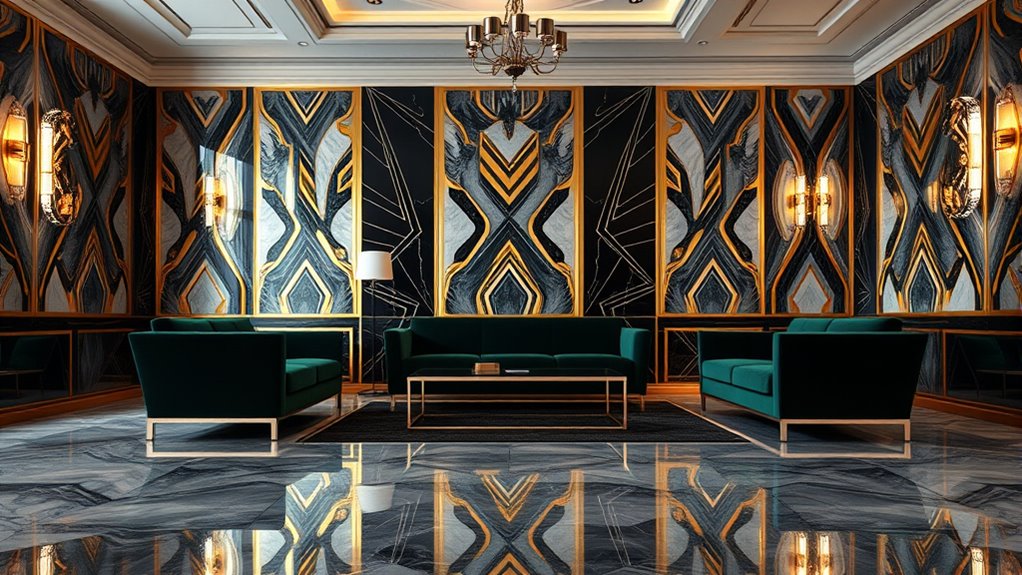

Art Deco style captures bold geometric elegance and glamour through striking patterns, sleek lines, and luxurious materials. It emphasizes symmetry, sharp angles, and contrasting colors like black and gold, creating a sense of modernity and sophistication. You’ll find its influence in jewelry, architecture, and design, making spaces and accessories feel glamorous and timeless. To discover how this iconic style continues to inspire, explore the fascinating details behind its enduring appeal.
Key Takeaways
- Art Deco emphasizes geometric shapes, bold lines, and symmetrical patterns, symbolizing modernity and elegance.
- Features luxurious materials like gold, platinum, and gemstones, creating a glamorous aesthetic.
- Incorporates exotic motifs, sharp angles, and stylized forms for visual impact and sophistication.
- Influences architecture and jewelry with sleek metalwork, precise stone cuts, and ornamental details.
- Continues to inspire contemporary design, celebrating timeless glamour through geometric and luxurious elements.
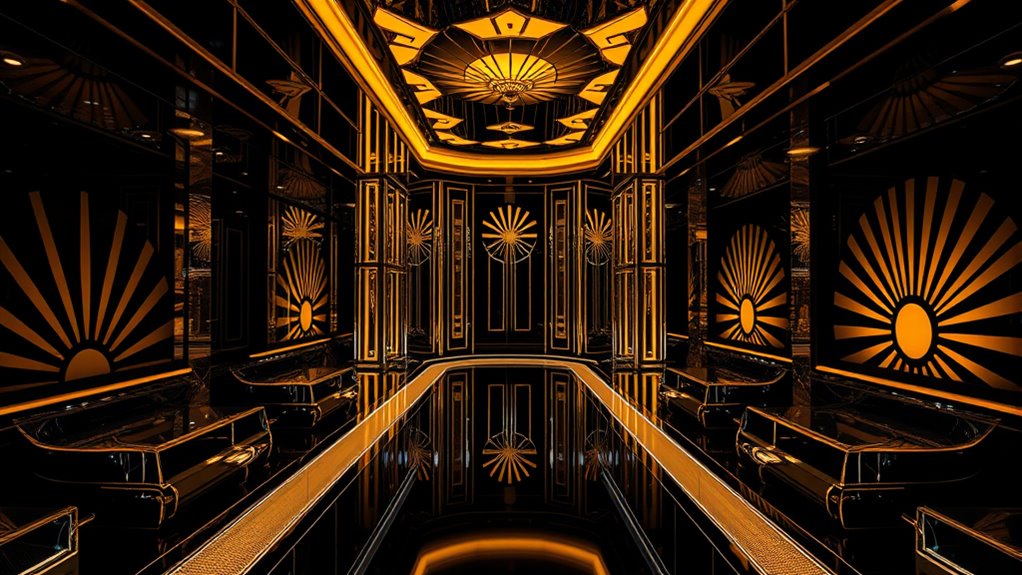
Have you ever wondered how a style that emerged nearly a century ago continues to influence modern design? Art Deco, with its distinctive blend of geometric shapes, bold lines, and luxurious materials, remains a powerful source of inspiration today. When you look at luxury jewelry crafted in the Art Deco style, you notice how it captures the spirit of elegance and glamour from the 1920s and 1930s. These pieces often feature sharp angles, symmetrical patterns, and exotic motifs, all designed to command attention and express sophistication. The use of contrasting colors, like black and gold or platinum and vibrant gemstones, enhances their striking visual appeal. Every detail, from the precise cut of the stones to the sleek metalwork, reflects the era’s emphasis on sleekness and modernity. You can see how the craftsmanship elevates jewelry from mere adornment to works of art, embodying both opulence and innovative design. Additionally, the emphasis on sleekness and modernity in design elements helps distinguish Art Deco from other styles.
Art Deco’s influence extends beyond jewelry into architecture, where its iconic motifs shape buildings and interiors. When you walk through a cityscape adorned with Art Deco architecture, you notice the emphasis on symmetry, stylized forms, and geometric patterns that create a sense of order and grandeur. Architectural motifs such as zigzags, chevrons, and sunbursts are prominent, often integrated into facades, doorways, and decorative details. These elements give structures a dynamic, almost futuristic appearance while still paying homage to traditional craftsmanship. The materials used—chrome, stainless steel, marble, and glass—highlight the luxurious aspect of Art Deco, reinforcing its association with wealth and modernity. You might find yourself admiring a skyscraper with stepped outlines and ornate embellishments, each detail reflecting the optimism and glamour of the Jazz Age. This style’s ability to combine luxury with streamlined geometric forms creates a timeless appeal that continues to inspire architects and designers today.
Even now, designers incorporate Art Deco’s principles into contemporary fashion, interior design, and branding, celebrating its boldness and elegance. Its architectural motifs and luxury jewelry serve as reminders of a time when art and design were about making a statement—about embracing modernity with a touch of lavishness. As you observe modern reinterpretations of Art Deco, you recognize how its emphasis on symmetry, luxury, and geometric beauty have become integral to the visual language of elegance. Whether in high-end jewelry or the facades of iconic buildings, Art Deco’s influence endures, transforming everyday environments into spaces that exude glamour and sophistication. It’s a style that, even nearly a century later, continues to captivate, inspire, and define timeless luxury.
As an affiliate, we earn on qualifying purchases.
Frequently Asked Questions
How Did Art Deco Influence Modern Interior Design?
Art Deco influences modern interior design by inspiring you to incorporate luxury furnishings and bold color schemes that create a glamorous atmosphere. You’ll notice sleek lines, geometric patterns, and metallic accents that add sophistication and visual interest. This style encourages you to blend opulence with contemporary elements, making your space feel both luxurious and stylish. By embracing Art Deco’s boldness, you elevate your interior aesthetic to reflect timeless elegance.
What Materials Are Characteristic of Art Deco Architecture?
You’ll notice that Art Deco architecture features materials like glass mosaics and inlaid wood, which emphasize its luxurious style. Glass mosaics create vibrant, reflective surfaces that catch the light, while inlaid wood adds intricate detail and richness. These materials work together to give buildings a sense of glamour and geometric elegance, making them stand out with their bold, decorative appeal characteristic of the era.
Who Are the Most Famous Art Deco Designers?
You should know that famous Art Deco designers include Émile-Jacques Ruhlmann, who crafted luxurious furniture, and René Lalique, renowned for stunning jewelry and glassware. When exploring Art Deco jewelry and fashion, these designers influenced the glamorous styles with bold geometric patterns and rich materials. Their work captures the essence of the era’s elegance and innovation, making them iconic figures in the Art Deco movement.
How Did Art Deco Spread Globally in the 1920S and 1930S?
You might think Art Deco spread mainly through design trends, but cultural diffusion played a key role. International exhibitions, like the 1925 Exposition Internationale des Arts Décoratifs in Paris, showcased its sleek, modern style worldwide. These events attracted global attention, inspiring architects and designers across continents. As a result, Art Deco’s bold geometric forms and glamour became a universal language, influencing everything from architecture to fashion during the 1920s and 1930s.
What Are Some Iconic Art Deco Artworks?
You’ll recognize iconic Art Deco artworks like the Chrysler Building’s striking spire, famous for its geometric design, and Tamara de Lempicka’s sleek portraits. In art deco jewelry, you see bold, symmetrical designs with colorful gemstones, while art deco fashion features elegant, streamlined silhouettes with luxurious fabrics. These pieces embody the glamour and modernity of the era, making them timeless symbols of the movement’s distinctive geometric elegance and glamour.
Conclusion
As you step back into the world of Art Deco, you realize it’s more than just design—it’s a shimmering mirror of an era’s bold dreams and daring spirit. Like a jeweled necklace, its geometric patterns and glamorous touches catch the light, reminding you that beauty and innovation dance hand in hand. Embrace this timeless elegance, letting it inspire your own creative journey, shining brightly like a star in the night sky of your imagination.