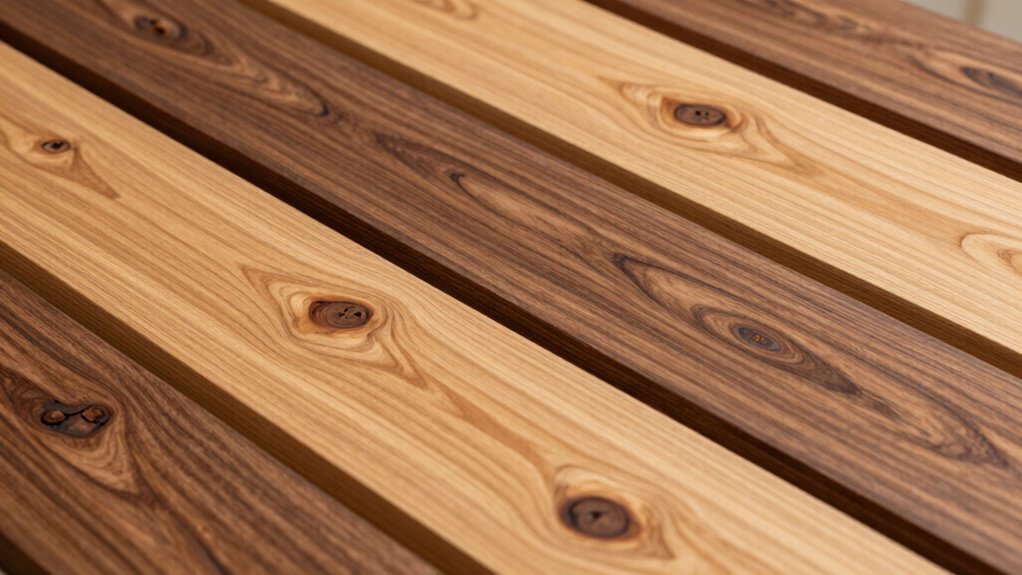

To layer wood tones successfully, start with a light base color that complements the wood’s natural grain. Apply thin, even coats, following the grain, and let each dry completely before adding the next. Use gentle strokes to add subtle darker or contrasting shades, enhancing depth without covering the grain. Focus on balancing your layers, and finish with a protective coat for a professional look. Keep these tips in mind, and you’ll craft a beautiful, layered wood finish every time.
Key Takeaways
- Start with a light, even base color that complements the wood’s natural tone.
- Apply layers gradually, allowing each to dry thoroughly before adding more.
- Use subtle, complementary shades within the same color family for harmony.
- Focus on highlighting the wood grain with gentle strokes and avoid covering it completely.
- Finish with a protective coat that enhances the layered colors and preserves the wood’s beauty.
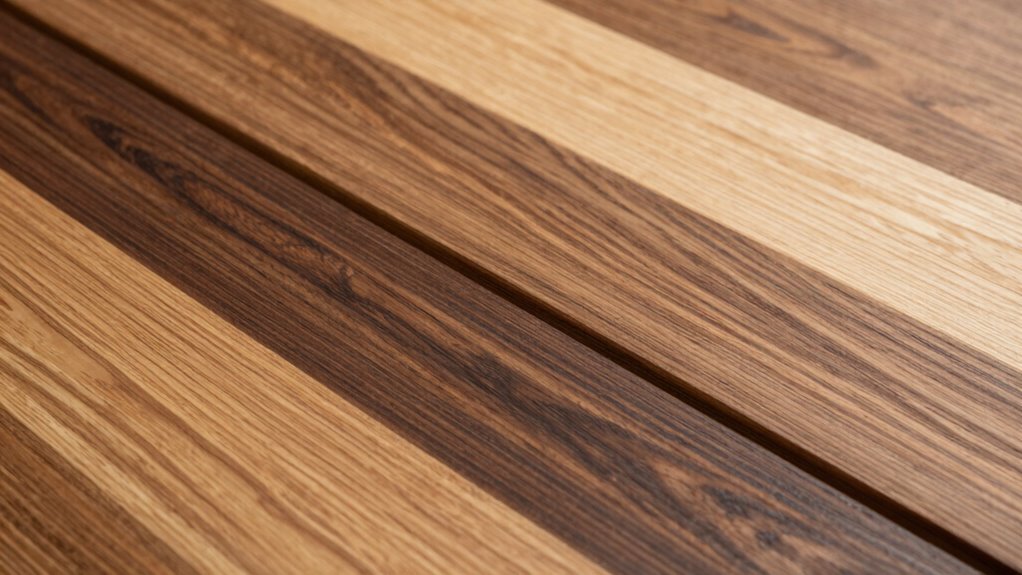
Ever wondered how to create rich, dynamic wood finishes without complex techniques? Layering wood tones might seem intimidating at first, but with a few simple steps, you can achieve stunning results that highlight the wood grain and enhance color harmony. The key is understanding how different tones work together and how to apply them thoughtfully. Your goal is to build depth and interest without overdoing it, so start by choosing a base color that complements the natural wood. Lighter shades often serve as a foundation, allowing you to add darker or contrasting tones for dimension.
When layering, pay close attention to the wood grain. The grain acts as a guide for your application, helping you follow its natural flow and bringing out its character. Use a brush or cloth to apply your first layer evenly, ensuring it settles into the grain without streaks. Once dry, evaluate how the tone interacts with the wood’s natural pattern. If the color feels flat or dull, consider adding a second layer, but keep it subtle. The idea isn’t to cover the grain but to enhance it, so gentle, deliberate strokes work best.
Color harmony is essential when layering tones. You want the different shades to blend seamlessly rather than clash or appear disjointed. To achieve this, select colors within the same family or those that complement each other. For example, warm browns and soft amber work beautifully together, creating a cohesive look that feels natural. Avoid overly contrasting colors unless you’re aiming for a bold, modern effect; harmony is about balance and subtlety. Understanding how color interaction impacts the overall look can help you make better choices when layering. Additionally, learning about wood tone variations can guide you in selecting shades that naturally work well together.
As you build your layers, keep in mind that less is often more. You can always add more, but removing excess can be tricky. Use light coats and allow each to dry thoroughly before adding the next. Sometimes, a light sanding between layers helps smooth out any uneven spots and enhances the depth of the finish. Remember, the interplay of tones is what makes layered wood finishes truly captivating, so take your time to develop a balanced look. Achieving a balanced color palette is crucial for creating a look that’s both rich and cohesive. Paying attention to color application techniques ensures your layers will blend harmoniously and look professional. Mastering these concepts can make a significant difference in the final outcome.
Finally, finish with a protective coat that enhances the color harmony and preserves the wood grain’s beauty. Whether you choose a matte or gloss finish, it should complement your overall look and bring all the layers together. With patience and attention to detail, you’ll master the art of layering wood tones, creating finishes that are beautifully layered and full of depth—without the fuss.

Retique It Muli-Purpose Wood Finish Kit – GO Beyond Faux Wood with Paintable Liquid Wood Based Primer and Gel Stain – Graining Tools Included (2X 8oz, Barn Wood)
- Authentic Wood Finish: Realistic wood look with recycled fibers
- Eco-Friendly & Safe: Water-based, zero VOC, odorless formula
- Easy Application: No stripping or sanding needed
As an affiliate, we earn on qualifying purchases.
As an affiliate, we earn on qualifying purchases.
Frequently Asked Questions
How Do I Choose Complementary Wood Tones?
To choose complementary wood tones, start by considering grain contrast and tone harmony. You want pieces with varying grain patterns to add visual interest, but keep their tones in a similar or harmonious range. Mix lighter and darker woods thoughtfully, ensuring they complement each other rather than clash. Trust your eye, and aim for a balanced look where different tones enhance each other’s natural beauty without overwhelming the space.
What Tools Are Best for Layering Wood Finishes?
Did you know that using the right tools can reduce finishing errors by up to 50%? For layering wood finishes, invest in high-quality brushes, foam applicators, and rags. A fine-bristled brush helps with precise wood stain application, while foam applicators ensure smooth, even layers. After staining, use a clean rag for finish sealing, guaranteeing an even coat without streaks. These tools make layering wood tones easier and more professional-looking.
How Long Should I Wait Between Layering Coats?
You should wait about 2 to 4 hours between layering coats, but always check the manufacturer’s instructions for specific drying times. This pause lets the finish cure enough to prevent smudging or uneven wood grain, maintaining a consistent finish sheen. Rushing the process can cause problems like bubbling or dull spots. Patience guarantees each coat properly adheres, resulting in a smooth, professional-looking layered wood tone.
Can I Mix Different Wood Types in One Project?
Yes, you can mix different wood types in one project, but pay close attention to the wood grain and color matching. Choose woods with similar grain patterns and complementary tones to create a harmonious look. Test your color match on scrap pieces first, as different woods absorb stain differently. This approach helps you achieve a cohesive design, even when combining various wood types, ensuring your project looks intentional and well-balanced.
How Do I Fix Mistakes in Layered Wood Finishes?
To fix mistakes in layered wood finishes, start by evaluating the wood grain and finish sheen to determine the best approach. Lightly sand the affected area with fine-grit sandpaper to smooth out imperfections and remove any uneven finish. Then, carefully reapply the finish, matching the sheen to the existing layer. This process helps blend the repair seamlessly, restoring the wood’s natural beauty and uniform appearance.
Conclusion
When layering wood tones, trust the idea that less is often more—you don’t need to match every shade perfectly. Think of it like mixing paints; a little contrast adds depth and warmth. Some say matching tones creates harmony, but a touch of variation actually makes your piece more interesting. So, experiment boldly and enjoy the process—your unique mix of wood tones will tell a story that’s truly yours.