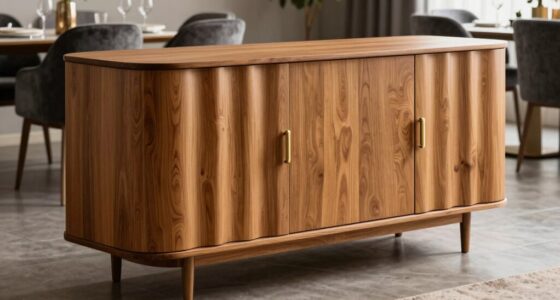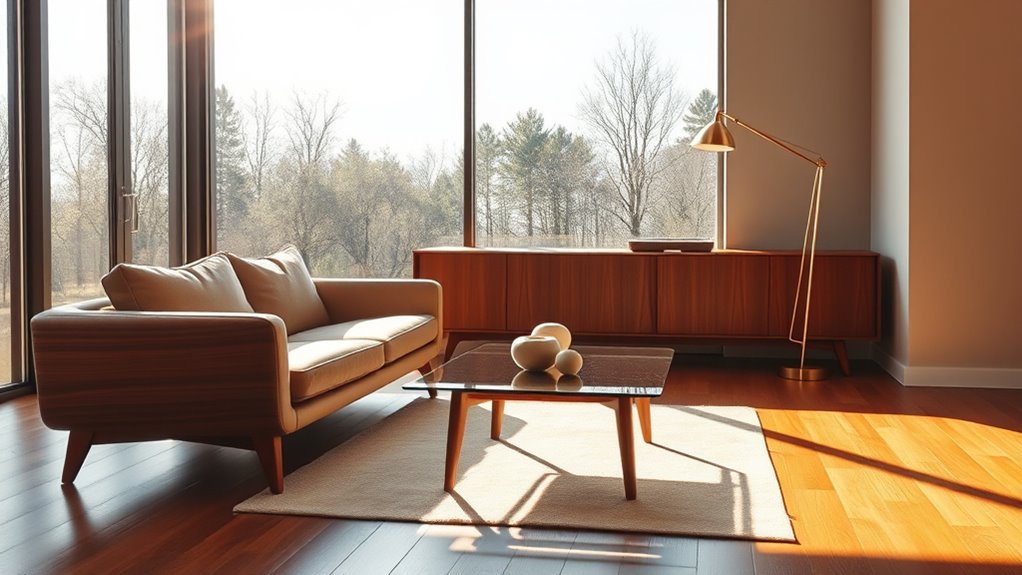

Mid-century modern furniture revolutionized design in the 1950s by emphasizing sleek, simple forms focused on functionality and style. You’ll notice clean lines, geometric shapes, and tapered legs that create open, airy spaces. This movement was a reaction to previous, bulkier styles, aiming for practicality without sacrificing aesthetics. Its influence shapes today’s minimalism and eco-conscious trends, showing that good design endures. Explore further to discover how this style continues inspiring contemporary living and collections.
Key Takeaways
- Mid-century modern emerged post-WWII, emphasizing innovation, simplicity, and practicality in furniture design.
- It features clean lines, geometric shapes, tapered legs, and open, airy interior layouts.
- The style experienced a vintage revival, boosting iconic pieces’ popularity among collectors.
- It laid the foundation for modern minimalism, influencing furniture, architecture, and design trends.
- Its timeless appeal continues to inspire contemporary interiors and maintains cultural relevance today.
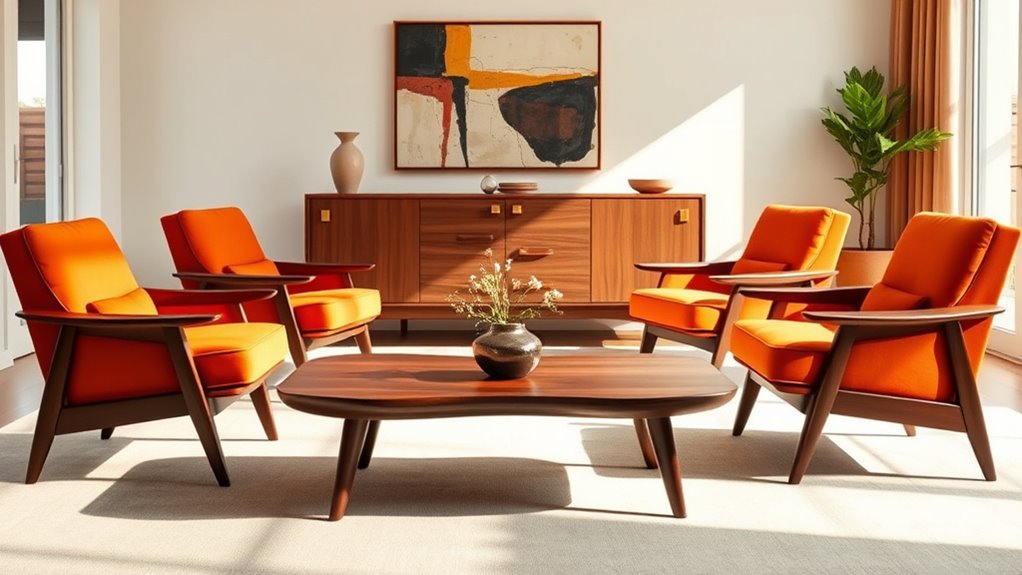
Have you ever wondered why mid-century modern furniture remains so popular today? It’s a style that’s experienced a remarkable vintage revival, capturing the imagination of new generations and influencing contemporary design trends. The appeal lies in its clean lines, functional forms, and seamless blend of form and function. But beyond its aesthetic charm, mid-century modern furniture revolutionized how we view interior spaces and the role of furniture within them. Its design influence extends far beyond its original era, shaping the minimalist movement and inspiring countless designers and homeowners alike.
This style emerged in the post-World War II era, a time when innovation and simplicity became central to daily life. As you explore mid-century modern pieces, you notice how they emphasize practicality without sacrificing style. The furniture is characterized by sleek, geometric shapes, tapered legs, and a focus on open, airy layouts. This approach was a conscious reaction against the ornate, bulky furniture of previous decades. Instead, it champions streamlined forms that feel fresh and timeless. The vintage revival of mid-century modern furniture has boosted its popularity, making these iconic pieces highly sought after. Collectors and enthusiasts appreciate the craftsmanship and unique design details, and many seek out authentic vintage items to incorporate into modern homes.
The design influence of mid-century modern furniture is evident in today’s interior trends. Its emphasis on minimalism and functionality has become a cornerstone of modern decor. You’ll see this style reflected in everything from sleek sofas and minimalist coffee tables to innovative storage solutions. The principles of mid-century design have informed the creation of contemporary furniture that balances aesthetics with practicality. This influence also extends into architecture, graphic design, and even fashion, where the clean, uncluttered look remains relevant. The movement’s focus on simplicity and utility resonates with today’s eco-conscious and space-conscious lifestyles. It encourages you to value quality over quantity, choosing pieces that serve a purpose while enhancing your living space.
In essence, mid-century modern furniture’s enduring popularity stems from its ability to adapt and inspire. Its vintage revival breathes new life into classic designs, and its profound design influence continues to shape modern aesthetics. As you incorporate these pieces into your home, you’re not just embracing a trend but participating in a design revolution that champions simplicity, innovation, and timeless elegance. This style’s ability to stay relevant for over half a century speaks to its universal appeal, proving that good design truly endures.
As an affiliate, we earn on qualifying purchases.
Frequently Asked Questions
What Are the Key Characteristics of Mid‑Century Modern Furniture?
You notice that mid-century modern furniture features clean lines and functional designs. It emphasizes geometric patterns and minimalist aesthetics, creating a sleek look. You’ll see simple forms, smooth surfaces, and a mix of natural and bold materials. This style avoids ornate details, focusing instead on practicality and beauty. It’s about combining form and function effortlessly, making your space feel modern, airy, and timeless.
How Did Mid‑Century Modern Design Influence Contemporary Interiors?
You notice how contemporary interiors often embrace minimalist aesthetics, emphasizing clean lines and simple forms. The influence of mid-century modern design is clear in your space through color palettes that feature neutral tones with occasional bold accents. This style encourages you to create functional, uncluttered environments where natural materials and open layouts highlight a timeless elegance, shaping modern interiors into welcoming, stylish spaces that balance form and function effortlessly.
Who Were the Most Prominent Designers of the 1950S?
You should know that the most prominent designers of the 1950s, like Charles and Ray Eames, pushed boundaries with their innovative furniture that embraced space age design and pop art influences. They created iconic pieces that reflected the optimism of the era, blending futuristic shapes with vibrant colors. Their work revolutionized interior design, inspiring contemporary styles that celebrate sleek lines, playful aesthetics, and revolutionary materials.
What Materials Were Commonly Used in Mid‑Century Modern Furniture?
Imagine building a bridge between style and function — that’s what materials like wood veneers and molded plastics do in furniture. You’ll find these materials often, as they create sleek, lightweight designs with a modern touch. Wood veneers give a warm, natural look, while molded plastics add flexibility and bold shapes. These materials help you craft pieces that are both innovative and timeless, perfectly capturing the spirit of mid-century modern design.
How Can I Identify Authentic Mid‑Century Modern Pieces?
To spot authentic vintage pieces, look for collectible indicators like original labels, craftsmanship details, and signs of age. Authentic mid-century modern furniture often features clean lines, quality materials, and minimal ornamentation. Check for consistent wear, original hardware, and construction techniques typical of the era. Trust your intuition and compare with verified examples. These clues help you determine vintage authenticity and avoid fakes or reproductions.
Conclusion
Imagine walking into a room adorned with a sleek, teak coffee table and a minimalist, molded plastic chair. That’s the essence of mid-century modern furniture—timeless, functional, and effortlessly stylish. As you embrace this design revolution, picture yourself in a space that balances form and function perfectly. This movement didn’t just change furniture; it transformed how you live and interact with your environment, making every moment more beautiful and intentional.