
Transitional style blends traditional charm with modern simplicity, creating timeless yet fresh spaces. You can achieve this look by combining classic shapes with contemporary finishes, pairing vintage-inspired furniture with sleek accents, and using neutral color palettes with richer hues. Texture, balance, and harmony are key — mix plush upholstery with smooth surfaces and thoughtfully combine decor styles. If you keep exploring, you’ll discover how to seamlessly integrate these elements for a cohesive, inviting home.
Key Takeaways
- Combine classic furniture shapes with modern finishes for a balanced transitional look.
- Use neutral color palettes accented with richer shades to create depth and warmth.
- Pair vintage-inspired wood pieces with sleek metal or glass accents for contrast.
- Incorporate traditional patterns subtly in rugs or curtains alongside minimal, geometric decor.
- Achieve harmony by blending traditional and contemporary elements thoughtfully for a timeless yet current space.
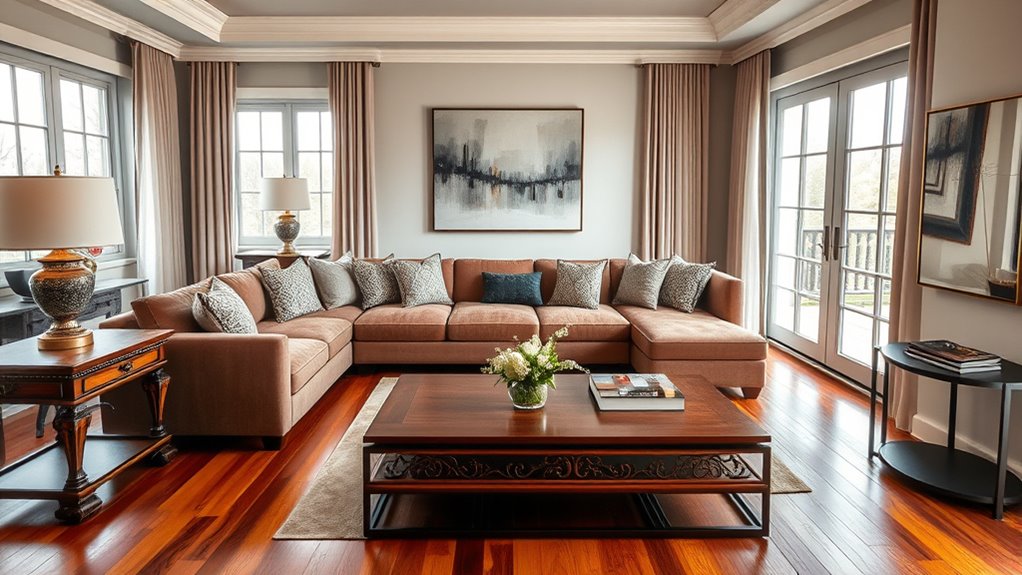
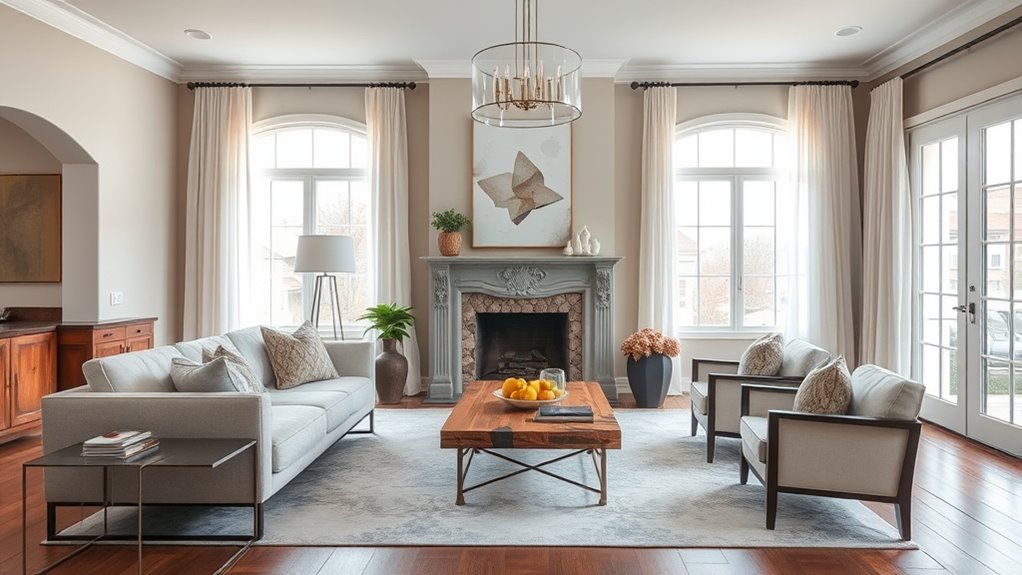
Have you ever wondered how to blend the timeless elegance of traditional design with the clean lines of modern decor? The key lies in carefully balancing elements so that your space feels cohesive yet interesting. When it comes to furniture selection, choose pieces that combine classic shapes with modern finishes. For instance, opt for a sleek sofa with subtle curves or a coffee table that blends ornate woodwork with minimalist metal accents. These choices create a harmonious mix that captures both worlds without overwhelming the space. Remember, transitional style isn’t about choosing between old and new but blending them seamlessly.
Color palettes play a vital role in achieving this look. You want to select hues that evoke warmth and sophistication while maintaining a contemporary freshness. Neutral tones like soft grays, beige, or taupe serve as a perfect backdrop, allowing your furniture and decor accents to stand out. Incorporate richer shades such as deep blues, emerald greens, or muted golds as accents to add depth and interest. These colors work well with both traditional and modern elements, creating a balanced environment that feels inviting yet stylish. Keep your palette simple—avoid overly bright or clashing colors—and focus on creating a unified look through subtle variations.
When deciding on furniture, think about the materials and finishes. Wood finishes that are lighter or distressed can evoke a traditional charm, but pairing them with sleek metal or glass accents keeps the look modern. For example, a vintage-inspired wooden dining table paired with streamlined chrome chairs bridges the gap between eras effortlessly. Textures also matter—mix plush upholstery with smooth, sleek surfaces to add visual appeal and tactile contrast. These thoughtful combinations prevent the space from feeling too formal or too casual, striking the perfect transitional balance. Additionally, maintaining proper gear shifting techniques can help keep your space balanced and harmonious when navigating different design elements and styles.
Furthermore, layering your decor helps reinforce the style. Use traditional patterns like damask or floral motifs in rugs or curtains, but keep them subdued and modern in execution. Minimal accessories with clean lines, such as geometric vases or abstract art, complement the traditional elements without cluttering the space. Lighting fixtures are another opportunity to fuse styles—choose chandeliers with a modern twist or sleek sconces with classic detailing. This blend of old and new ensures your space feels curated yet comfortable.
Ultimately, achieving a successful transitional style hinges on your ability to blend furniture selection, color palettes, and decor thoughtfully. It’s about creating a space that feels timeless yet current, inviting you to enjoy the best of both worlds. When you strike the right balance, your home becomes a reflection of your sophisticated taste and appreciation for design evolution.
Frequently Asked Questions
How Do I Choose the Right Balance of Traditional and Modern Elements?
To choose the right balance, start with your furniture selection—mix classic pieces with sleek, modern designs to create harmony. Use lighting choices to enhance this blend; incorporate traditional chandeliers alongside contemporary floor lamps. Keep a cohesive color palette to unify the space. Trust your style instincts, and don’t be afraid to experiment. The goal is to create a warm, inviting atmosphere that feels both timeless and current.
What Color Schemes Work Best for Transitional Interiors?
For transitional interiors, you should choose a versatile color palette with neutral tones like beige, gray, or taupe as your base. Add accent hues such as soft blues, warm greens, or muted reds to create visual interest. These colors work well because they balance traditional richness with modern simplicity, ensuring your space feels cohesive and inviting. Stick to a few accent hues to maintain harmony and avoid overwhelming the room.
Can Transitional Style Suit Small Spaces Effectively?
Transitional style works beautifully in small spaces, like a tailored suit that fits perfectly. You can use smart small space solutions such as multi-functional furniture and light colors to keep the area feeling open. Focus on furniture selection that balances traditional charm with sleek modern lines. This approach creates a harmonious flow, making your small space feel cozy yet stylish. With the right choices, you’ll turn compactness into comfort and elegance.
How Do I Incorporate Personalized Touches Into Transitional Design?
To incorporate personalized touches into progression design, start by adding decorative accessories that reflect your personality, like unique artwork or meaningful collectibles. You can also customize furniture pieces with your preferred fabrics, finishes, or hardware to make them feel more personal. Mixing these elements seamlessly with your existing traditional and contemporary pieces creates a balanced, inviting space that truly feels like your own.
What Are Common Mistakes to Avoid in Transitional Decorating?
Watch out for cluttered spaces and mismatched furniture placement—that’s a quick way to ruin your look. Avoid overusing bold lighting choices that clash with your decor, and don’t forget balance. The key is harmony between traditional and contemporary pieces. Keep lighting subtle and furniture well-arranged. If you stray from these, your space might feel chaotic rather than curated, undermining the sophisticated charm you’re aiming for.
Conclusion
Embracing transitional style allows you to blend tradition and modernity seamlessly. It’s like weaving a tapestry where classic and contemporary threads intertwine, creating a harmonious design that’s both timeless and fresh. With each piece, you craft a space that’s uniquely yours—balanced, inviting, and full of character. So, why not step into this style and let your home tell a story—one where past and present dance together in perfect rhythm?