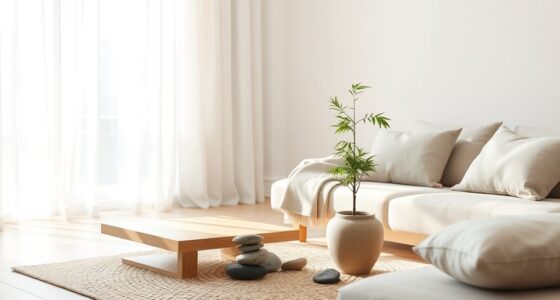
Colors greatly influence your mood through their psychological effects. Warm tones like reds, oranges, and yellows energize you, boosting alertness and creating lively, motivating spaces. Cool tones such as blues, greens, and purples promote relaxation, calmness, and reflection, making them ideal for peaceful environments. Understanding how these colors affect emotions helps you make conscious decisions about your surroundings. If you’re curious about how to use these hues effectively, you’ll discover more insights as you explore further.
Key Takeaways
- Warm tones like red, orange, and yellow energize and stimulate emotions, promoting activity and social interaction.
- Cool tones such as blue, green, and purple induce calmness, relaxation, and a sense of tranquility.
- Color perceptions vary culturally; red can symbolize passion or danger, influencing emotional responses.
- Bright colors generally boost alertness and enthusiasm, while subdued hues foster peace and reflection.
- Selecting specific colors can intentionally shape environments to evoke desired moods and psychological effects.

Have you ever noticed how a room’s color can instantly influence your feelings? It’s not just your imagination. Colors have a powerful emotional influence that can lift your mood or bring you down. When you step into a space painted in bright yellow, you might feel energized and optimistic. On the other hand, a deep blue can evoke calmness and serenity. These reactions are rooted in both the psychological effects of colors and their cultural symbolism, which shapes how different hues are perceived around the world.
Warm tones like red, orange, and yellow are often associated with energy, passion, and warmth. They tend to stimulate emotions and can make you feel more alert or enthusiastic. That’s why many restaurants use red or orange to encourage appetite and social interaction. Conversely, cool tones such as blue, green, and purple are linked to tranquility, relaxation, and stability. These colors are commonly used in spaces meant for rest or reflection, like bedrooms or meditation areas, because they help foster a sense of calm. Your emotional response to these colors is influenced by their inherent qualities, but also by cultural symbolism. For example, red can symbolize love and celebration in many cultures, yet it also signifies danger or warning in others. Similarly, white is often associated with purity and peace in Western traditions, but in some Eastern cultures, it’s linked to mourning and loss. These cultural nuances deepen the emotional impact of color and help explain why the same hue can evoke different feelings depending on where you are.
Understanding this relationship can help you choose colors more intentionally. If you want to create a lively, motivating environment, warm colors could be your best choice. If you aim to establish a peaceful, contemplative space, cool tones might serve you better. Recognizing the emotional influence of colors, along with their cultural symbolism, allows you to tailor your surroundings to support your desired mood and behavior. Additionally, knowledge about personality types can inform how different individuals might respond to various color schemes, enhancing the effectiveness of your design choices. Whether decorating a home, designing a workspace, or selecting clothing, being aware of these psychological effects helps you make smarter, more conscious decisions.
In the end, color isn’t just a visual element—it’s a subtle language of emotion and meaning. By understanding how warm and cool tones can influence your mood, you gain the power to shape your environment in ways that boost your well-being. It’s a simple yet profound way to harness the emotional influence of color and create spaces that truly resonate with your inner state.
As an affiliate, we earn on qualifying purchases.
Frequently Asked Questions
How Do Cultural Differences Influence Color Perception and Mood?
You should consider that cultural symbolism and regional color preferences shape how you perceive colors and their moods. In some cultures, red symbolizes luck, while in others, it signals danger. Your mood can change based on these associations, making color perception deeply personal and culturally influenced. Recognizing these differences helps you understand why colors evoke varied emotions across cultures, affecting your choices and reactions in different contexts.
Can Color Therapy Effectively Treat Mood Disorders?
Color therapy can help improve mood by leveraging color symbolism and evoking emotional responses. You might find it effective as a complementary approach, especially when specific colors promote relaxation or energy. While scientific evidence varies, many people report positive effects on their emotional well-being. Keep in mind, it’s not a standalone treatment but can support other therapies, helping you reconnect with your emotions and foster a balanced mood.
How Do Lighting Conditions Alter the Psychological Impact of Colors?
Lighting conditions gently influence how you perceive colors, subtly shifting their psychological effects through lighting psychology and color dynamics. Bright, warm light can amplify feelings of warmth and energy, while softer, cooler lighting may promote calmness and introspection. As you experience different lighting, notice how colors change in mood and impact, making your environment feel more vibrant or serene. Adjusting lighting lets you tailor your space’s emotional atmosphere seamlessly.
What Are the Long-Term Effects of Color Choices in Interior Design?
Your long-term color choices influence how you feel in a space, shaping emotional associations and reinforcing color symbolism. Bright, warm tones can energize and motivate you, while cool shades promote calm and relaxation over time. Consistent use of these colors in interior design helps create a harmonious environment that supports your mood and well-being. Be mindful of your selections, as they can profoundly impact your emotional health and overall comfort.
Do Personal Experiences Change Individual Responses to Warm and Cool Tones?
Yes, your personal experiences can change how you respond to warm and cool tones. Your personal memories and emotional associations influence your reactions; for example, a warm color linked to a happy memory may evoke positive feelings, while a cool tone associated with a stressful event might trigger discomfort. These subjective experiences shape your perception, making color choices uniquely impactful based on your individual history and emotional connections.
Conclusion
As you embrace the gentle dance of warm and cool tones, you subtly invite a calming harmony into your space. Understanding their delicate influence allows you to craft environments that soothe or energize, like a soft whisper guiding your mood. By thoughtfully choosing your colors, you create a welcoming haven where your feelings can flourish naturally. Ultimately, color becomes your quiet partner, gently shaping your world in ways both seen and felt, without ever saying a word.