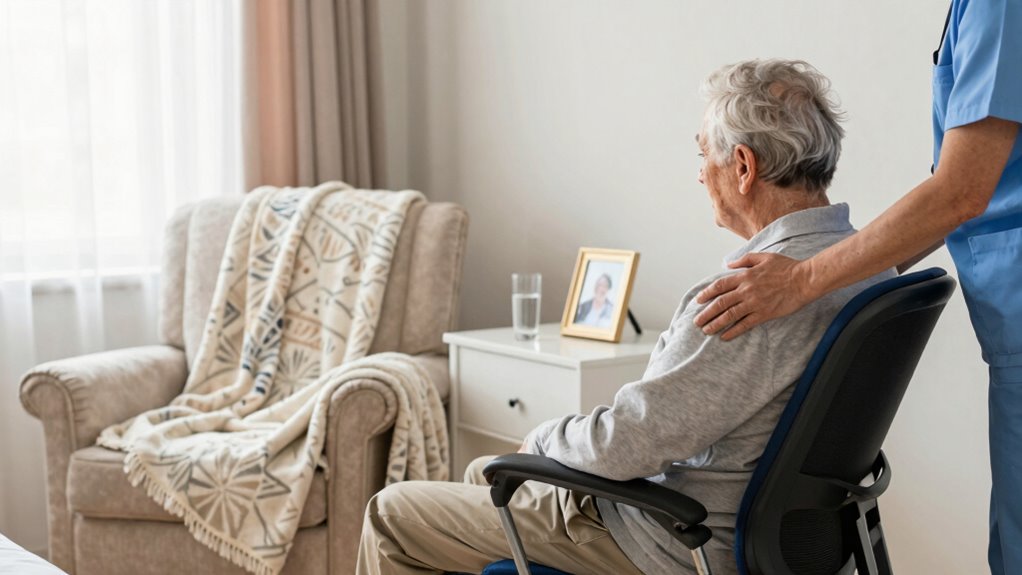
To preserve dignity during care, you should create a home setup that balances privacy, comfort, and independence. Incorporate assistive technology like voice controls and mobility aids to support daily tasks, making sure personal belongings are accessible. Use room dividers, secure locks, and proper lighting to enhance privacy. Thoughtfully arrange furniture to improve accessibility and reduce discomfort. Regularly involve the individual in adjustments to keep their environment respectful and supportive. Explore more ideas to foster a respectful, empowering space.

Get decor and gifts delivered free with Prime
- Fast, free delivery on millions of items
- Prime Video, Amazon Music and more included
- Member-only deals all year
Key Takeaways
- Incorporate assistive technology and mobility aids to promote independence and reduce reliance on caregivers.
- Create private, secure spaces with room dividers and locks to support personal privacy during care.
- Use adjustable lighting and soundproofing to ensure a comfortable and discreet environment.
- Arrange furniture and storage for easy access, minimizing discomfort and embarrassment during movement or grooming.
- Involve the individual in planning and regularly review the setup to respect their preferences and maintain dignity.
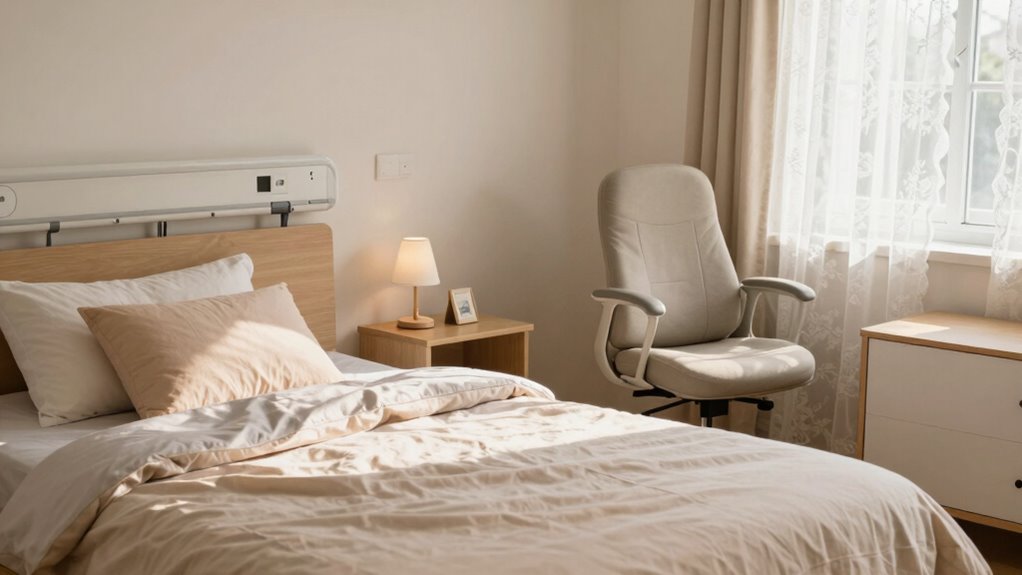
Creating a home environment that preserves dignity during care is fundamental for both comfort and respect. When setting up your space, consider how assistive technology can support independence while maintaining privacy and personal boundaries. Modern devices like automated bed adjustments, voice-activated controls, and mobility aids empower individuals to perform daily tasks with less reliance on others, fostering a sense of autonomy. These tools help reduce feelings of vulnerability and reinforce self-esteem, making care routines feel less intrusive.
Assistive technology promotes independence, privacy, and dignity, making daily routines less intrusive and empowering individuals to maintain self-esteem.
Privacy enhancements are equally important. You should prioritize creating private areas where individuals can feel secure and unobserved during personal activities. Installing room dividers, curtains, or screens allows for discreet spaces within shared rooms, giving a person control over their environment. Additionally, guaranteeing doors have secure locks and that personal belongings are easily accessible helps maintain a sense of ownership and control over their space. Proper placement of mirrors and lighting can also promote dignity by allowing individuals to see themselves clearly and comfortably during grooming or dressing.
Lighting plays a pivotal role in preserving dignity as well. Bright, adjustable lighting can make personal care easier and more comfortable, reducing embarrassment or discomfort. Consider motion-sensor lights or dimmable fixtures that can be easily controlled, providing flexibility without disrupting privacy. Soundproofing measures, such as adding soft furnishings or acoustic panels, can minimize noise and prevent accidental exposure during intimate moments, further supporting a respectful environment.
Furniture arrangement is another key factor. Positioning beds, chairs, and assistive devices thoughtfully ensures that caregivers can access necessary areas without causing discomfort or embarrassment. Keep frequently used items within easy reach, reducing the need for intrusive assistance. Incorporating accessible storage solutions that support independence allows the individual to retrieve personal items independently, reinforcing their dignity and autonomy. Additionally, understanding how environmental modifications can improve comfort and safety is essential for creating a respectful living space. Creating an environment that is ergonomically designed can also significantly enhance safety and ease of movement for everyone involved.
Lastly, involve the individual in designing their home setup. Their preferences, routines, and comfort should guide decisions about layout and technology. When they feel consulted and in control, it strengthens their sense of dignity and promotes cooperation during care routines. Regularly review and adjust the environment as needed, ensuring it continues to meet their evolving needs and preferences.
voice-activated assistive technology for elderly
As an affiliate, we earn on qualifying purchases.
As an affiliate, we earn on qualifying purchases.
Frequently Asked Questions
How Can I Personalize the Home Environment for Individual Dignity?
You can personalize the home environment by incorporating personalized decor that reflects the individual’s tastes and memories, making them feel at home. Create comfort zones with familiar items and cozy furniture to promote independence and security. Allow them to choose artwork, photos, or textiles that resonate personally. This approach helps preserve dignity by respecting their identity, making the space feel uniquely theirs and fostering comfort and confidence during care.
What Privacy Measures Are Essential in a Caregiving Home Setup?
You should prioritize creating clear personal spaces where your loved one can retreat for privacy, ensuring they have control over their environment. Designate confidential areas, like a private bathroom or a cozy corner, to foster trust. Use privacy curtains or locks when necessary, and establish boundaries that respect their personal space. These measures help preserve dignity, making your home a secure, respectful environment for caregiving.
How Do I Address Emotional Needs Alongside Physical Care?
Ever wonder how to nurture emotional needs along with physical care? You can build a supportive environment by offering emotional support and encouraging open conversations, which boost mental well-being. Spend quality time listening, showing empathy, and respecting their feelings. Small gestures like comforting words and creating a sense of security make a big difference. Addressing emotional needs isn’t optional; it’s essential for holistic care and maintaining dignity.
What Are Cost-Effective Ways to Improve Home Dignity Features?
You can improve home dignity features cost-effectively by incorporating cultural sensitivity, like respecting traditions in design and routines, which boosts comfort. Encourage social engagement by creating inviting spaces for family and friends, fostering connection and support. Simple updates like adjustable furniture, private spaces, and thoughtful decor show regard for personal preferences without overspending. These changes help maintain dignity, ensure emotional well-being, and create a more inclusive environment.
How Can Technology Support Dignity in Home Care?
Think of technology as a trusted guide, gently supporting your loved one’s independence. Virtual reality can offer immersive experiences, helping seniors feel connected and stimulated, while assistive devices like voice-activated controls enable them to manage tasks quietly and discreetly. These tools empower your loved one, maintaining dignity by minimizing reliance on others, much like a steady hand guiding them through daily challenges, fostering confidence and respect in their home environment.
Conclusion
Creating a home setup that respects dignity isn’t just about the right furniture—it’s about thoughtful design. Imagine helping your loved one into a cozy, accessible bathroom where they feel in control, not vulnerable. By including features like grab bars and a walk-in shower, you foster independence and respect. When your care environment prioritizes comfort and dignity, you help your loved one feel valued and safe every day, making caregiving a more compassionate experience for both of you.
Evergreen bestsellers Picks
bestsellers
As an affiliate, we earn on qualifying purchases.