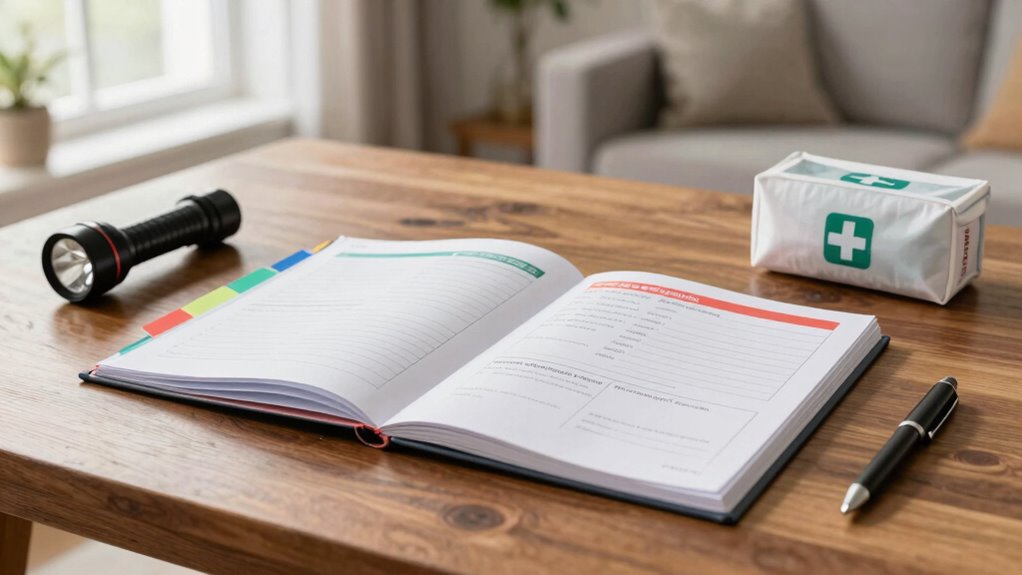

Creating a home emergency folder is essential for quick access to crucial information during crises. It should include emergency contacts, safety plans, important documents, and checklists for various incidents. Keep it organized and update it regularly, storing it in a known, accessible place for everyone in your family. Staying prepared makes a real difference when time matters most. Keep going to discover more tips to make your emergency plan even stronger.
Open a free Amazon Business account
Business pricing, bulk buying and tax-exempt orders.
As an affiliate, we earn on qualifying purchases.
Key Takeaways
- Organize critical contact information for emergency services, neighbors, and support networks for quick access during crises.
- Include a comprehensive safety plan and checklists tailored to different emergencies to guide family responses.
- Store essential documents securely, both physically and digitally, for easy retrieval during emergencies.
- Regularly review and update the folder’s contents to ensure information remains current and reliable.
- Keep the folder in a designated, accessible location known to all household members for immediate use.

Having a well-organized Home Emergency Folder can make a stressful situation much easier to handle. When an emergency strikes, every second counts, and knowing exactly where to find critical information can make all the difference. This folder acts as your central hub for essential details, guaranteeing you and your family can respond quickly and effectively. A key component of this folder is your emergency contact list. You want to have all important phone numbers in one place—fire department, police, medical providers, and trusted neighbors. Including these contacts guarantees that if your phone is dead or inaccessible, you’re still prepared to reach out for help. Make certain to update this list regularly, especially if any contact information changes. Additionally, having a comprehensive safety plan outlined in your folder can help guide your actions during various types of emergencies, ensuring everyone knows what steps to take under pressure. Regularly reviewing your safety plan can also help identify potential gaps in your preparedness.
Alongside your emergency contacts, your folder should contain a thorough safety checklist. This checklist serves as a guide to prepare your home and family for different types of emergencies, from fires to natural disasters. It helps you verify that safety equipment like smoke detectors, fire extinguishers, and carbon monoxide alarms are operational. It also prompts you to review escape routes, assemble emergency kits, and secure important documents. Having this checklist at your fingertips means you won’t forget essential safety steps in a crisis. You can even customize it based on your home’s specific needs, such as including flood barriers or earthquake safety tips. Incorporating emergency preparedness strategies into your routine can significantly enhance your family’s resilience during a crisis. Regularly reviewing and practicing your safety plan can also improve your family’s emergency readiness, ensuring everyone knows what to do when seconds matter.
Your Home Emergency Folder should also hold copies of important documents. This includes insurance policies, medical records, birth certificates, and property deeds. Keep digital copies as backups, but guarantee physical copies are stored securely but accessibly. In an emergency, quick access to these documents can simplify insurance claims or help authorities verify your identity. Creating a systematic organization method for storing these documents can further streamline access during a crisis.
It’s equally important to review and update your folder regularly. Emergencies evolve, and so should your preparedness plan. Set reminders every few months to verify contact information, update safety checklists, and replenish emergency supplies. Keep the folder in a designated, easily accessible place—preferably one known to everyone in the household. This way, in an emergency, your family can grab the folder and find everything they need without wasting precious time.
emergency contact organizer folder
As an affiliate, we earn on qualifying purchases.
As an affiliate, we earn on qualifying purchases.
Frequently Asked Questions
How Often Should I Update My Emergency Folder?
You should update your emergency folder at least once a year, especially your emergency kit and family communication plan. Regular updates guarantee your documents stay current and your supplies are stocked. Review important contacts, medical info, and insurance details, replacing expired items. Keeping your emergency kit ready and family communication plan up-to-date helps you respond quickly during a crisis, reducing stress and confusion when it matters most.
Where Is the Best Place to Store the Emergency Folder?
Think of your emergency folder as a treasure chest that needs a safe, accessible hiding spot. Store it in a fireproof safe or a locked cabinet, ensuring it’s protected from hazards and theft. Choose a location that’s easy for family members to reach quickly, like a central closet or a designated drawer. Prioritize storage safety and accessibility options so you can grab it swiftly during an emergency.
Who Should Have Access to the Emergency Folder?
You should guarantee that everyone in your family has access to the emergency folder for effective family communication and emergency preparedness. Share copies with trusted family members, close friends, or neighbors who can help if you’re unavailable. Keep the folder in a secure yet accessible location, like a safe or a designated central spot. Regularly update it and confirm all relevant people know where it is and how to use it in emergencies.
What if I Lose Some Important Documents?
If you lose important documents, don’t panic. Stay calm and focus on document organization by gathering any copies or digital versions you might have. Contact relevant agencies to replace essential items like IDs or insurance papers. Implement safety precautions by storing backups in secure, accessible locations. Consider scanning documents and saving them securely online to prevent future loss, ensuring you’re prepared for emergencies without risking critical information.
How Can I Keep Digital Copies of the Folder?
You can keep digital copies of your emergency folder by scanning documents and storing them securely in the cloud. Use a trusted cloud storage service to guarantee your files are protected by encryption and easy to access from any device. Remember to set strong passwords and enable two-factor authentication for added digital security. Regularly update your files to keep your digital copies current and reliable in emergencies.
Conclusion
Think of your Home Emergency Folder as a sturdy lighthouse guiding your family safely through life’s storms. Just as a lighthouse stands tall amidst crashing waves, your folder provides a steady beacon of preparedness when chaos strikes. By creating this essential guide, you’re building a resilient fortress—ready to withstand any surprise that comes your way. Stay proactive, stay protected, and let your folder be the guiding light that keeps your family safe, no matter the storm.
Fall Picks
fall essentials
As an affiliate, we earn on qualifying purchases.